
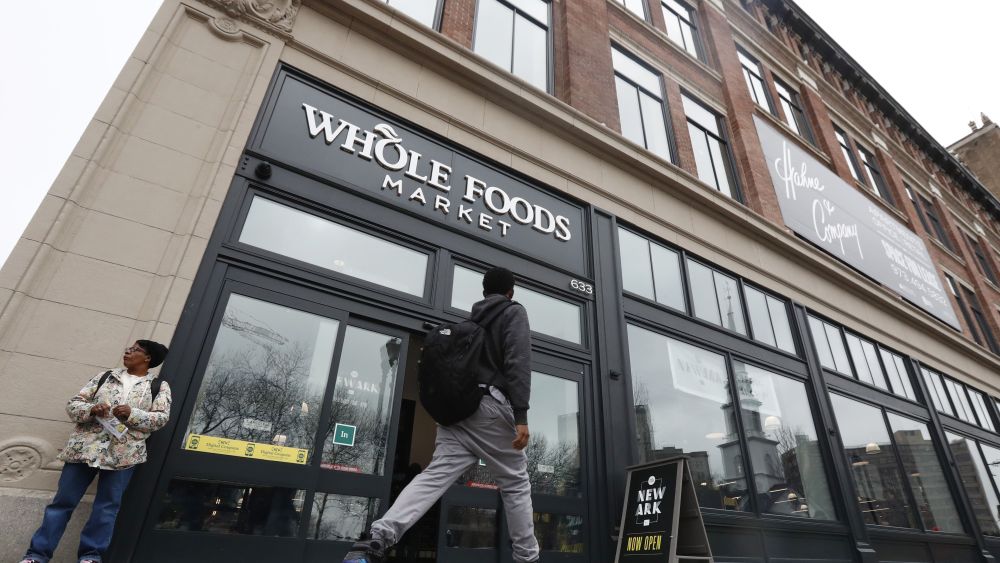
E-commerce giant Amazon.com plans to buy Whole Foods, the Texas-based upscale grocery chain, in a $13.7 billion deal.
Amazon, which is led by the ultra aggressive Jeff Bezos, said it will pay $42 a share in an all-cash deal that includes the group’s debt. The company, which has $21 billion in cash and short term securities on its books, is one of the few that could shoulder such a deal without having to borrow.
“This partnership presents an opportunity to maximize value for Whole Foods Market’s shareholders, while at the same time extending our mission and bringing the highest quality, experience, convenience and innovation to our customers,” said John Mackey, Whole Foods co-founder and chief executive.
John Mackey will continue as chief executive officer of Whole Foods and its headquarters will remain in Austin, Tex. Both companies said they expect the transaction to close during the second half of 2017.
Shares of Whole Foods rose 27 percent to $41.94 while Amazon’s stock gained 3.5 percent to $997.90. Amazon’s gain is notable because when deals are announced, shares of the acquiring company often fall given the additional risk of an acquisition, especially when it marks a move into new a new segment, as this deal does for the Web giant.
Whole Foods has 460 stores across the U.S, Canada and in the United Kingdom, with 87,000 workers and sales of $16 billion.
Related Articles
RBC Capital Markets analyst Mark Mahaney said the deal was a somewhat surprising step for Amazon.
“This would be the largest acquisition Amazon has done to date, by a factor of 10-times plus,” Mahaney said. “That’s the first surprise. The second is that while the company has been establishing a tentative physical footprint with a small number of Amazon Book Stores, the company has always veered away from physical retail presences. The investment thesis on Amazon has always been that the company has traded off rising retail costs for declining technology costs. That said, the company has clearly signaled its intent to more aggressively invest in new growth options … and we have for some time identified groceries as one of the most logical places for Amazon to expand into. So with that as backdrop, we view this development as somewhat rather than totally surprising.”
More from WWD: