
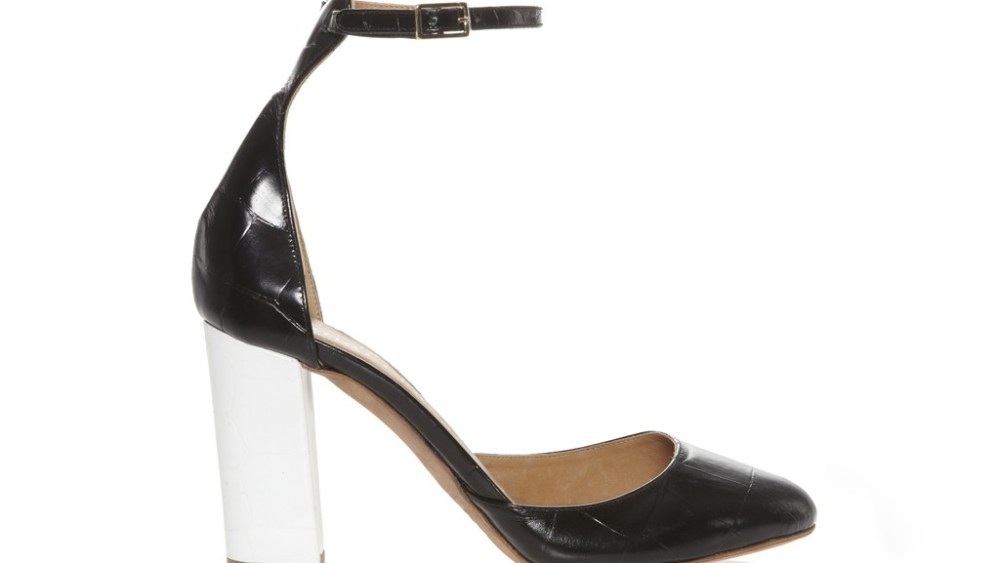
U.K. footwear brand Kurt Geiger has been on the market since early this year, but so far it’s still waiting for an offer.
Sources said that Lion Capital, which has expressed interest in the company, is still on the fence on whether or not to submit an offer. L Capital, which also is said to have considered an acquisition of Geiger, is not expected to make an offer. Advent International is another private equity firm believed to have at least eyed the possibility of a Geiger acquisition.
One of the stumbling points could be a valuation for Geiger. The company’s earnings before interest, taxes, depreciation, and amortization is about 25 million pounds, or $38 million at current exchange. Sky News first reported that there’s a takeover bid in the works that values the brand at 250 million pounds, or $379 million. That would peg the multiple at 10 x EBITDA.
Related Articles
William Susman, founder of boutique advisory firm Threadstone Partners, said, “Sellers are still at 10x. Unfortunately, with global market volatility, buyers are now around 7x. Strong brands with growth still command a premium.”
You May Also Like
Sources said that if Geiger is seen as a strong brand, it could command at the very least a multiple of 8x or 8.5x.
Geiger was acquired by Jones Apparel Group in June 2011 in a $350 million cash transaction, inclusive of debt. The sellers were U.K.-based private equity firm Graphite Capital and members of the Geiger’s management, who held minority stakes. Geiger, Europe’s largest luxury shoe retailer, has been the distribution partner for the Nine West brand in the U.K. since 2009. Nine West was owned by Jones at the time. The plan at that point in time was to give Geiger entrée to the U.S. and Jones a platform in Europe. Neil Clifford, chief executive officer of Geiger, remained with the business.
Subsequent to the Geiger deal, Jones was acquired by U.S. private equity firm Sycamore Partners in April 2014 for $2.2 billion, which included $1 billion in debt. In the acquisition, Sycamore acquired Geiger and Stuart Weitzman. A week after the Jones deal closed, Geiger and Weitzman became independent firms, although Sycamore retained a majority stake in each business.
Weitzman was sold in May to Coach Inc. in a transaction valued at $574 million, with $530 million paid up front and up to $44 million in earnouts over three years.
The Weitzman deal was met with skepticism — mostly over growth potential of the brand — and many initially were surprised that Sycamore could get its purchase price. To be sure, Coach’s business has been under pressure, and the deal for Weitzman expands the handbag firm’s market share in footwear. Coach has an ambitious, although still unproven, strategy to turn itself into a lifestyle brand.
In the case of Geiger, the operation might make it a tougher sell if a buyer is seeking a luxury business. About 75 percent of Geiger’s business is women’s footwear, with the balance in men’s, and licensing.
Until a year ago, Geiger struggled with its premium business as its customer had moved on to better quality, more on-trend, lower-priced shoes that Zara and other high-street brands were offering. Geiger responded with a big revamp and pushed its Asian-made Miss KG private label brand, with price points as low as 40 pounds, or $61, and almost everything under 100 pounds, or $152. The strategy worked, with Geiger building up business in its own stores and with midmarket department stores.
In contrast, their luxury business is shrinking as the major brands are increasingly going directly to the department stores to set up concessions, rather than have Geiger operate their spaces. One example is Christian Louboutin, which went directly to Harrods for its space at Harrods Shoe. Another example is Prada.
Some sources speculate that if Lion Capital passed on Sergio Rossi, it would likely pass on Geiger, especially at an inflated price as potential buyers have kicked the tires already and walked away.
Neither Lion Capital nor Geiger returned calls for comment. Sycamore declined comment.