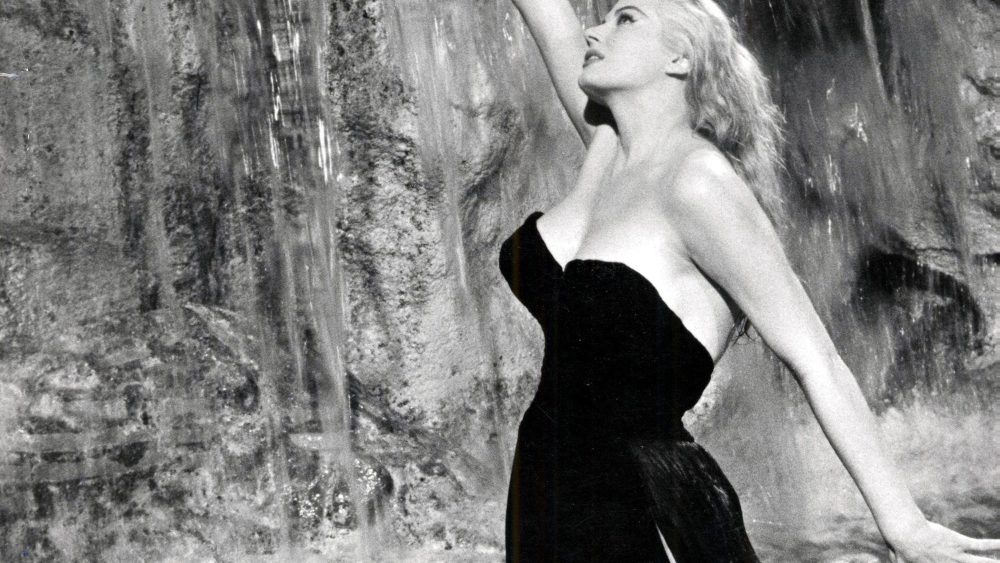
MILAN — At the height of Hollywood on the Tiber also known as Rome’s La Dolce Vita era, Fernanda Gattinoni dressed cinema’s biggest stars on and off screen.
Leading ladies Audrey Hepburn, Ingrid Bergman and Gina Lollobrigida were faithful customers and Gattinoni earned an Oscar nod for Best Costume Design for her work on the former’s attire in the 1956 film “War and Peace.” Gattinoni, who died in 2002, believed in the “no guts, no glory” motto, which she proved by turning down Coco Chanel’s offer to join her Paris atelier in the 1920s. She later went on to form her own house in the late 1940s.
Related Articles
“White Milano is the ideal location to launch our new contemporary image,” managing director Manuel Filippucci told WWD. The Filippucci family, an active player in the knitwear market, acquired the label in 2005 through a company called Phoenix 1946 Srl. Gattinoni has no survivors as her son, Raniero, also a designer, joined her in the mid-1980s when the house expanded to include ready-to-wear clothes in its collections, died in 1993.
You May Also Like
Together with designer Luigi Filippo Morelli, the Filippucci family is working on propelling the label into a modern era with a fresh design vision characterized by sartorial refinement, ethereal drapery and accents, and 100 percent virgin wool and cashmere knitwear. “The idea was to translate this heritage into something for a real woman,” Morelli told WWD, pointing to a tuxedo shirt fashioned with puckered tailoring.
The historic retrospective was on show for the duration of White Milano, which started Feb. 26 and ended Sunday. Inside an immersive environment, historical films featuring Gattinoni’s iconic dresses were projected, alongside original designs worn by Anita Ekberg in “La Dolce Vita” and Hepburn in “War and Peace” and other on-screen dresses worn by Lana Turner and Bergman.

The Gulf Is Key to Growth
The showcase proved a welcome reprieve from a difficult macroeconomic climate brought about by tariffs, an ongoing consumer spending slowdown, and the U.S. conflict with Iran, which ignited Saturday.
White Milano continues to pioneer new initiatives with the Middle East with high hopes placed on the region and an agreement signed with the Saudi Fashion Commission in October 2025 for the opening of the permanent space The Circle in Riyadh at Misk City. “The prestigious location made available to us is spacious and elegantly furnished, allowing us to develop numerous activities for our clients aimed at the commercial introduction of international brands into Gulf markets. Throughout 2026, we will carry out many initiatives abroad,” said White Milano and M. Seventy chief executive officer Brenda Bellei.
Since the Saudi Arabian Fashion Commission launched its first commercial wholesale event ever at White Milano in 2022, the ties between White Milano’s owner M. Seventy have become increasingly stronger.
In sync with Milan Women’s Fashion Week, White Milano hosted more than 300 brands, a 10 percent increase compared to February 2025. International labels showcasing their fall and winter collections, as well as resortwear, represented 46 percent of the total. Buyers hailed from markets like the U.A.E., the U.S., China, Japan, as well as Brazil, Azerbaijan and more.
Fresh Designs Abound
The featured brands at the trade show showcased in White Milan’s Secret Rooms included Susan Fang, an international womenswear brand founded in 2017 and who showed her fall 2025 collection during Milan Fashion Week, supported by Dolce & Gabbana. Also featured was Lucille Thievre, a Paris-based brand founded in 2021 by its eponymous designer, known for using only jersey fabrics in her collections. The Parisian chic brand Inès de la Fressange and the luxury outerwear brand Olivia V were also part of the lineup.
Inside the fair’s Loft space within its Superstudio venue on Milan’s Via Tortona 27, Madagascar-based Ibeliv presented a lifestyle collection of bags and hats made from woven and washed leather as well as raffia. Founded In 2015 with the aim of improving women’s quality of life in its country, the firm now employs 4,000 people and is the largest raffia manufacturer on the island.
“I was tired of people making raffia bags and never crediting Madagascar,” owner Liv Ramanandraibe said of the brand, which he started after leaving a career in finance. Ibeliv has drawn a European following and encapsulates the Mediterranean summer vibe. It is now sold in 800 stores worldwide, mainly in France, Italy and Germany, including luxury hospitality spaces like the Monte Carlo Beach Club.
Hospitality, a Growing Opportunity
Massimiliano Bizzi, president and cofounder of M. Seventy and White Milano, said boutiques within luxury hospitality establishments are no longer simply accessory retail spaces but have become true points of reference for global consumers seeking distinctive products during their travel experiences.
“In this context, platforms like White Milano support brands in engaging with buyers from the hospitality sector, expanding commercial opportunities beyond traditional channels and fostering strategic connections with hotels and international concept stores,” he said.
In terms of styles and colors, buyers were looking for a touch of escapism even within the fall and winter collections. Yayoi Takemi of Tokyo retail group Baycrews said his firm was looking for tailored jackets and design knits as key items, as well as statement accessories such as volume necklaces and bracelets and hair accessories.
“We have selected pieces with subtle shimmer and lamé details as trend-driven accent elements to add shine to winter fabrics. For colors, we are incorporating Kelly green, burgundy and pink, along with soft off-white and beige to gently enhance femininity as accent tones within a basic color palette,” Takemi said.
Uberta Zambeletti of Milan’s Wait and See said she was in search of brands that have “quirk, a vision, and which produce items with a quality that justifies the price.”
Wait and See’s wholesale price points range on average around 70 euros. Wait and See’s average retail price is just under 200 euros, with prices that range from 50 to 700 euros.
White Milano was full of unique and bold designs, she explained.
“I found more color than I have been finding in showrooms in general. I find this season’s color palettes generally tend to be on the safe side, whereas at White Milano, I found a range of international brands that were bolder in that respect, not only in terms of color range but also of patterns,” she said.
and emotionally resonant storytelling. Courtesy of Susan Fang