
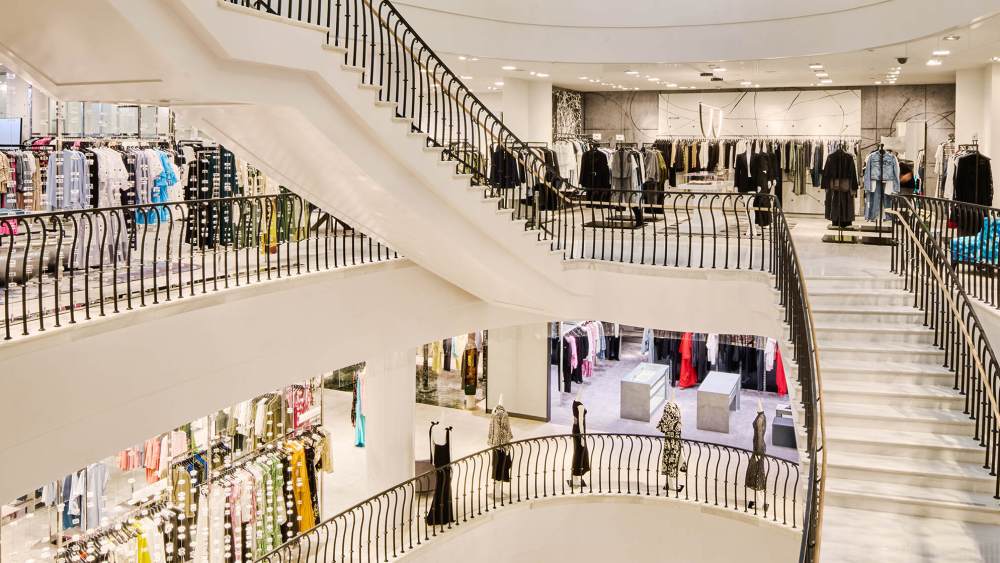
Since Saks Global completed its acquisition of Neiman Marcus Group in December, it’s had to wrestle with vendors unhappy over new payment terms and sooth the nerves of bondholders who didn’t have as much collateral as they thought.
Even without that, bringing the two companies together is a big project that involves cutting some $600 million in costs over time, setting up shop on Amazon, resetting the luxury department store model and more.
But as much as Saks wants to move forward, it is also — literally — litigating one thorny piece of its $2.7 billion deal for Neiman’s. It’s a legal dispute that could, if it goes to trial, shed some light on exactly how the long-suffering Hudson’s Bay went under.
You May Also Like
Related Articles
The dispute started with the complicated negotiations that cleared the way for the Neiman’s acquisition. Saks needed to restructure some debt from its partner Pathlight Capital in order to separate from its former parent company, Hudson’s Bay Co., as Neiman’s was brought on board.
Pathlight agreed to amend a credit facility and give Hudson’s Bay a $65.6 million term loan in return for a $5 million payment, which Saks made in January. But Saks also agreed to two further payments totaling $8.8 million to Pathlight if the term loan to Hudson’s Bay was not repaid.
Saks did not make the two additional payments, claiming that Pathlight did not support its effort to refinance the loan to Hudson’s Bay, precipitating the Canadian retailer’s slide into the equivalent of bankruptcy and then into liquidation.
Pathlight sued Saks in New York State Court in May, claiming that it “fully performed its obligations,” and was due its $8.8 million.
In its reply to that suit on Tuesday, Saks denied Pathlight’s allegations. The retailer said in connection with the acquisition it paid back $370 million in loans to Pathlight, rolled over its remaining debt into the term loan and agreed to pay more than $6 million in fees.
“Pathlight’s claims are barred by its breach of the implied covenant of good faith and fair dealing,” Saks said in its response filed with the court. “Pathlight agreed that Saks Global would not be required to pay the second and final installments to the extent that HBC had repaid the term loans.
“Pathlight, however, refused to cooperate or otherwise take any actions that would have allowed HBC to address its liquidity needs and repay the term loans,” Saks said. “In fact, when asked for basic cooperation, Matt Williams, a Pathlight principal, at one point stated bluntly: ‘I don’t care. I’m not interested in being helpful.’
“Accordingly, through its actions and inactions, Pathlight has violated the implied covenant of good faith and fair dealing, including its implied duty to act in good faith to facilitate and/or not inhibit HBC’s efforts to repay the term loans and thereby discharge any obligation to pay the second and final installments.”
Saks also claimed that Pathlight “fraudulently induced” Saks to enter the side agreement, knowing that “it would never cooperate with HBC as necessary to satisfy the term loans such that the Saks Global’s obligation to pay the second installment and final installment would be relieved.”
While the case does not seem central to the bigger picture at Saks and its efforts to remake luxury retailing, it is something of a coda for Hudson’s Bay — which had years of ups and downs and ranks as North America’s oldest company, founded in 1670 as a fur trader.
Hudson’s Bay liquidated, but the name is due to live on. The Canadian Tire Corp. agreed to buy the intellectual property of Hudson’s Bay for 30 million Canadian dollars in May.