Updated 7:48 GMT Feb. 25
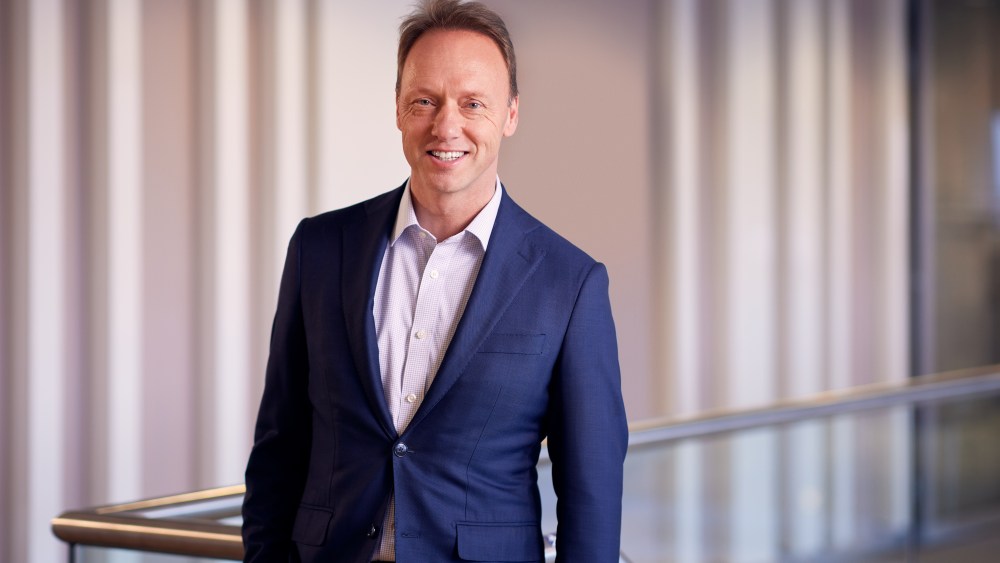
LONDON — After less than two years on the job, Hein Schumacher is out as chief executive officer of Unilever, a move that shocked the industry and prompted speculation about what might have led to his exit.
Schumacher, who joined as CEO in July 2023, will be succeeded by Fernando Fernandez, a Unilever veteran who is currently serving as chief financial officer and executive director.
You May Also Like
Related Articles
Unilever did not say why, exactly, Schumacher was leaving. The consumer giant, parent of brands including Dove, Vaseline and Tatcha, said only that he was stepping down as CEO and as a board member “by mutual agreement” and will leave the company officially on May 31.
Fernandez will take up the top job on Saturday. The move sent Unilever’s shares down 2.3 percent to close at 43.80 pounds on Tuesday.
In a statement, Unilever chairman Ian Meakins thanked Schumacher for “resetting Unilever’s strategy, for the focus and discipline he has brought to the company and for the solid financial progress delivered during 2024.”
He said Schumacher introduced and led “a significant productivity program and the commencement of the ice cream [division’s] separation, both of which are fully on track.”
Meakins added that Schumacher’s growth action plan “has put Unilever on a path to higher performance and the board is committed to accelerating its execution. We are grateful for Hein’s leadership, and we wish him the very best for the future.”
While the board was “pleased” with Unilever’s performance, Meakins said “there is much further to go to deliver best-in-class results.”
Schumacher said it was “a privilege to lead Unilever. We have made real progress and I am proud of what we have achieved in a short period of time. With a clear strategy, a portfolio reset in motion and a strong leadership team in place, I look forward to seeing Unilever move from strength to strength in the future.”
Unilever said there is no change to the company’s 2025 outlook or its medium-term guidance.

Schumacher will continue to receive his current level of fixed pay of 1.85 million euros up to the cessation of his employment in May. He will then be eligible for a payment in lieu of the remainder of his notice period.
The company said he will be treated as a “good leaver” under the remuneration policy for the purposes of his outstanding incentives.
Schumacher is a Dutch national and was formerly CEO of Royal FrieslandCampina, an international dairy and nutrition business. At Unilever, he succeeded Alan Jope, and immediately began reorganizing the company’s structure and priorities to make it more efficient.
The phrase, “We committed to doing fewer things, better and with greater impact,” became Schumacher’s mantra during his short tenure.
On his watch, Unilever decided to separate the ice cream business and, after dragging its heels, finally pulled out of Russia due to the war in Ukraine. His turnaround plan aimed at capturing market share and boosting profits has begun to bear fruit.
As reported, the ice cream business will be separated by way of a demerger, and the new business will be listed in Amsterdam, London and New York, the same three exchanges on which Unilever shares are currently traded. The demerger is set to take place by the end of 2025.
Some analysts speculated that Schumacher’s warning of a “soft” start to the new year might have signaled the beginning of the end. “The worry will be that this slowdown has deepened in the last few weeks,” Jefferies said in a report on Tuesday.
The company reported a 1.9 percent uptick in turnover to 60.8 billion euros in 2024, while underlying sales growth was 4.2 percent in the 12-month period.
Unilever saw a 10.8 percent drop in net profit to 6.4 billion euros due to a loss on disposals and higher restructuring costs as a result of accelerating its productivity program.
Jefferies also speculated that investors will like seeing Fernandez taking charge of the company.
“They like his direct approach, but some may also see his style as somewhat maverick. We think this is a unanimous decision by the board.”
Many had seen Hein as being a sponsored CEO choice by activist investor Nelson Peltz.
As reported Peltz muscled his way onto the Unilever board, and was instrumental in getting Jope fired following the CEO’s failed attempts to buy GSK’s consumer goods arm, which now trades as a publicly listed company.
It is understood that Schumacher was a Peltz favorite for the job, but something happened, and now it will be a Unilever veteran running the show.
Jefferies said the CEO change will give the board free range to review strategy, and especially M&A strategy.
In its report, RBC Capital Markets said the bank was “completely nonplussed by [Hein’s] ejection from the CEO role,” and added that his departure could be read as a “victory for those Unilever insiders who resented the appointment of an ‘external CEO,’ and evidence of the old — and often dysfunctional — Unilever culture reasserting itself.”
While RBC Capital Markets believed it was good to have an “outsider” in the role, it said the employees may have been unhappy with Schumacher.
“Certainly we have been picking up suggestions that morale has been impacted where restructuring actions have been most assertive. But if that’s the reason [for Hein’s departure], it feels very extreme.
“For now, the best we can come up with is that as an outsider with a commitment to changing Unilever, he might have ruffled too many feathers internally. Fernando Fernandez, the incoming CEO, has been at Unilever for 37 years and might be a more acceptable change agent,” RBC said.
Prior to becoming CFO in January 2024, Fernandez had a successful tenure as president of beauty and well-being, one of Unilever’s fastest growing businesses.
In previous roles as president Latin America, CEO Brazil and CEO Philippines he led some of the company’s best-performing markets, delivering strong financial results while developing exceptional talent, according to Unilever.
On Tuesday, Meakins said: “The board has been impressed with Fernando’s decisive and results-oriented approach and his ability to drive change at speed. He has a strong track record of performance and portfolio management, a love of brands and a profound knowledge of Unilever’s operations.”
Fernandez said that Unilever will now concentrate “on building a future-fit portfolio with an attractive growth footprint and delivering unmatched functional and perceivable superiority across our top 30 power brands.
“I have full confidence in our team’s ability to propel Unilever to a global industry-leading position and create substantial value for our shareholders. I would like to thank Hein for his values-led leadership and the performance focus he has brought to the business. I wish him every success for the future,” he added.