
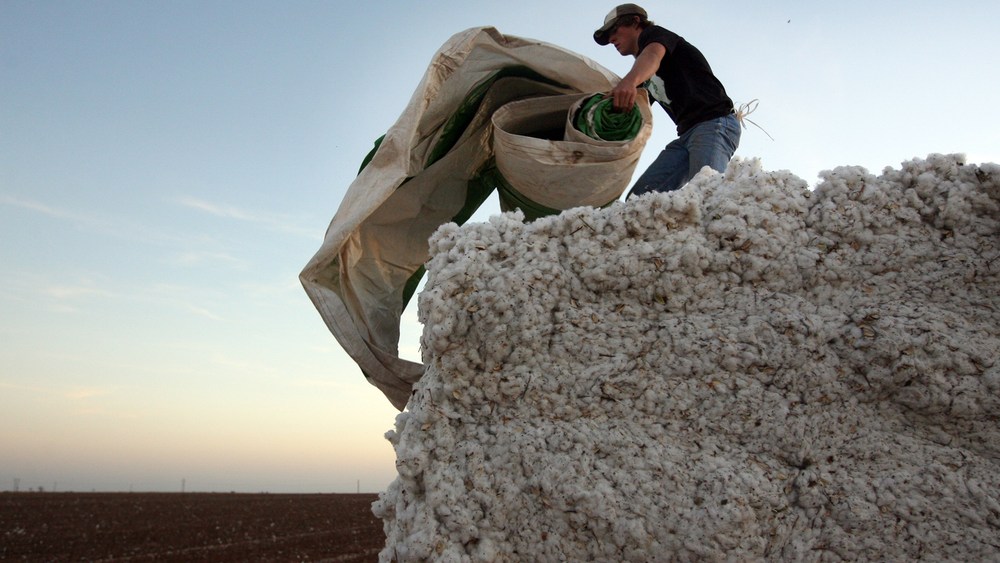
India will be suspending the 11 percent customs duty and agricultural cess on raw cotton imports in a move that is expected to grant some measure of relief to domestic textile and apparel manufacturers grappling with potential revenue loss from higher U.S. tariffs.
The exemption, which will take effect from Aug. 19 to Sept. 30, can also be seen as a temporary concession to American exporters who have been pushing for greater market access to the South Asian nation, whose falling cotton yields have lately turned it from a net exporter to a net importer of the fiber. The U.S. is India’s top supplier of cotton.
Related Articles
On Aug. 27, the Trump administration’s already-high 25 percent tariff on India is poised to double, ostensibly in protest of the country’s purchase of Russian oil. The Indian government was already working to address a previous White House complaint about a nearly $46 billion trade deficit by buying more energy and defense equipment from the U.S.
You May Also Like
The escalated rate — and the existential threat it poses to Indian businesses that risk losing orders to rivals in more favorably tariffed geographies, such as Bangladesh and Vietnam — has further complicated matters. The U.S. has been India’s largest overseas destination, accounting for nearly 29 percent of its textile and apparel exports, or nearly $10.3 billion worth, over the past year. Earlier this month, the Global Trade Research Initiative, a New Delhi-based think tank, said that an additional 50 percent duty could lead to a 40 to 50 percent decline in America-bound shipments.
Rakesh Mehra, chairman of the Confederation of Indian Textile Industry, or CITI, has called the tariff a “huge setback” to India’s competitiveness. CITI has also been calling for the removal of the import duty on cotton to help domestic cotton prices be more in line with international ones.
“It is our fervent appeal to the government to urgently take steps to come to the aid of India’s textile and apparel sector during these hugely testing times, given the government’s strong commitment to increase the competitiveness of local industry and help our companies become major players on the world stage,” Mehra said in a statement.
Mehra praised India’s recent free trade agreement with the U.K. as a “huge positive for India’s textile and apparel domain,” one that could help the country achieve its goal of reaching $100 billion in textile and apparel exports by 2030. He said he hoped to see a similar deal manifest with the U.S.
“A well-rounded [bilateral trade agreement] with the U.S., which takes proper care of India’s sovereign interests and is also fair and balanced, could be a win-win proposition for both nations,” Mehra added.