
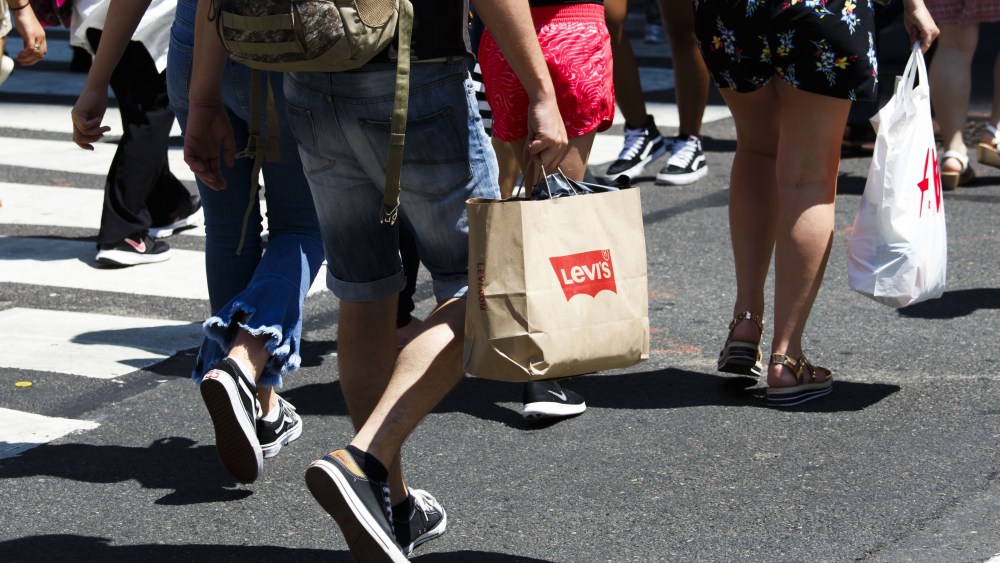
A “more-powerful-than-anticipated” consumer spending recovery helped drive the U.S. economy’s best performance in almost four years in the second quarter, but economists questioned how long it can last.
Official figures revealed that the world’s largest economy grew at an annualized pace of 4.1 percent between April and June, its fastest rate of expansion in four years and almost double the previous quarter’s 2.2 percent increase.
Consumption, which accounts for around three-quarters of the economy, was a big factor behind the better-than-expected numbers. Thanks to tax cuts and a strong jobs market, it grew by 4 percent, compared with a less impressive 0.5 percent rise in the previous quarter.
Related Articles
Brian Coulton, chief economist at Fitch Ratings, said: “While we always expected a bounce back in consumption, it was more powerful than anticipated and speaks to the impact of an increasingly tight labor market and strong job growth on consumer income and households’ confidence.”
You May Also Like
Business investment also played its part, up by 7.3 percent, although this was less strong than in the first three months of the year. Exports, meanwhile, rose by 9.3 percent, partly driven by some foreign buyers stockpiling American goods as the trade war heated up.
Economists attribute the increase in spending by consumers partly to trillion-dollar tax cuts implemented by the government, which boosted many disposable incomes, but cautioned that this is unlikely to be a theme through the rest of the year against a backdrop of rising interest rate and the ongoing trade war with China.
The U.S. Federal Reserve last month pushed up the target range for the federal funds rate to 2 percent from 1.75 percent, marking the seventh rate hike since the end of 2015 and indicated more are on their way as it weans consumers off years of financial crisis-induced easy monetary policies. It is expected to sit on its hands at its policy meeting next week, but two more rises are expected this year.
“Helped by the massive fiscal stimulus, the economy enjoyed a strong first half of this year but, as the stimulus fades and monetary policy becomes progressively tighter, we expect GDP growth to slow markedly from mid-2019 onwards,” said Paul Ashworth, chief U.S. economist at Capital Economics.
He is forecasting gross domestic product growth to slow from 2.9 percent this year to a more modest 2 percent in 2019, but warned that an escalation of trade tensions represents another downside risk to economic output.
The U.S. is gearing up to slap an additional 10 percent tariffs on a raft of Chinese imports, many consumer-facing, and has pledged to go even further if China provokes the White House. Until this week, the U.S. had also been battling the European Union on trade, but tensions have eased following a meeting between President Trump and European Commission President Jean-Claude Juncker.
This came as the University of Michigan’s closely watched consumer sentiment index dropped from 98.2 in June to a six-month low of 97.9 in June, raising concerns than confidence could be starting to falter after hitting a 14-year high this year.
Indeed, consumers were becoming increasingly nervous about the trade war, with 35 percent of households stating the tariffs would have a negative economic impact in July, up from 21 percent in June and 15 percent in May.
“Of course, these negative economic expectations could quickly disappear if the trade issues with Europe are promptly settled and immediately followed by agreements with China, Canada and Mexico. Resolution is critical to forestall decreases in consumer discretionary spending as a precaution against a worsening economy,” it said.