Updated 5:30 p.m. ET on July 23
PARIS — LVMH Moët Hennessy Louis Vuitton said net profit fell 22 percent in the first half as its key fashion and leather goods division missed expectations, underscoring the pressures faced by a host of incoming designers at the group’s key houses.
The branch, home to brands including Louis Vuitton, Dior and Celine, recorded a 9 percent drop in organic sales in the second quarter, below the Visible Alpha consensus forecast for a 7 percent decline.
Louis Vuitton continues to outperform other brands, while Dior remained below the division average, chief financial officer Cécile Cabanis told analysts and journalists on a webcast on Thursday.
However, she said the decline was due almost entirely to weakness in Asia, where there was a reversal of the yen weakness that significantly boosted tourist business in Japan at the same time last year.
Related Articles
Organic sales in Japan fell 28 percent year-on-year in the second quarter.
Cabanis saw flickers of improvement locally in China and touted an easier comparison basis for the coming quarter, though she conceded the Chinese economy is “probably not out of the woods yet.”
Operating profit for the fashion and leather goods division fell 18 percent in the first half, but the executive said the operating margin remained healthy at 34.7 percent.
You May Also Like

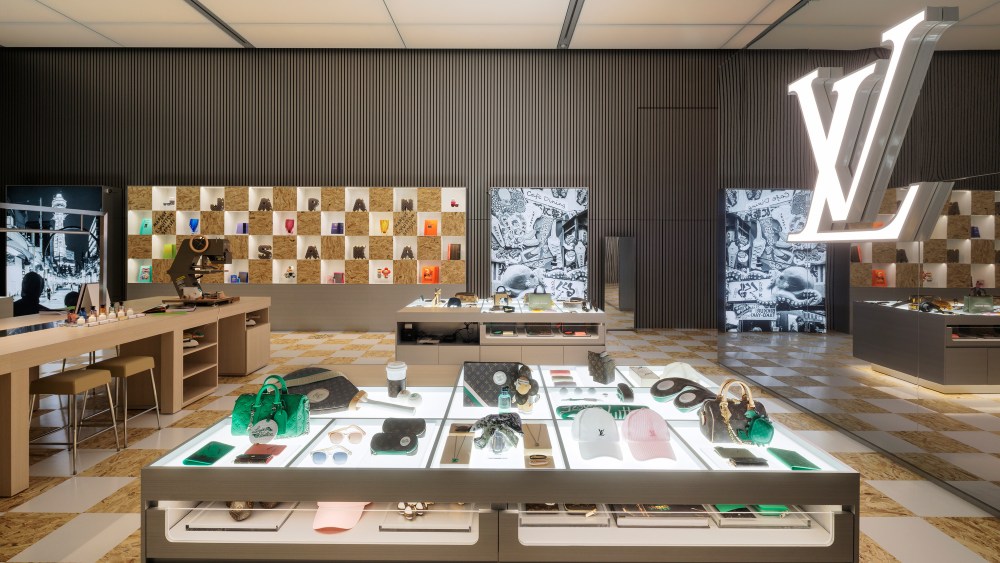
While LVMH continues to cap costs, it remains committed to investing in its brands, as evidenced by recent flagship openings for Louis Vuitton in Shanghai and Tiffany & Co. in Japan, and plans to open Dior boutiques in New York City and Beverly Hills in the second half.
The group is searching for efficiencies in areas like point of sale marketing for perfume and cosmetics, and fashion shows, where it is reviewing its contracts with external agencies, she said. It’s also closing underperforming doors.
“Our philosophy is very clear. We need to ensure that we invest what we need to invest behind growth, and we need to make sure that we are able to mitigate and maintain a high level of margins,” Cabanis said.
Group net profit totaled 5.70 billion euros in the first six months of 2025, while profit from recurring operations was down 15 percent to 9.01 billion euros, equating to an operating margin of 22.6 percent.
Overall revenues fell 7 percent to 19.50 billion euros in the three months to June 30, representing a decline of 4 percent in organic terms.
“This was definitely not a good set of results, but not disastrous either,” said Luca Solca, analyst at Bernstein.
A Perfect Storm
In terms of revenues, watches and jewelry performed slightly better than expected, with organic sales flat in the second quarter. Perfumes and cosmetics were in line with forecasts, rising 1 percent.
Wines and spirits beat consensus estimates with a 4 percent decline, while selective retailing also exceeded expectations, up 4 percent.
Analysts had hoped that fashion and leather goods would deliver a beat after encouraging results at sector peer Compagnie Financière Richemont, which reported a 6 percent rise in overall sales in the three months to June 30.
By contrast, LVMH is facing a perfect storm, with anemic demand for luxury goods, a strengthening euro and looming U.S. trade tariffs causing its share price to drop around 26 percent so far this year.
The macroeconomic issues have been compounded by a series of internal problems, including data breaches at Vuitton and Dior, and legal proceedings against Loro Piana over alleged worker exploitation in Italy.
Nonetheless, the industry bellwether expressed confidence in its prospects.
“LVMH showed solidity in the current context,” Bernard Arnault, chairman and chief executive officer of LVMH, said in a statement.
“Beyond the prevailing uncertainties, we remain focused thanks to the long-term vision that has always guided our family group,” he added. “We head into the second half of the year with great vigilance, and I am confident in LVMH’s tremendous long-term potential and the commitment of our teams to further reinforce the group’s leadership position in luxury goods.”
LVMH described Jonathan Anderson’s debut menswear collection for Dior, unveiled in June, as an “immense success,” with Cabanis noting the show garnered 1.1 billion views on social media.
Bernstein’s Solca has partly attributed LVMH’s woes to a series of price increases in the wake of the coronavirus pandemic, and called on the group to address “off-kilter pricing” at Dior.
Cabanis said the brand continues to see good traction on its D-Journey and Dior Toujours bags, and is riding the momentum leading up to Anderson’s first collections landing in stores next year.
“We are very confident both in terms of product [and] communication,” she said, noting that Anderson’s role as director of both women’s and men’s collections will ensure “full consistency on the brand vision.”
Meanwhile, the debut collections by Sarah Burton at Givenchy in March and Michael Rider at Celine earlier this month were “particularly well received,” the luxury group said.
Looking Ahead
LVMH is gearing up for more debuts, with Anderson set to show his first women’s collection for Dior on Oct. 1, and Jack McCollough and Lazaro Hernandez presenting their debut line for Loewe on Oct. 3, according to the preliminary calendar released by the Fédération de la Haute Couture et de la Mode on Thursday.
Cabanis said Vuitton continues to lead in many markets thanks to its innovative store concepts, like the Shanghai flagship, which is shaped like a life-size cruise ship.
“It’s unexpected. It’s something only Vuitton can do,” she said. “We are not going to do 400 of those, but there might be a few down the road.”
She added that the brand is sticking to its pricing strategy, which consists of delivering sophisticated products for its high-end clientele and introducing more accessible categories aimed as aspirational customers, such as a new cosmetics line developed by Pat McGrath, set to bow this fall.
“We don’t work on price segmentation — we are not Coca-Cola — but we are working on bringing the best product, and with that, making sure that the value that is in the product is recognized by our clients,” Cabanis said.
Regarding Loro Piana, she reiterated that the brand was unaware of the problems in its supply chain and was working to rectify the situation.
“This topic is beyond Loro Piana. It’s a topic that the full industry in Italy is facing, and it’s something that we will have all to manage collectively,” she said. “It shouldn’t create an impact on the [brand’s] image.”
Amid flat demand from the U.S. in the second quarter, LVMH is preparing to weather the impact of U.S. President Donald Trump’s threatened trade tariffs in a variety of ways, though Cabanis said its wines and spirits division had less leeway than fashion and leather goods.
The ongoing restructuring of Moët Hennessy is not expected to deliver results until the second half of 2026, she added. “We don’t expect any significant impact this year on that front, but we are very confident that the team has got the plan under control and is delivering,” Cabanis said.