
U.S. retail stocks bucked a down market and rose in early trading today.
The S&P 500 Retail Industry Group gained 1.1 percent to 1,078.86 shortly after the opening bell on Wall Street even as the Dow Jones Industrial Average fell 0.3 percent, or over 47 points, to 15,979.76.
Sears Holdings Corp. proved the retail rule, and its stock fell 3.1 percent to $16.22 after the company said its comparable-store sales fell 9.2 percent last year and that it would accelerate the closing of unprofitable doors.
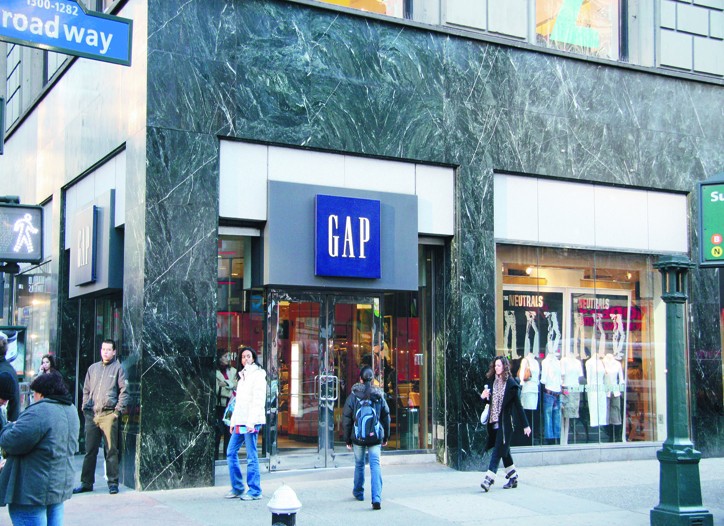
On the other hand, shares of Gap Inc. rose 2.9 percent to $24.68 after the company said earnings would come near the top of its expected range for the fourth quarter despite slipping sales.
Related Articles
Also among the early fashion-industry gainers were: Bebe Stores Inc., up 3 percent to 38 cents; Hanesbrands Inc., 2.7 percent to $24.46; Under Armour Inc., 2.7 percent to $74.50; Nike Inc. 1.5 percent to $55.87; L Brands Inc., 1.5 percent to $82.30, and TJX Companies Inc., 1.5 percent to $68.80.
You May Also Like
Traders, though, remain on a knife’s edge.
And analysts are starting to talk more about the possibility of a recession.
Cowen and Co.’s Oliver Chen issued a note to clients today titled, “Are We Going Into A Recession? If So, Consider These Retail Stocks.”
He was noncommittal on the R-word, noting, “We hope we’re not entering a recession.” But if an economic contraction comes, he suggested that, “stocks that appeal to the low-end consumer and have minimal global exposure appear well-suited to weather an economic downturn.”
The same is not true higher up the price scale.
“We note stock price movements of luxury stocks that appeal to the high-end consumer, significant exposure to apparel, and/or have greater international revenue exposure tend to underperform the S&P 500 the most during periods of economic slowdown,” he said.
In Tokyo, the Nikkei 225 fell 5.4 percent as traders worried over yields in the benchmark 10-year Japanese government bond. That, in effect, has investors paying to loan money to the government and has sparked broader economic concerns.
European markets were down anywhere from 1.6 percent to 3 percent.