
Rosenblum’s, a family-owned men’s and women’s business with two stores in Jacksonville, Fla., has been operating for 111 years. After a record-breaking 2007 followed by a slide last year, owner Bob Rosenblum is
hunkering down for a struggle.
His challenge is representative of the retail difficulties throughout the Southeast.
With sales off 12 percent in 2008, Rosenblum’s is eliminating lines that are sold in nearby department or outlet stores, including Hugo Boss, Tommy Bahama and Cole Haan, and replacing them with made-to-order custom men’s wear, and contemporary women’s lines such as Nanette Lapore, Trina Turk and Tory Burch. The retailer cut inventory by $500,000 last fall, and is ramping up customer service with more personal calls, and giveaways such as a $100 no-strings-attached gift certificate to its best customers.
Related Articles
“We’re not taking January shipments, just cleaning up inventory,” Rosenblum said. “We’re planning budgets 10 to 20 percent down, hoping for the best and planning for the worst.”
You May Also Like
With Florida among the epicenters of the recession, the pain in the Southeast also is being felt from the banking center of Charlotte, N.C., to the once booming Atlanta metropolitan area.
“The region overall reflects the national average, in job losses, wealth destruction, housing and credit problems,” said Mark Vitner, senior economist with Wachovia.
Economic conditions in Florida, the fourth most populous state with 17 million people, are the most serious in the Southeast and “the second worst in the nation” after California, said Jeff Humphries, economic forecaster at the University of Georgia’s Selig Center for Economic Growth.
The state’s jobless rate reached 8.1 percent in December, the highest level since September 1992. The population had been rising by an average of 418,000 annually from 2002 to 2006, but little change is predicted in the next few years, according to the University of Florida’s bureau of economic business and research.
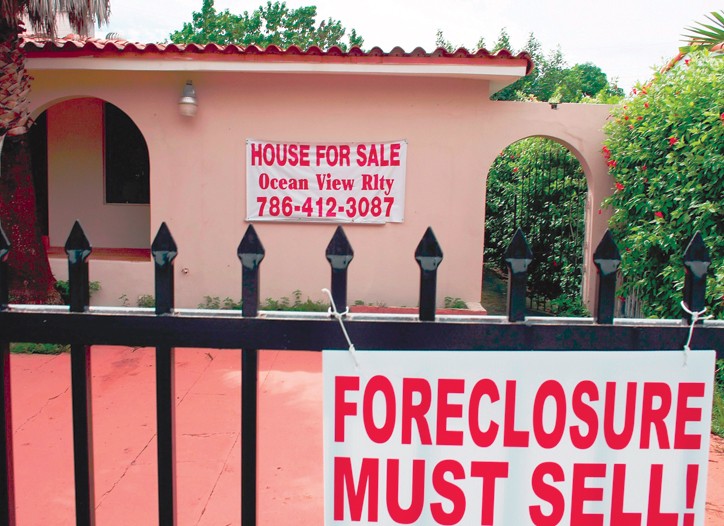
Commercial and residential development and speculation peaked in 2006 and began slowing in fall 2007, as the cost of living, property taxes and insurance skyrocketed. In 2008, new home construction fell 80 percent and home prices declined 30 percent. The bad news will continue through 2009, Humphries said.
The burst real estate bubble has been a key factor in curtailed consumer spending.
“Housing is to Florida as finance is to Wall Street,” said Cynthia Cohen, president of Strategic Mindshare, a Miami-based consulting firm.
International tourism had helped to buoy retail in vacation cities such as Miami and Orlando, but has tapered with the global financial crisis and a stronger dollar. Data from Visitflorida.org show a 3.2 percent decline in
visitors for third quarter 2008, compared with a 1.2 percent increase for the same period in 2007.
“Tourism and retail sales are down from last year,” Cohen said. “Luxury is soft and nobody is buying full-price anything.”
At Bal Harbour Shops, a luxury center north of Miami Beach anchored by Saks Fifth Avenue and Neiman Marcus, sales dropped 22 percent in October, after September’s peak of $2,161 a square foot, for non-department stores, said Matthew Lazenby, general partner. The 500,000-square-foot center had 2008
sales of more than $500 million, compared with $480 million in 2007. But in the last few months of the year, some stores posted sales declines as steep as 30 percent.
“We were booming through July,” Lazenby said. “Even in September, 15 tenants had double-digit increases.”
Lazenby said international tourism is off, and local customers are cautious.
Strategic Mindshare’s Cohen said some Florida cities, such as Jacksonville and Tampa, “with real companies and industries,” are not suffering as much as tourist-driven Miami, Orlando and Naples. Jacksonville is a
transportation hub with deep-water ports, railroads and pulp and paper manufacturing. Tampa has aerospace, medical technology and banking firms.
Nose for Clothes, a Miami-based women’s specialty chain with six south Florida stores and two in Atlanta, said the economic malaise is unprecedented.
“The old challenges that seemed so daunting pale by comparison to the past six to 12 months,” said chief executive officer Joe Falowitz.
The downturn began in November 2007, worsened with the credit crunch and “reached a new low” as the financial crisis erupted in October and November, he said. An annual 12 percent sales drop for the year ending Oct. 31 was augmented by 22 percent to 31 percent declines in the last months.
Nose for Clothes streamlined business, slashed inventory 35 percent, cut five of 15 employees and renegotiated deals with landlords. The downturn that started early in Florida stores is now just as bad in Atlanta.
Like Miami, Atlanta’s rapid development over the past decade, including major mixed-use projects and retail, is pulling back. Atlanta never had a real estate bubble or much speculative buying, but foreclosures have spiked.
Commercial development has in some cases stalled or been delayed by the credit squeeze, said economists Vitner and Humphries. Retail vacancies in the fourth quarter of 2008 were 9.1 percent, compared with 8.5 percent in the third quarter, according to CoStar Group Inc. a real estate research firm in Bethesda, Md.
Job losses are severe in Georgia, where the unemployment rate jumped to 8.1 percent in December from 7.5 percent in November, the highest level since 1983, according to the Georgia Department of Labor. This month, Macy’s Inc. said it will eliminate its Central Division in Atlanta, cutting 850 jobs.
Atlanta area retailers are feeling the impact.
“In 31 years of business, I’ve seen other recessions, but this one has so many ingredients, it’s the perfect storm,” said Julie Routenberg, owner of Potpourri, a women’s specialty store with two suburban Atlanta locations. “The decline has affected all businesses, as customers pull in the reins and are embarrassed to shop and spend money.”
Business is so difficult that “profit doesn’t exist, flat sales feel like gains and department stores are paying people to shop,” said Routenberg, noting that one customer came in with a $500 jacket bought at Saks for $57.
Routenberg slashed inventory by $200,000. She is adding lower-priced margin builders to her high-end sportswear, such as layering pieces and casual pants.
Buying with a sharper pencil, she faces the problem of manufacturer cutbacks, and a possible dearth of inventory for reorders if she doesn’t buy goods early.
For many Atlanta specialty stores, the economic crisis comes after a series of robberies over the past few years by gangs dubbed “Blue Jean Bandits,” that stole premium denim.
Blue Genes, a 7,500-square-foot boutique specializing in premium denim that has filed for bankruptcy amid declining sales and rising costs, was robbed six times, losing more than $200,000 wholesale in inventory, co-owner Jane Sims said. The robberies led to increased security and insurance costs.
Farshad Arshid, owner of Standard, a Midtown Atlanta contemporary men’s and women’s store, jumped at an opportunity to open in the upscale Lenox Square mall in November, after three robberies at his Midtown store over the past two years. With two stores now, the Lenox store has brought in 40 percent increase in new customers.
Fourth-quarter sales, however, dropped 12 percent, after overall increases of 8 to 10 percent until summer 2008. Arshid compared Atlanta’s consumer mind-set with the rest of the country, but added the frustration of a gas shortage and spiking prices in September, caused by Hurricane Ike.
“Since September and October, customers have changed,” he said. “The financial collapse, the election and more layoffs, the luxury spending guilt factor have all created a mood of ‘what’s next?’” he said.
Other parts of the Southeast, such as Charlotte, N.C., headquarters of Wachovia and Bank of America, are affected by banking and credit woes, but are buffered by a more stable housing market, said Wachovia’s Vitner.
“Charlotte has 300 financial firms, and potential cutbacks will have a significant impact, but Charlotte doesn’t have as many financial jobs as New York will lose,” he said.
Charlotte luxury retailer Capitol Boutique and The Poole Shop, reported a change in their designer customers’ shopping behavior.
“They aren’t buying the glitzy gowns, but looking for the versatile, long-lasting pieces that will fit into their wardrobe,” said Ruth Caldwell, senior buyer.
Other midsize cities, such as Nashville, Tenn., and Birmingham, Ala., have diverse economies that include recession-resistent industries such as health care and education, and are less severely challenged.
The Mall at Green Hills, anchored by Dillard’s and Macy’s, opened in Nashville in 1954 and has been on a luxury push since 2005, adding Tiffany and Louis Vuitton in 2006, the first Tennessee locations for each.
Nordstrom, scheduled to launch its first Tennessee location at Green Hills in October 2010 has delayed opening until 2011 because of the economic climate, said mall officials. One Nashville specialty store, The Cotton Mill, a 21-year-old boutique, is expanding. With three divisions — The Cotton Mill Collection, Nicole Miller and The Cotton Mill Lifestyle, all in one space in the Green Hills suburb — it is adding 2,000 square feet to its 7,000-square-foot store, with 18 new designers.
As for the gloom, particularly luxury, Bob Neimer, owner of The Cotton Mill, was philosophical.
“We opened on Black Friday in 1987,” he said. “There are three things to do in recession — retreat, maintain or grow. We’ve come this far by reinventing ourselves every five years. We’re choosing to grow.”