
Updated 5:09 p.m. ET April 8
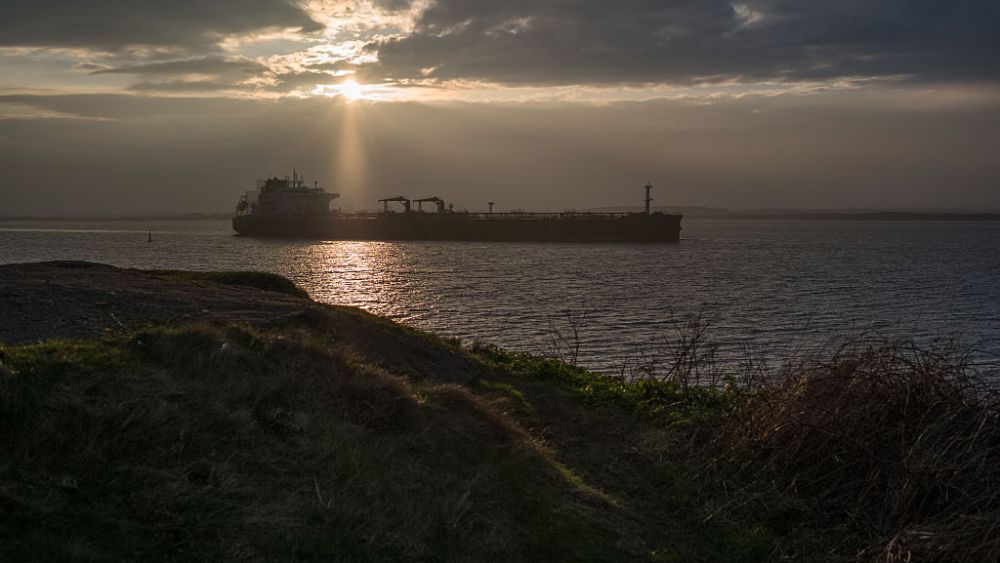
The world breathed a tentative sigh of relief — and stock markets went on a run — after a two-week ceasefire halted hostilities in Iran and started to reopen the Strait of Hormuz, a vital passageway for the global oil market.
The Dow Jones Industrial Average shot up 2.9 percent, or 1,325.46 points, to 47,909 on Wednesday. Markets were up more than 4 percent in Frankfurt and Paris, and ahead 3.7 percent in Milan and 2.5 percent in London.
Related Articles
In fashion, most of the biggest gains were seen in Europe, although Levi Strauss & Co. was buoyed as well by strong first-quarter results and saw its stock jump 10.7 percent to $21.82.
You May Also Like
The other big gainers included LuxExperience, up 9.5 percent to $8.56; Brunello Cucinelli, 8.2 percent to 80.78 euros; Burberry Group, 8 percent to 11.55 pounds; Compagnie Financière Richemont, 7.9 percent to 151.60 Swiss franc; Kering, 7.6 percent to 277.25 euros; Tapestry Inc., 7.4 percent to $150.57; Ralph Lauren Corp., 7.4 percent to $375.27; Hermès International, 7.3 percent to 1,768 euros, and LVMH Moët Hennessy Louis Vuitton, 6.9 percent to 498.85 euros.
The global tension broke after U.S. President Donald Trump backed away from his threat that “a whole civilization will die tonight” in Iran, which the U.S. and Israel attacked on Feb. 28 in an effort to defang its authoritarian government.
In a dramatic rhetorical shift, Trump posted to social media early Wednesday that it was “a big day for world peace!…There will be lots of positive action! Big money will be made. Iran can start the reconstruction process. We’ll be loading up with supplies of all kinds, and just ‘hangin’ around’ in order to make sure that everything goes well.”
While Trump relies on instincts honed in the dog-eat-dog, there’s-always-money-to-be-made world of New York real estate, everybody else has been left guessing.
The war with Iran has caused significant damage in the Middle East and jolted the global economy.
Oil and gasoline prices shot up around the world after the war started and have started to weigh on already inflation-weary consumers.
A gallon of regular in the U.S. is selling for an average of $4.16, an increase from $3.45 a month ago, according to AAA. That’s already hit consumer confidence, which fell 6 percent in March, according to University of Michigan’s Surveys of Consumers.
Already, the fashion industry was facing a long list of answered questions, from just what tariffs will cost to how to not get bested by AI.
Sonia Lapinsky, managing director and leader of fashion retail at AlixPartners, said even with the tensions easing and oil prices falling on Wednesday, the industry needs to stay sharp.
“When we think about how do [oil disruptions] affect fashion, we’re thinking about all of the product lines that are highly synthetics-driven that are going to be most compromised or at risk — performance gear is huge, fast fashion is huge, very low-cost apparel is often very polyester-driven. That’s still out there as uncertain for the near future.”
Shoppers have proven to be very resilient through all kinds of trouble lately, but Lapinsky said they can’t be “indefinitely resilient” as the world continues to change so fast.
“We’re going to see more of the story of winners and losers,” she said. “So what is it that the retailers, who are going to win, are going to do to really get [consumers] to let go? It’s got to be something that’s exciting and probably a little bit escapist and resonant.”
Even if the Strait of Hormuz stays open and war does not flare back up, it is expected to take months for the oil market to resettle and shipping to get back to normal.
Supply chain company Maersk showed optimism in response to the Pakistan-brokered ceasefire, but said it would not make any changes to specific services.
Visibility into cargo in the Persian Gulf is low for now, according to the ocean carrier, which is seeking further clarity on the ceasefire’s “very limited” details.
“The ceasefire may create transit opportunities, but it does not yet provide full maritime certainty, and we need to understand all potential conditions attached,” Maersk said in a customer advisory Wednesday. “The safety of our seafarers, vessels and cargo remains Maersk’s highest priority.”
And safety — the promise of it or at least a step back from talk of complete annihilation — was something Wall Street was eager to celebrate.
— With contributions from Glenn Taylor