Updated 5:57 p.m. GMT Feb. 13
LONDON — Unilever is expecting a “soft” start to the new year after reporting a 1.9 percent uptick in turnover to 60.8 billion euros in 2024.
The consumer giant, parent of brands including Dove, Vaseline and Paula’s Choice, reported underlying sales growth of 4.2 percent in the 12-month period, and a 10.8 percent drop in net profit to 6.4 billion euros.
The company said the decline in profit for the year was due to a loss on disposals and higher restructuring costs as a result of accelerating its productivity program.
You May Also Like
Related Articles
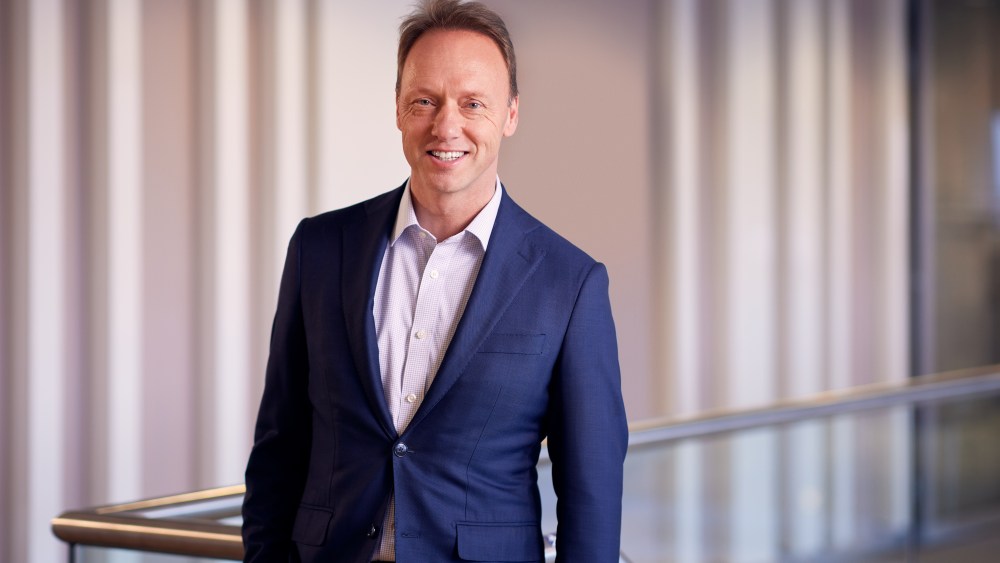
Unilever has been looking to slim down, sharpen its focus and streamline its operating structure. Hein Schumacher, chief executive officer, said the new strategy was beginning to bear fruit.
“We committed to doing fewer things, better and with greater impact. We executed the plan at pace and made progress in 2024,” Schumacher said.
“Fewer, bigger innovations helped to deliver volume growth consistently above 2 percent in each quarter. All business groups delivered positive volume growth for the year,” he added.
Schumacher said Unilver’s “power brands,” which account for more than 75 percent of turnover, led the growth, with particularly strong performances from Dove, Comfort, Vaseline and Liquid I.V.
He added that the separation of Unilever’s ice cream division, announced last year, was on track. On Thursday, Unilever named Jean-Francois van Boxmeer as chair designate for the demerged ice cream business.
Van Boxmeer is currently chair of Vodafone Group and non-executive director of Heineken Holding, having served as CEO of Heineken for 15 years.
Ice cream will be separated by way of a demerger, and the business will be listed in Amsterdam, London and New York, the same three exchanges on which Unilever shares are currently traded. The demerger is set to take place by the end of the year.
Looking ahead, Schumacher said that market growth, which slowed throughout 2024, is expected to remain soft in the first half of 2025.

“The steps we have taken in 2024, further reinvestment in our brands and strong innovation pipelines leave us better positioned to deliver on our ambitions in the years ahead,” he said.
Underlying sales growth for 2025 is set to land within Unilever’s multiyear range of 3 to 5 percent.
The company said it expects the market — and its own growth — to improve during the year as prices increase, reflecting higher commodity costs in 2025. The company said it’s expecting a more balanced split between volume and price.
In 2024, Unilever’s Beauty and Wellbeing division outperformed the company as a whole, with underlying sales up 6.5 percent in the 12 months, driven mainly by volume growth.
Unilever said growth in beauty and well-being reflected the “ongoing premiumization” of its core hair care and skin care portfolio and the continued strength of its prestige beauty and well-being portfolio, which together accounted for around 30 percent of turnover in the Beauty and Wellbeing division.
The company said it saw “strong performances” from power brands including Sunsilk, Dove, Vaseline, Ponds, Liquid I.V. and Nutrafol.
Dove, which represents around 40 percent of turnover in the personal care division, grew in the high-single digits with the successful launch of a new range of whole-body deodorants and a serum shower collection, using active face care ingredients in body wash formats.
Prestige beauty grew by a midsingle digit reflecting a slowdown in the U.S. beauty market. Hourglass and Tatcha grew in the double digits, while other brands, including Paula’s Choice, delivered low-single-digit growth.
Unilever said that one of its newest brands, K18, a premium biotech hair care brand, grew in the double digits and will be included in underlying sales growth from this month.
Wellbeing sales saw strong double-digit growth led by Liquid I.V., Nutrafol and Olly. Unilever said Liquid I.V. saw the continued success of its sugar-free variant and ongoing international expansion, entering seven new markets during 2024.
Nutrafol extended into skin care with a daily supplement designed to address acne, while Olly saw strong growth in China led by its female health supplements.
Analysts described the results as “solid,” although the markets weren’t as upbeat. The shares closed down 5.6 percent at 44.86 pounds due to the cautious outlook for the first half of 2025.
Danny Yeo Sze Wai, an analyst at CFRA Research, maintained his “buy” recommendation on the shares.
“We see evidence of strategic transformation, supported by Unilever’s focused investments in its power brands. We also see encouraging growth across all business units, reflecting strong internal controls over its winning portfolios,” he said.
Yeo warned, however, that Unilever’s comments on a softer first half “will likely unsettle sentiment,” despite a clear underlying sales growth target of 3 to 5 percent for full-year 2025.
Callum Elliott of Bernstein and James Edwardes Jones at RBC Capital Markets both described the results as “solid,” and in line with consensus estimates.