
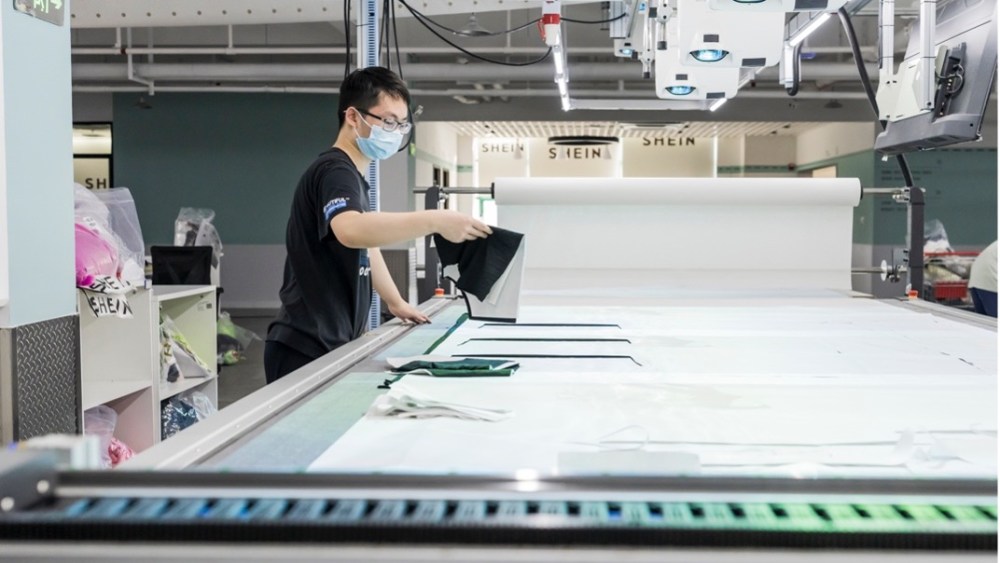
After the pandemic and during the current economic uncertainty, retailers are looking to invest heavily in relationships with their supply chains to create a better future. SHEIN, the global fashion and lifestyle e-commerce company, is leading the charge for a more reconceptualized approach for their business that stretches from design conception to the finished product.
During the “Agile Supply Chains: The Future of the Fashion Industry” webinar, executive vice chairman at SHEIN, Donald Tang, spoke on a panel with Divya Demato, the founder of GoodOps, and Veronique Yang, managing director and senior partner at Boston Consulting Group.
Related Articles
To set the stage for the session, the panelists cited a recent study from Boston Consulting Group, titled, “Agility Is Fashion’s New Source of Competitive Advantage.” The study looked at how the fashion industry can be more competitive by building a supply chain that is customer-orientated and puts in place end-to-end mechanisms for changes in demand. The BCG study discussed Shein’s supply chain model and digitalization capabilities to achieve supply chain agility.
You May Also Like
Furthermore, the BCG study highlighted three key avenues through which a company can become more agile. Firstly, the intelligent push, an archetype with a modern twist on the more traditional fashion model, utilizes digitization to give a more accurate landscape to better predict demand based on initial sell-through and make certain supply chain steps virtual. Secondly, the fast-fashion push strategically and rapidly adapts runway fashion trends for the everyday consumer. Lastly, the on-demand digital direct-to-consumer approaches small minimum order quantities of 100 to 200 pieces to test the market and replenish orders on demand to secure minimum stock levels and production waste.
To read the companion story to this article in Sourcing Journal, CLICK HERE.
Tang discussed how the company has adapted to the customer— especially amid changing demand. Customers want more options and at affordable price points. Tang has seen firsthand that “the battle for the hearts and minds of consumers” has intensified. To better adapt to customers’ changing demands, SHEIN has consistently employed small-batch initial order tactics. As the production process becomes more agile, it improves efficiency, leading to reduced deadstock and waste, as well as more affordable price points for customers.
Recent economic uncertainties are also impacting consumer behavior by making shoppers seek more affordability. “In a survey that we have done recently with our customers, 87 percent of the respondents have changed to more affordable options after noticing the cost of living has increased significantly,” Tang said.
As for the physical product itself, Yang sees a shift in how consumers are looking for more diverse and inclusive items from retailers. “They’re expecting more inclusive products that can cater to the needs of different ethnicity, culture, sizing and more as they are also expecting this product offering to come in a much faster way — as the fashion trends are diffusing much speedier fashion with the rise of social platforms.”
Fittingly, SHEIN’s mission is to “serve as a leader in the industry and bring fashion into the modern era.” One of the ways the company is achieving this is through the reimagining of the supply chain. All businesses witnessed firsthand the issues of not having a productive and good working relationship with their manufacturers during the pandemic.
Now in the “new normal,” despite Tang admitting that no one has the answers, SHEIN has led the way in maintaining close relationships with their manufacturing and supply chain partners. They helped digitize small and medium factories to help them see their own capacities more seamlessly and efficiently. Moreover, the factories have better liquidity because they are being paid faster by the retailer. According to the BCG study, SHEIN achieves an inventory turnover of around 40 days, significantly lower than the retail fashion industry average of 108 to 121 days between 2019 and 2021.
Demato labeled the SHEIN business model to be revolutionary as she believes that more companies will be adopting a similar model/method for their businesses after seeing the popularity with consumers and equal partnerships with their manufacturers and factories.
The traditional fashion production timeline for specific seasons and products typically takes about 12 months from design to putting out a finished product in retailers. But this timeline has now become vastly out of date, especially in today’s social media climate, and the Generation Z-focused retailers are seeking to capture.
“It was a very linear system before and I think that companies that are still operating linearly, will lose out and have continued to lose out,” Demato said. “In terms of how those traditional orders and seasons had been in for decades, just doesn’t work anymore in terms of meeting these needs of the consumer, especially in fashion.”
Demato noted that Gen Z is quite a different group than Millennials and Gen X. The Gen Z cohort grew up with technology in the palm of their hands and never had to wait for anything. Thus, their demands are much higher for fashion retailers.
One would assume these on-demand DTC systems would be more costly, but SHEIN has implemented digitization to streamline the process. Most of the costs associated with clothing production come from the fabrics. Tang notes the company has consolidated the fabrics through digitization, which helps cut costs significantly.
“What we see is digital really plays a role to help resolve these issues on the fabric side. It consolidates the fabric based on the market demand forecasts and they build online fabric digital platforms,” BCG’s Yang explains. “All the suppliers are pre-qualified, checked and consolidated. Their suppliers and manufacturers can directly place orders to all the fabric suppliers.”
Speaking on the changing of production lines, Yang said that digitalization helps streamline supply chain tasks and save time for suppliers. For example, an online fabric ordering database and order system makes it effortless for suppliers to carry out material preparation ahead of production.
Tang said that all these changes in the supply chain start with a philosophical change of mind. SHEIN is aiming to focus on on-demand agile manufacturing that minimizes waste. Through this approach, SHEIN can pass along those savings to the consumer.
To summarize SHEIN’s approach, Tang said, “If you find a way to do good while you are doing well, or do well, while are you doing good? That is a beautiful thing.”
To learn more about SHEIN, click here.