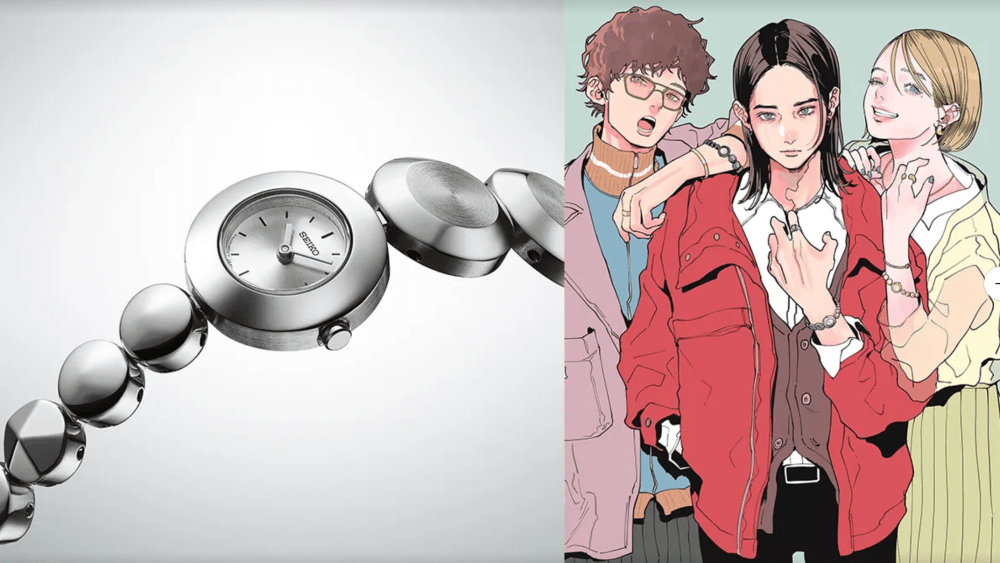
On Dec. 5, Seiko will launch its first collection of the Seiko power design project, a series that proposes new possibilities for wristwatches. Available in silver, black and gold tones, prices range from $344.00 (JPY50,600) to $381.00 (JPY56,100). Each version will be limited to 500 pieces, sold at Seiko boutiques and online store.
The power design project, launched in 2001 and continuing until 2009, was driven by Seiko’s in-house designers, who sought new ways to approach watchmaking with fresh perspectives. Revived in 2022 after a 13-year hiatus, the project has since showcased its creations mainly through exhibitions.
Related Articles
Now, for the first time, it is presenting a collection directly to end users.
What kind of timepieces has this initiative — born from reinterpreting Seiko’s past creations in a contemporary and fashionable way — brought forth? The story of this project, along with the words of its key figures, reveals the collection’s unique appeal.
Carrying Forward Seiko’s Legacy of Bold Challenges: The Power Design Project
Seiko began its business in 1881 with watch repair and sales. Eleven years later, it started manufacturing wall clocks. In the early Taisho era, when pocket watches were mainstream, the company anticipated the era of wristwatches, undertaking repeated research and prototyping. This led to the creation of Japan’s first wristwatch, Laurel, in 1913. For over a century, Seiko has continued to take on new challenges.
The power design project, launched in 2001, was originally an internal initiative that encouraged Seiko’s designers to step outside their usual perspectives and experiment with new ideas. Revived in 2022, the project found a new home at Seiko Seed, the brand’s gallery space in front of Harajuku Station in Tokyo. There, under a range of themes, the team explored the joy and creativity of wristwatches, presenting fresh, era-defining concepts to a wide audience that included end users. To mark the release of this collection, illustrator Nakaki Pantz — celebrated for whimsical yet powerful imagery that resonates with young audiences and for collaborations with leading fashion brands and ad campaigns — created the collection’s key visual.
“Collection 1” – Inspired by Rich Archives

The first exhibition following the project’s revival carried the theme Rebirth. For this, Seiko designers selected seven archival models and reimagined each through their own creative lens. From this showcase emerged collection 1, featuring a design by Yuya Suganuma.
Suganuma drew inspiration from a 1984 model in the Tissé line, one of the brand’s pioneering bracelet watches. Originally introduced as a delicate timepiece for women, he reinterpreted it as a versatile wristwatch suited for all genders, ages and occasions.
The design emphasizes unity and diversity through its details: a large 12 o’clock link that mirrors the case in size, asymmetric links on the 6 o’clock side that symbolize different values, and a multifaceted third link to add a touch of playfulness. For greater legibility and elegance, the dial features 12-hour markers instead of the original four, with mirror-polished hands tailored to each color variation.
A Design That Suits Any Occasion, Highlighting the Wearer’s Personality
Each color variation of the Seiko power design project collection 1 naturally blends with the wearer’s style, adding delicate accents of color. Preserving the original appeal of the Tissé as a bracelet watch, the design incorporates contemporary values and practicality, allowing the timepiece to bring out the individuality of its wearer.
Key Figures Discuss the Seiko Power Design Project
To mark the launch of collection 1, Suganuma sat down for a dialogue with Pantz to discuss the thoughts behind expressing diverse values in the design, as well as the ideas that inspired the visual concept.
“When upgrading a women’s watch into something more modern, I wanted it to be an accessory that could be worn freely, without restrictions of gender or age,” Suganuma said. “I struggled with how to move away from the perception of ‘a small, cute watch.’”
“When I was chosen to create the key visual for a collection that people of various generations will wear, I felt a real sense of mission. I designed three characters that would make viewers think: ‘I want to be like this person’ or ‘I’d like to wear the watch chosen by someone like this,’” concluded Pantz.
What kind of chemistry emerged from the creative exchange between these two key figures? The full transcript of their discussion is available on the official webpage of the Seiko power design project.