MILAN — Not unlike fashion, hospitality is experiencing a shortage of well-trained staff and managers that can meet the demand of sophisticated and needy clients.
This is particularly true in the luxury space, which according to a study by industry association Altagamma represents about 2 percent of all hospitality locations in the country but generates 25 percent of revenues for related activities.
To be sure, high-spending tourists coming to Italy are also those who shop for luxury brands, tap into fine dining experiences and buy into high-end services. Altagamma estimates that a luxury tourist spends ninefold what regular visitors do, in addition to luxury hospitality operators employing about double the number of workers per venue compared to other segments.
You May Also Like
Related Articles
“Tourism is a fundamental asset for Italy and a strategic lever to develop Made in Italy. Visitors of the country fall in love with our lifestyle, design, fashion, food and wines and this fuels exports of Made in Italy [products] in the world,” said Matteo Lunelli, chairman of Altagamma and president and chief executive officer of winemaker Ferrari Trento.
“Growing that [high-end] niche of excellent hospitality means that we can have an exponential effect on the country’s economy,” he said.
Hospitality is just another facet of the Made in Italy values and lifestyle. In sync with fashion and design, it requires the same focus on storytelling and brand-building that those sectors have come to fine tune and master so well.
“We believe that at the heart of Made in Italy excellence lies a manufacturing know-how, as much as Italian hospitality is an art created by people that are masters in this field. It must be safeguarded and passed down to younger generations, which need to be trained,” Lunelli said.
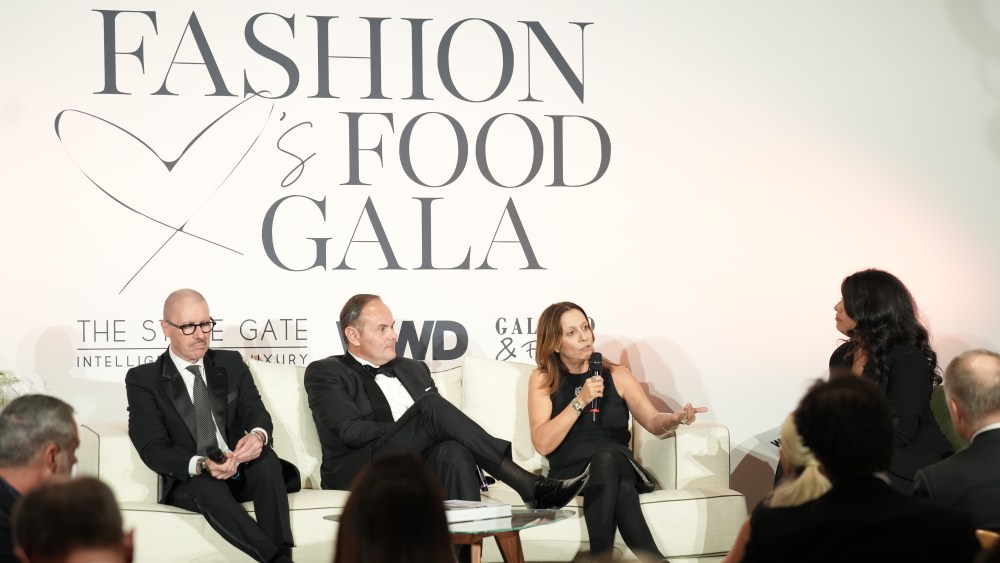
Speaking at the second edition of the Fashion Loves Food gala hosted by WWD with The Style Gate and Galateo and Friends in Milan last week, Lunelli shared the stage with Stefania Valenti, managing director of business school Istituto Marangoni, and Christophe Mercier, the school’s luxury hospitality leader and adviser.
Known for its experience in training professionals in the fashion, art and design space, Istituto Marangoni is gearing up to debut its first two post-graduate master’s degrees in hospitality. Courses in fashion luxury and brand management for hospitality and luxury hospitality and customer experience management will bow in 2025 at the school’s Milan and Paris units, respectively.

Valenti believes that the educational method implemented by Istituto Marangoni over the past almost 90 years can easily be transferred to other fields and industries.
The recent developments in the field of hospitality stemmed from the evidence that students from Swiss hospitality schools attended master courses in fashion, luxury and brand management at Istituto Marangoni. When one of those schools came knocking at the door looking for synergies, Valentini and the school’s team realized they could expand into that sector alone, aiming to provide their students with an education that benefits from the school’s cross-pollination of art, design and fashion.
“I realized that [other schools] missed the brand building sensibility, the ability to teach [students about] the customer experience…the ability to [teach how to] welcome customers, to do storytelling on the heritage of a brand. These things are probably not taught at other schools, while we do,” she said.
The executive believes that next-gen professionals in the hospitality sphere should be experts in customer care, big data and AI-powered profiling, event organization, brand building and overall should be “cross-skilled managers who are able to meet the needs of a high spending clientele,” she said.
According to Altagamma’s Lunelli, the luxury and high-end sectors that the association represents will be lacking 276,000 workers across roles by 2028, of which 32,000 would be in hospitality.
“There is an asymmetry between supply and demand,” he said. “Hospitality is a fundamental asset for our country and in order to grow it, we will need young people to become masters in that field. On the one side it’s important to train them, on the other it’s necessary to fuel their aspirations and draw the youngsters toward these jobs,” Lunelli said.
Through the “Altagamma Adotta Una Scuola,” or “Adopt a School” in English, the association is promoting tie-ups between brands and educational institutes to create academic programs tailored to the companies’ needs. “This also persuades [the students’] families because a brand brings about reputation, making the educational journey more attractive,” Lunelli said.
Delving into Istituto Marangoni’s hospitality education offering, Mercier echoed the other speakers’ sentiment, highlighting how the “bridge between fashion and hospitality has become very short.”
“There is an ecosystem missing that needs to be developed to answer demand and necessities. We need to create the specialists, the artisans of hospitality, no longer just generic professionals,” he said, detailing how trained hospitality staffers need to develop a sensibility for adjacent industries such as design and “knowledge of the language specific to the field and also the finesse to understand it.”
“Hospitality is an art deeply ingrained in Italy, rooted in our culture, but it’s a matter of educating professionals and fueling their vocations,” Lunelli agreed.
“In a country that often talks about the risks associated with over tourism we need to bank on the relaunch of touristic flows and a higher-end repositioning,” he said. “In order to do all of this, we need to fill these hospitality venues with young people who are adequately trained and able to offer an appropriate service to clients that become increasingly demanding and sophisticated.”