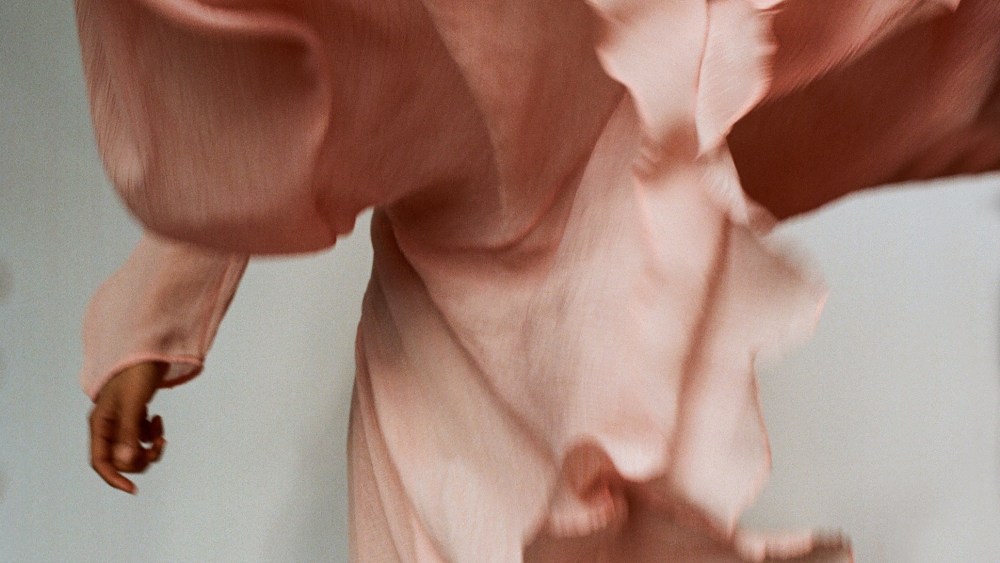
The eco-conscious clamor for fashionably functional solutions in the luxury space has given way to higher expectations across sustainably made processes and products. And fiber producer Lenzing’s TENCEL™ LUXE – a unique lyocell filament yarn of botanic origin created specially for the premium and luxury markets as a sustainably produced and botanical alternative to silk – continues to widen its reach, seeing enduring expansion on the horizon.
Vineet Singhal, Vice President Global Business Unit Noble Fibers at Lenzing AG, said that as the brand witnesses a seismic shift toward sustainability and growing demand in sustainable solutions for filament, it “also sees growing demand of TENCEL™ LUXE branded lyocell filament yarn from diverse market segments for various applications. We believe at scale, TENCEL™ LUXE will become a game changer in the fashion industry, which is looking for truly sustainable yet highly functional solution, especially in the filament yarn space.”
Related Articles
Singhal added that it was an important step to add TENCEL™ LUXE to the company’s portfolio of fibers under the TENCEL™ brand, as it is a filament “backed by sustainability, science, and savoir-faire, that appeals to elegance and sophistication without compromising on environmental impact” – and it goes much further than “just being an alternative for silk.”
To date, TENCEL™ LUXE has appeared in collections by designers such as Italian sustainability ambassador Flavia La Rocca; multi-disciplinary artist Osman Yousefzada at London Fashion Week; eco-couture house PEET DULLAERT, which recently celebrated its 10th anniversary during Paris Couture Week; luxury Indian traditional wear designer JJ Valaya, who launched his new bridge-to-luxury brand JJV using TENCEL™ LUXE material; and TANEIRA, a TATA group Indian traditional wear brand that launched a co-branded sarees collection with TENCEL™ LUXE.
Here, Lenzing talks to Fairchild Studio about the development of TENCEL™ LUXE, its differentiation in the market, and evolution of the sustainable luxury sector.
FAIRCHILD STUDIO: Tell us about TENCEL™ LUXE. What inspired the development of this yarn?
Vineet Singhal: The global fashion industry consumes more filament yarn than staple fiber yarn to capture better aesthetics and functionality. However, most filament yarns in the market are derived from oil and thus not biodegradable. Non-oil-based filament yarns don’t offer the full functionality that is needed by discerning consumers, and most do not employ sustainable manufacturing practices.
As a leader in sustainable innovations, Lenzing took responsibility to develop a truly sustainable yet highly functional filament yarn. We have been building on the versatility of our lyocell filament yarn and are expanding to a wide range of applications for activewear and intimates.

FAIRCHILD STUDIO: How is TENCEL™ LUXE differentiated from comparable yarns in the market?
V.S.: TENCEL™ LUXE is produced as a continuous parallel yarn using Lenzing’s innovative Eco-Filament technology. Designed for sensuality, yet engineered for environmental consciousness, TENCEL™ LUXE branded lyocell fibers is derived from wood pulp and produced in a closed-looped process, which helps to ensure minimal environmental impact, reducing the amount of water, energy and raw material required to produce a garment. TENCEL™ LUXE filament yarn has also been registered with The Vegan Society. Its botanic origin and ability to fully revert back to nature means it follows the cycle “From Nature to Skin to Nature”.
We’ve taken care to ensure that the filaments are highly versatile and can be used for a diverse range of applications across multiple segments spanning from couture pieces, all the way to activewear, intimates, denim, shirting, bridal wear, traditional wear, agriculture—the possibilities are endless. Fabrics made using TENCEL™ LUXE filament yarn drapes beautifully and contributes to breathability of fabrics and has the added benefit of feeling soft, cool, and airy on the skin.
In comparison, most of the filament yarn in the market are either non-biodegradable or lack full functionality and/or impact our planet negatively.
FAIRCHILD STUDIO: How would you describe the eco-luxury fashion market? How has it evolved in recent years as more brands prioritize sustainability?
V.S.: Sustainability has always been at the core of luxury fashion. The origins of couture, for example, sits at the opposite spectrum of ready-to-wear, where garments are made to order, last due to exceptional quality and stay in one’s wardrobe thanks to its emotional value. Nowadays, the luxury market has only further evolved to make sustainability the norm, also in ready to wear collections.
An important driver: Growth in the luxury segment is increasingly being driven by younger consumers, who aren’t willing to compromise when it comes to sustainability. In our recent 2022 Textile Brand Performance Study conducted with Nielsen, 57 percent of consumers in the markets we surveyed rate eco-friendly materials as a very important or a key factor in their purchase decision making.
FAIRCHILD STUDIO: What’s next for TENCEL™ LUXE?
V.S.: In the pipeline for this year, TENCEL™ LUXE will continue its collaborations with Dutch cult design duo Viktor & Rolf, who are using exclusive TENCEL™ LUXE fabric developments for their haute couture and bridal collections, conscious luxury brand Bav Tailor, and Vogue UK’s “One to Watch” Anciela, whilst expanding its partnership portfolio through collaborations with brands including Deepika Govind and Safaa. TENCEL™ LUXE was also recently showcased in an exciting new collaboration with Patrick Mcdowell at London Fashion Week.
But as I mentioned, consumers today demand high quality, great aesthetics, and transparent, planet friendly garments in almost all segments and markets. As a result of rising consumer demand, we are not just focusing on one category. Expect to see TENCEL™ LUXE working with brands in the categories of haute couture, bridal wear, ready-to-wear, denim, shirting, active wear, traditional wear, and intimates, etc. – as we expand our footprint even further.