Founded nearly 160 years ago, IWC Schaffhausen continues to be a leading luxury watchmaker. In celebration of 90 years of Pilot watches, the heritage Swiss brand is marking the occasion with launches.
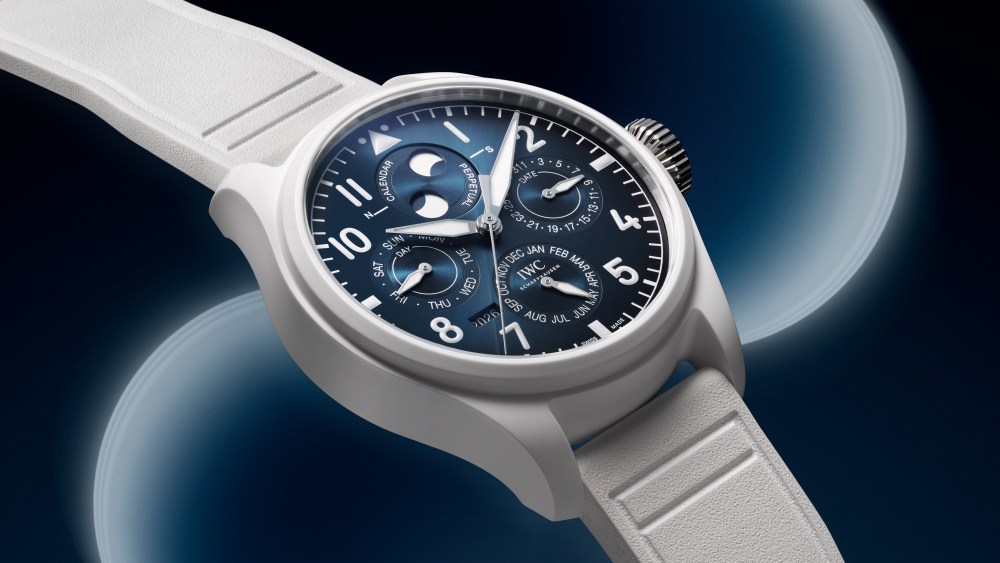
IWC is also celebrating two decades of partnership with the descendants of Antoine de Saint-Exupéry and his popular novel “The Little Prince”; the watchmakers are launching the new Le Petit Prince collection. The 18-karat 5N gold, white ceramic and stainless steel design editions all have a signature deep-blue dial with a sunray finish and Little Prince motifs on the back of their cases.
Related Articles
Christian Knoop, chief design officer at IWC, told Fairchild Studio that one of the standout pieces shown at the Watches and Wonders 2026 event from the collection is the Perpetual Calendar ProSet. This is the first perpetual calendar whose displays and its moon phase can be adjusted both forward and backward through a single crown position.

“The Le Petit Prince collection is dedicated to Antoine de Saint-Exupéry’s timeless story of exploration,” explained Knoop. “Our partnership with the heirs of Antoine de Saint-Exupéry, now in its 20th year, has always embodied a different dimension of that legacy — the humanistic and emotional side of aviation, as expressed in Saint-Exupéry’s writing.”
Marking this momentous milestone of crafting Pilot watches, IWC is taking its purpose-built instruments beyond the sky and into space. The Pilot’s Venturer Vertical Drive was crafted specifically for human spaceflight, tested and verified by the company’s partner Vast.
With its patent-pending rotating bezel system to replace the crown, it allows astronauts to operate the watch functions while wearing the pressurized space suits’ gloves. Moreover, its 24-hour display also tracks mission time in a Coordinated Universal Time/Greenwich Mean Time format, which is essential for life on the space stations.
“IWC has been engineering Pilot’s Watches since 1936 — purpose-built instruments for those who push beyond the horizon. The Venturer Vertical Drive is the natural next step: not an adaptation of an existing design, but a watch engineered from the ground up for the unique demands of modern human spaceflight, extending that 90-year aviation legacy into the future,” concluded Knoop.
To learn more, visit IWC.com.