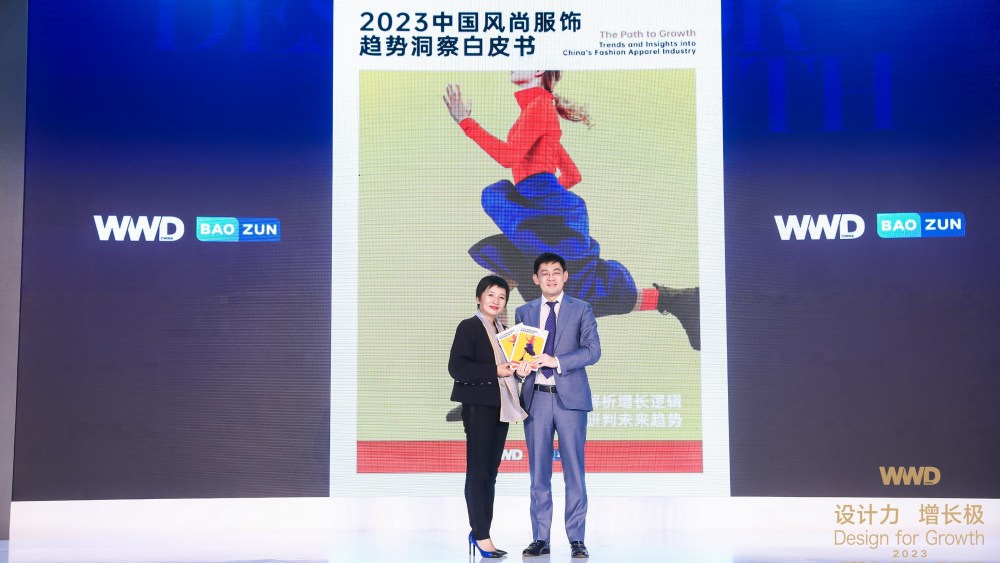
Amid the fervor of global fashion weeks, the WWD CEO Summit in Shanghai spotlighted apparel—the broader fashion industry’s crown jewel. At this event, WWD China and Baozun Inc. introduced their co-authored white paper: “The Path to Growth: 2023 Trends and Insights into China’s Fashion Apparel Industry.” This collaborative piece, rich with insights for online apparel ventures, saw Arthur Yu, President of Baozun E-Commerce, delineating the future trajectory of the apparel domain.
Following Paris and Milan Fashion Weeks, Shanghai’s Spring/Summer 2024 Fashion Week, themed “Interlinking Vitality,” commenced on Oct. 8. With nearly 100 product debuts from top global brands, it provided a pivotal glimpse into China’s dynamic apparel scene.
Related Articles
In the evolving digital economy, consumer preferences lean towards personalization and diversity. Over the next decade, China’s apparel sector anticipates “mild growth with elevated quality,” spotlighting specialized niches and a thriving mid-to-high-end market.
As a digital economy pioneer, China witnessed technology amplifying online and offline retail harmony. Emphasizing environmental conservation and women’s empowerment reshapes fashion narratives. This presents not only a clear roadmap for China’s apparel world but also charts a course for global brands in China, promoting tech integration for seamless operations and sustainable, quality growth.

WWD China’s inaugural CEO Summit, coinciding with major global fashion weeks, took place in Shanghai on Sept. 27. At the summit, e-commerce trailblazer Baozun and WWD China co-released “The Path to Growth: 2023 Trends and Insights into China’s Fashion Apparel Industry.” This comprehensive guide highlighted around thirty standout brand cases, diving deep into the apparel industry’s leading five trends which will help guide brands toward future growth.
Please CLICK HERE to read the white paper.
Digital Age Opportunities: Navigating Apparel Industry Trends
A vanguard in brand e-commerce, Baozun has long guided brands through digital transformation. With a holistic e-commerce solution powered by data and tech-driven consumer insights and product development, Baozun boasts a clientele of over 400 esteemed global and local brands.
In 2023, Baozun, in collaboration with WWD China, introduced this white paper, offering sharp insights and strategies to fortify brands’ digital age competitiveness.
This white paper delves into the apparel industry’s landscape, addressing challenges and opportunities presented by macroeconomic factors, consumer market shifts, and the convergence of online and offline realms. Drawing from a rich array of brand case studies, it illuminates the industry’s pulse —highlighting aspects like consumer demographics, pricing strategies, and evolving marketing channels. Five pivotal trends are spotlighted: “Full-Price Strategy,” “Online/Offline Integration,” “Omnichannel Fine-Grained Operations,” “Creative Livestreaming” and “The New People-Product-Place Operation Model.” Amidst a fluid market, the paper prescribes strategies for the apparel sector’s forward march, spotlighting 17 industry hurdles — from brand marketing to supply chain intricacies — and offering a suite of practical solutions.
The white paper spotlights the successes of 2023, highlighting brands like Nike, Gap, Hoka, Ugg, Anine Bing, Comme Moi, Lululemon, Uniqlo, Crush Collection, AllSaints, Arket and others. It provides a panoramic view of China’s apparel industry’s current pulse and the nuances of target consumer groups. Examples include Arc’teryx’s emphasis on premium experiences, Nike’s adeptness in engaging the youth, and Anine Bing’s strategies driving its positive brand evolution. Through collaboration, the white paper illustrates how brands carve their niches and foster deep consumer relationships in shifting markets.
In the last decade, China’s burgeoning e-commerce landscape welcomed a succession of international brands. But as the dividends of this era wane, where should brands pivot for sustained growth? With its global lens, this white paper melds visionary trend analysis with hands-on operational insights. It stands as a beacon for local and global brands crafting strategies for the Chinese market.
President of Baozun E-Commerce Dissects Future Hurdles & Growth Avenues in Apparel
With the white paper’s impactful launch in China’s apparel sphere, Lena Yang, WWD China’s co-founder and vice chairman, initiated a conversation with Arthur Yu, President of Baozun E-Commerce. They delved into the complex challenges confronting China’s apparel sector through the lens of consumer behaviors, emerging trends, and sustainability. Their discourse further pivoted on pinpointing strategies, enabling brands to harness upcoming growth opportunities.
Arthur Yu of Baozun E-Commerce remarked, “Post-pandemic 2023 witnessed China’s apparel sector grow by 11 percent, becoming a rare industry boasting double-digit growth. This swift growth brought heightened challenges, stemming from a shifting industry landscape and channels.”
Arthur highlighted the multifaceted challenges ahead: Gen Z’s ascendancy as the apparel sector’s primary growth driver, a shift in consumer leanings toward emotional and experiential engagements, and supply chain complexities. He emphasized that brands would need to harness the potential of the mid-to-high-end market, employing data-centric methods and fortifying operational strategies. This significant shift, he posited, isn’t arbitrary but driven by deep market forces.
Arthur pinpointed two leading trends: “Consumers are transitioning from purely functional to a more personalized shopping mindset. Moreover, Gen Z has emerged as the vital catalyst propelling the apparel industry’s expansion.”
As the apparel sector gravitates toward a blended online/offline model and the rise of e-commerce 3.0, Arthur suggests brands intensify their DTC tactics and hone omni-channel operation to achieve seamless customer experience and maximize ROI. In his view, today’s retail scenario underscores two primary transformations: the homogenization and integration of online and offline platforms.
In response to these challenges, Arthur outlined two pivotal strategies. He emphasized intertwining omnichannel methodologies with online-offline integration. Furthermore, he noted the growing consumer inclination towards consistent experiences, asserting that customers seek uniformity in experience and treatment whether they shop online or offline.
Anticipating 2024, the Chinese apparel market is poised for novel opportunities. These arise from post-millennial needs, shifting consumption trends—especially among women in premium cities—and the promise of nascent niche brands. The adeptness in leveraging these elements will determine a brand’s ability to seize forthcoming growth.
Nearing 2024, Arthur highlighted Baozun’s focus areas: “In the upcoming year, we’re zeroing in on three central themes. One is the evolving demographics, trailed by emerging scenarios. Platforms like Douyin (the Chinese version of TikTok) and Xiaohongshu (known as Red) have notably surged this year and have shown great potential following the success of platforms like Tmall, JD.com and Tencent. We’re attentive to the next major platforms poised to rise. Additionally, brands. Which of our existing brands can excel? Which new brands can emerge in this vast Chinese market? These are all directions that we are paying close attention to.
Advanced technology empowers brands to fluidly meld online and offline channels, optimizing coordination among people, products, and locations. This synergy boosts efficiency and quality in facets like customer service, visuals, product range, and operations—catalyzing digital brand evolution. For Arthur, technology isn’t just an instrument. He asserts, “Technology isn’t merely an asset; it’s pivotal to a brand’s transformative journey.”
Set against technology’s “hard power”, the “soft power” derived from embracing a green ecosystem, unwavering social responsibility, and meticulous corporate governance ensure enduring industry prominence. Arthur views this not as a momentary shift but a visionary move to secure lasting stability.
On sustainability, Arthur emphasized, “our dedication to sustainable growth is steadfast. We initiated our ESG journey three years ago, aspiring for notable advancements in the sector.”
The fashion sector’s consensus is unmistakable: China remains a fertile ground for global fashion in the upcoming decade. Against a recovering macroeconomic backdrop, apparel leaders must grasp current opportunities, discern digital and consumer shifts, champion innovations, and craft varied strategies to ensure a competitive edge.
Beyond the white paper’s joint release by digital pioneer Baozun and WWD China, both entities hint at deeper collaborations, shaping a novel “China Model” guiding the apparel industry toward high-end evolution.
Please CLICK HERE to read the white paper.