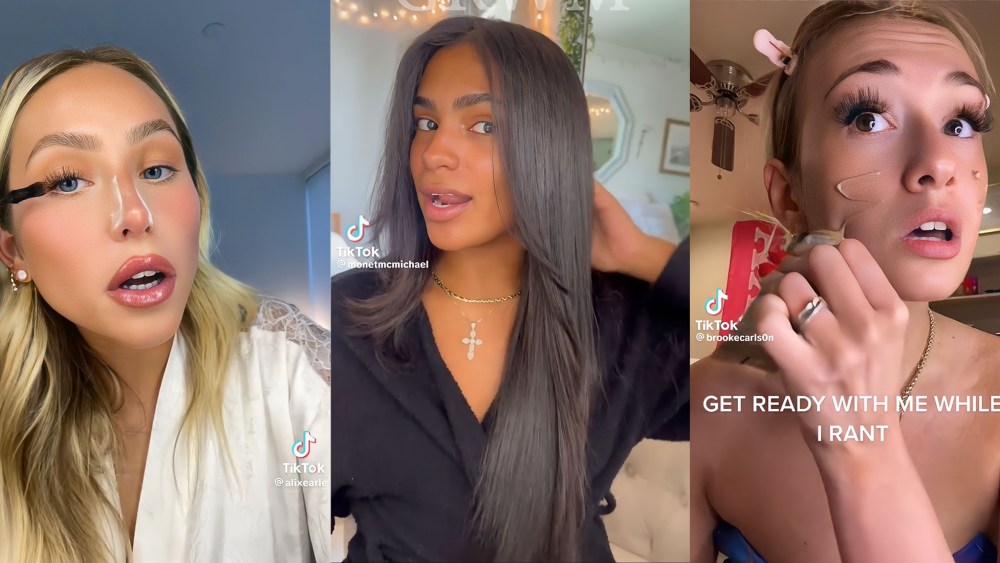
In a digital beauty landscape often defined by short-lived movements and passing trends, the “Get Ready With Me” video — commonly abbreviated to “GRWM” — has found unique longevity.
The pared-back video style was pioneered by beauty influencers including Michelle Phan, Jaclyn Hill and Jackie Aina in the early 2010s on YouTube, offering audiences a chattier and lengthier alternative to the straightforward makeup tutorials that dominated the space at the time.
“‘Get Ready With Me’ was not a term I heard until I had been on YouTube for several years — really, I was just talking to a camera and doing my makeup,” said Jaclyn Hill, a former MAC Cosmetics makeup artist who shot to YouTube fame in 2012 thanks to her warm personality and celebrity-inspired makeup tutorials, and now helms a namesake makeup line under Forma Brands.
Related Articles

One of Hill’s earliest viral uploads was a Kim Kardashian-inspired makeup tutorial, and, four years later, Hill united with Kardashian for a joint GRWM to promote the then-new (now defunct) KKW Beauty line in 2017.
“A ‘Get Ready With Me’ lets the audience know it’s more of a chill, real lifestyle video, as opposed to a teaching video; the purpose of it is to feel like you’re getting ready with a friend,” Hill said.
The video style’s impromptu, first-draft feel has lended itself easily to TikTok, a platform less conducive to the kind of overtly polished and aspirational content that thrives on Instagram and, to a lesser extent, YouTube.
And the rise of short-form video has only widened the parameters of the GRWM — in fact, Spate reports that U.S. Google searches for “GRWM” peaked just this past February, reaching 149,300 monthly searches and seeing a 185.1 percent year-over-year increase in volume. BeautyTok heavy hitters like Alix Earle, Monet McMichael and Meredith Duxbury are among those propelling the trend to new heights.
“My approach to content creation has definitely changed over the years — the more I spoke and shared my life with [my audience], the more traction my videos got,” said 22-year-old Earle, who recently graduated from The University of Miami and rose to “It” girl status last year, drawing viewers from around the world thanks in part to her on-camera vulnerability.
“When I start filming a [GRWM] video, I know the concept of what I’m going to be talking about; aside from that, each and every talking point is just what naturally comes to mind,” said Earle, echoing Hill’s sentiment about speaking to her community, rather than at them.
Beyond the run-of-the-mill “GRWM for class/work/to go out” videos, TikTok creators of all following sizes are routinely uploading increasingly personal iterations. “GRWM — Nan’s Funeral,” reads one thumbnail of a recent viral upload by TikTok user @mollypashbymua; others by different creators depict getting ready to break up with a significant other; getting ready while detailing a recent medical diagnosis, discussing heartbreak, and other personal topics.
“So many people have grown up with this being the norm — talking into a camera and sharing your feelings and your day; it has become very normal,” said Alyssa Mancao, a therapist who operates a Santa Monica-based practice and specializes in anxiety, depression and relationships.
“There’s less of a stigma now around disclosing what you’re going through; if it feels like someone is sharing something deep, vulnerable — maybe even oversharing — it’s probably because they’re looking for people who can relate to their story,” Mancao said.
Of course, shock factor plays a role in boosting visibility, which Mancao pointed out may prompt users to exaggerate or divulge certain details. Despite this, the GRWM has only grown in cultural relevance, catapulting some creators to seeming overnight popularity and offering a sense of community to Gen Z consumers, who comprise the loneliest generation and are increasingly seeking connection and community wherever they can find it — even if it’s through a screen.