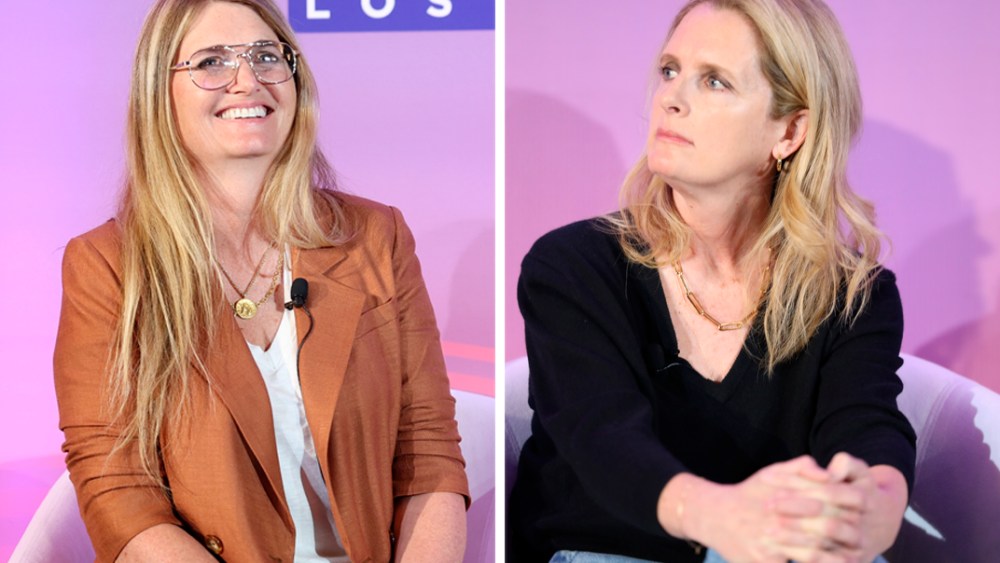
For Brook Harvey-Taylor, prioritizing safer beauty isn’t a marketing line. As the chief executive officer and founder of Pacifica Beauty said, the sensibility runs deep, going all the way back to her Montana upbringing.
“I grew up on a cattle ranch, and I spent a lot of time in nature really understanding the connectivity between animals and the planet, and plants,” she said. “I love nature and the fragility of it, also, and as I was growing up, I always had this vision that I would do something with healing that had to do with nature. So that drove me to think about creating a product that was in service of healing.”
Related Articles

In her mind’s eye, the term was more encompassing than human health or wellness. Growing up on a ranch gave her respect for animals, she said, drawing her to veganism. That’s why, for 27 years, Pacifica Beauty has been 100 percent vegan and cruelty-free. It was a sort of healing for the planet, connection with animals and more.
For Credo cofounder Annie Jackson, her early beginnings at the Esteé Lauder Cos. and work on the founding team at Sephora in the U.S. gave her a deep understanding of how the beauty sector works. The challenges of launching a new, untested business had her looking into indie brands, and the effort imbued her with different perspectives about beauty.
“With Credo, we really felt an opportunity to have this intersection of, ‘Could you make a more sustainable brand that was primarily natural, and have it be just as efficacious and have the same packaging, components and experience that people want out of conventional beauty, but have it be primarily natural?’” she said.
Clean beauty has always been a somewhat vague nomenclature, with brands applying the term to the use of naturally occurring actives, organically certified ingredients or simply anything that wasn’t grown in a lab. Meanwhile, other brands are fine with some select use of synthetics. It’s a confusing scenario — but that only makes it more important for companies to clearly define what it means for their brands.
“Our constant has always been that our core value is compassion, so that’s the lens that we see everything through,” said Harvey-Taylor. “It’s not [just] clean; it’s not ingredients. It’s this bigger compassion story that we now have coined ‘compassionism.’ Clean is just a piece of how we think about our holistic brand.”
She acknowledged that the industry and brands are working to clarify terms like “safe,” “clean” and “sustainable” — which, at Pacifica, translates as accountability. It’s a focus on everything from ingredients down to packaging.
“The important thing to remember is, this is what the customer is demanding,” said Jackson. “The cosmetics industry is a $71 billion industry in the U.S. and it actually is the most transparent about what is in products of any industry out there. But it has kind of the unique distinction of being the least regulated.”
That appears to be changing, at least to some degree, with states such as California passing laws like the Toxic-Free Cosmetic Act, which will eliminate 24 chemicals from beauty products starting in January 2025.
Credo isn’t waiting. Jackson said clean beauty will necessarily evolve into a broader state of hazard assessment, thanks to one simple fact: Just because an ingredient lacks hazard data or evidence of risk or danger, that doesn’t mean it’s safe. So the retailer works with a nonprofit called Come Forward, and “we’re just going to start picking ingredients where we can [get] some real science-backed information to get the data behind them,” said Jackson.
As for the future, Harvey-Taylor pointed to efficiencies and innovations, from sugar cane packaging to the use of fermentation. It points to safer beauty meaning more than just personal health and wellness, but extending to the balance of animals, plants and the broader environment.
“It starts with brands and consumers, because I don’t think the government is going to do enough to really save us, so we have to save ourselves and think about how we, as brands, can move faster than the government,” said Harvey-Taylor. “I feel like getting to the hearts and minds of the consumer is incredibly powerful. And then the government finally makes these big changes, which are amazing, and people like Annie work hard on that.”