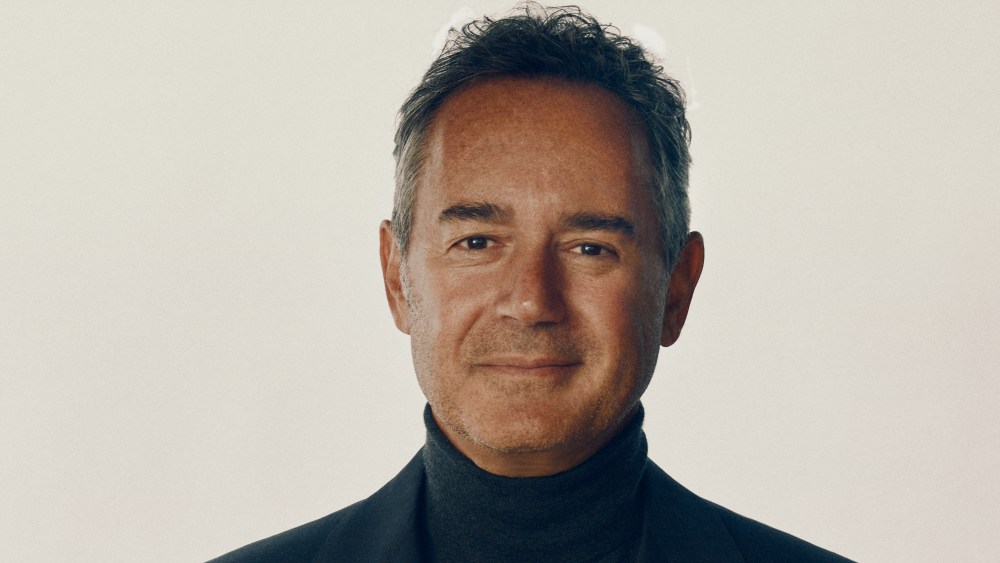
After 15 years in business, luxury hair care brand Oribe is still full steam ahead.
The brand has expanded to 42 countries, net sales are up 51 percent on its hero Dry Texturizing Spray, and sales are said to surpass $170 million in net sales this year — nearly double what they were when Kao acquired the company in 2017.
But Daniel Kaner, the president who cofounded the brand with megastylist Oribe Canales and Tev Finger and oversaw its sale to Kao in 2017, is as engaged as he’s ever been in the hair care business. “Regarding retirement, I hate the idea of it. When you love what you do as much as I do, and you love the people who you work with, and you get to meet interesting people every day — I’m always going to work,” he said during a recent conversation, celebrating 15 years of Oribe. “I’m just starting to learn now.”
Related Articles

Kaner credits a razor-sharp commitment to culture and craftsmanship for Oribe’s success. “We knew being in the salon business and being so close to the customer, we wanted to create something unique, but we didn’t know how to do that. So we just said everything matters, everything counts: design, performance, fragrance, team, salon and stores. And if you take that approach, you have a better shot at creating something special,” he said.
Here, Kaner talks the ebbs and flows of the professional and prestige hair category, how consumers have evolved and his priorities for the years ahead.
Beauty Inc: It’s been 15 years since Oribe launched. How have you seen the consumer evolve?
Daniel Kaner: When I first started, professional hair care was sold by licensed aestheticians in a licensed environment. We’ve seen a lot of migration. When we started Oribe, part of the value proposition was that if we wanted to make something best-in-class, we’re going to have to migrate slightly outside of the [traditional] distribution channels.
When we started, we said to our salon customers that we’d like to be the best of the best, we’d like to be at Bergdorf Goodman and Neiman Marcus. We had to expand, and part of our disruption was to ask our salon partners for permission. Some brands have very broad distribution, and we’ve got a very small distribution, but they’re some of the best partnerships in the marketplace. In the earliest days, in the U.S, you had Ian Ginsberg C.O. Bigelow in New York and Ron Robinson at Fred Segal in L.A. You’d be at a very few of these kinds of places. And then things started to change.
How are you thinking about the continued blurring of the retail and professional channels?
D.K.: It’s not so much of a blur anymore. Our sight has been corrected. Not all channels are good for hair care. We say we want to be where the consumer is, but the consumer isn’t everywhere. There’s certain areas where they want to discover hair care where it’s credible. And then all the channels want us to tone up our perspective to their customers, so they want us to focus a bit more on perspective. Now, we’re trying to create value ultimately for them and for our customers.
Salons still account for 40 percent of your sales. How has that channel changed?
D.K.: First, look at what has stayed the same in the salons. It’s amazing, the reach we have. The group of people that come through a salon, the demographic is just really wide. There’s an opportunity to reach a client base that is really unique. We’re only 15 minutes away from a consumer in every market.
The biggest, most significant shift was after COVID-19, fewer stylists are going to school to become licensed stylists and that’s a challenge. And the populations are growing, so there’s a huge amount of consumers who want to come into the salon. And the spread of services has changed.
What has it taken to keep Oribe relevant for 15 years? How did you drive the creative ethos of the brand?
D.K.: I’ve been working with the team on that since the beginning. Also, what happens when a founder leaves the room? We study a lot of art, craftsmanship and design. We’re makers, we’re not manufacturers. It’s such a small team, and everyone still touches the product. We’ve got global educators around the world, and we still handwrite notes. We try to build it into our culture because when you learn about leadership, it’s about perpetuating the culture that you’ve designed. People may come and go from an organization, but the goals and artistry, you want to stay the same.
In 2018 we started doing collaborations that were’t traditional. The idea was rather than being manufacturers, we’re going to learn to be artists by working with artists who have a design sensibility.
What are your top three priorities for the years ahead?
D.K.: Four years ago, it would have been a different answer, but the world has lived through quite a crisis. Some of us are in the office, some of us are not, and we’ve worked so long to build relationships with our partnerships all over the world. Not having the team in the room learning, watching and being mentored is a challenge, so that’s my first priority, figuring out that balance.
The second thing isn’t as much about selling product, but promoting the craft of hairdressing. We have 80 artists from around the world whose goal is to share, teach, excite and tell the Oribe story. We will recruit in every market that we’re doing business in. The individual ethnicity, the unique natural hair, its texture, looking from their lens — we’ll bring them all together.
For the third, joining Kao in a lot of ways has been really fantastic. They start the day with this robust idea of environmental, social corporate governance. So for being a small business, thinking that we’re going to go on that journey to become better makers, it’s so much better bolstered when your parent corporation is there already because they don’t question your investment. We have our own ESG program, and we’re going to be better makers.
Note: This interview has been edited for clarity.