Makeup giants are looking to skin care to bolster their businesses.
Brands including Benefit, MAC Cosmetics, The Lip Bar and Nudestix have all recently introduced skin care products to their assortments, and it comes at a time of growth for both categories. According to year-end data from the NPD Group, makeup — still prestige beauty’s largest category — grew 18 percent, outpacing the industry. Skin care, rife with new entrants, grew 12 percent. For brands with a loyal enough following, why not reap the rewards of both?
Related Articles
While it sounds simple enough, history shows that treatment can be tricky terrain for a color brand to navigate. “If there’s a brand with a good core following, they can extend that into other categories,” said Olivia Tong, an analyst at Raymond James. “The flip side of that is you want to be more diversified — especially after the last couple of years when there wasn’t a lot of makeup, but skin care went through the roof. Most of these bigger companies already do skin care with other brands, so there’s a wealth of knowledge within the parent company.”
Tong also noted it can minimize costs across a multibrand portfolio. “It’s expensive to advertise, and if you can cover more bases with your brand, all the better,” she said. “In regards to the market, there’s been some energy that’s gone back to makeup, which even pre-pandemic, had started to slow down a bit. The big debate is how much is sticky in terms of the [skin care buying] habits formed over the last two years. Some of it is transitory, but consumers are open to a lot more now.”
Though the category is ripe with opportunity, it also poses challenges. A brand’s authority in makeup does not a skin care success make, Tong said. “Authenticity is really important in these areas. It can smell like you’re simply trying to leverage your brand and not necessarily have a heck of a lot to stand on. That’s a harder pill [for consumers] to swallow.”
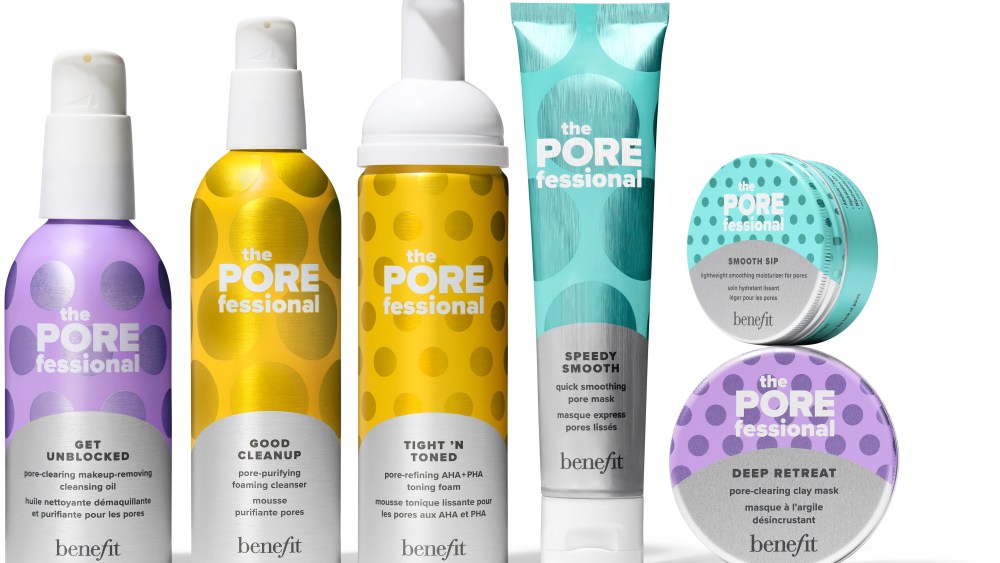
For Benefit, the key was product positioning. The brand introduced seven products in a category it dubs “pore care” earlier this week, an expansion on the hero Porefessional franchise, so named for its cult classic primer.
“We’re the number-one brow brand worldwide, and having a second category to fuel growth is critical for us,” said Christie Fleischer, Benefit’s chief executive officer. “We believe that, in the early years, 15 percent of our business can come through pores. In the short term, it will contribute a significant amount to our growth.”
Benefit accordingly bolstered the launch with clinical backing, and the products include claims like a 12-hour mattifying effect. Prices of the assortment range from $20 to $44.
MAC also focused on its key strength — makeup artistry — for its Hyper Real line, comprising a cleansing oil, serum and moisturizer priced from $48 to $55, and a $37 application brush. The goal was “to build a discipline around skin artistry,” said Drew Elliott, MAC’s global creative director.

“This has been a four-year journey,” Elliott said, adding that key considerations during product development included “first and foremost, how is it going to perform with makeup — either to enhance it or remove it — and then which benefits we could pack into it so you don’t have to compromise your skin care routine.”
The brand isn’t totally new to skin care, having previously debuted the Studio Moisture Cream, Complete Comfort Cream and a slew of primers. “We had this portfolio, but we are building out something understandable to the consumer. From a skin care perspective, [Hyper Real] is also packed with very advanced technology and ingredients.”
Hyaluronic acid, niacinamide, ceramides and Japanese peony extract also give the range its skin care benefits. “Looking at the three different products, what’s interesting are the ceramides in the skin canvas balm. That repairs skin to be makeup ready,” he said, adding that the cleansing oil can remove even MAC’s longest-wear products.
“It’s bringing all of these notes of artistry that’s also a moment to care for yourself,” he continued, adding that the products can be used with any type of makeup without pilling or noodling. “If you go on our website, it really shows how you add that skin care moment with a makeup application, and how it enhances that.”
Melissa Butler, founder and CEO of The Lip Bar, also thought of her skin care range, which launched exclusively in Target last month, as an expansion of a makeup routine, not overtaking skin care heavyweights. To that end, it’s being merchandised with the rest of the brand’s makeup products in-store.
“We want to crawl before we run, and that’s why we were intentional about positioning this as makeup-adjacent. This is an easier conversation to have because we’ve been driving that conversation and driving that story,” Butler said at launch last month. “We didn’t want to come out with clinical skin care, that didn’t make sense for us. People know us for makeup.”
More established players have seen challenges and rewards in equal measure. Taylor Frankel, cofounder and chief brand officer of Nudestix, said that brand’s skin care offering took a moment to get off the ground, given pandemic-induced headwinds during its 2020 launch. Now, it’s available at both Ulta Beauty and Sephora, with prices ranging from $18 to $39.
“It was challenging to raise brand awareness at the time,” Frankel said. “But, it was quite a seamless transition. Our Nudestix customer loves all things skin, and one of the main pillars of Nudestix is the skin-ification of makeup. Our customer was very much looking for the Nudestix version of skin care that was clean, simple, multitasking and vegan.”
Frankel acknowledged she joined a crowded room. “Skin care has gotten increasingly competitive, and everyone has their skin care wardrobe and is very loyal,” she said. “It’s been about educating consistently, having thought leaders and experts on our team to educate the science. It’s about being creative on how we integrate Nudeskin into these pre-existing rituals and regimens customers have.”