PARIS — L’Oréal chief executive officer Nicolas Hieronimus discussed the Kering Beauty deal Tuesday evening, less than 48 hours after the 4 billion euro acquisition, the largest in group history, was revealed Sunday night.
It was among the information shared during a call with analysts and journalists after market close to present L’Oréal’s third-quarter and nine-month results.
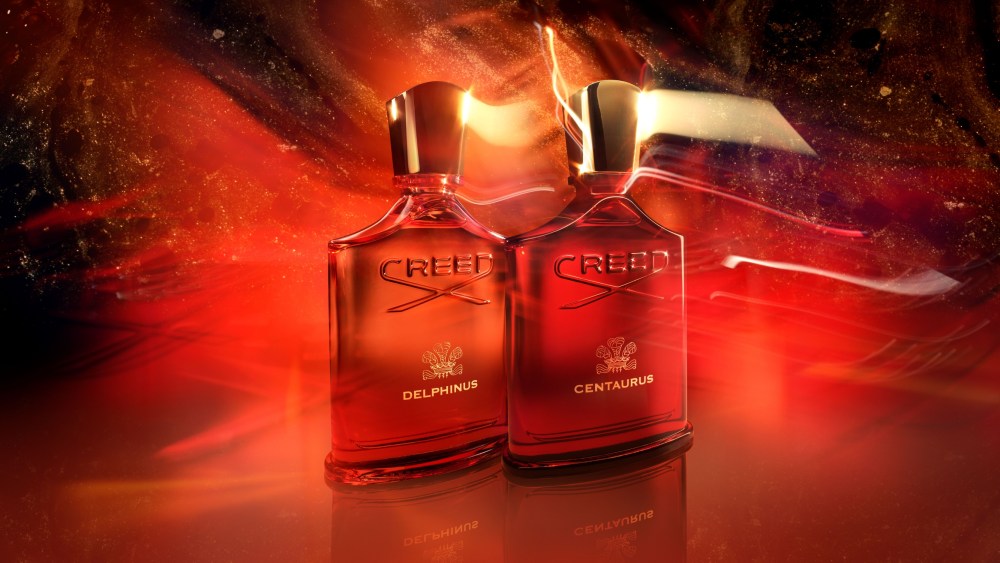
As previously reported, as part of the Kering Beauty transaction, L’Oréal will add to its Luxe division The House of Creed niche fragrance brand, as well as the beauty and fragrance licenses of Balenciaga, Bottega Veneta and, when it becomes available, Gucci.
Related Articles
“I’m extremely excited about this transaction,” Hieronimus said. “Not only does it cement our existing leadership in luxury beauty, I also see enormous potential for each one of these four brands. We have proved our ability to turn licenses into billionaires.”
Yves Saint Laurent, for instance, is now as big in beauty as it is in fashion, with annual net sales close to 3 billion euros. YSL ranks in the top five of luxury beauty brands, and Hieronimus believes Gucci can catch up with YSL at some point. Meanwhile, Prada fragrance and beauty crossed the 500 million euro mark four years after joining L’Oréal Luxe.
Hieronimus called Creed a “beautiful brand” in the top three of the niche fragrance market, which has products priced upward of 200 euros. That is the fastest-growing category in the perfume segment, which, in turn, is the fastest-growing category in beauty.

“It happens to be a segment where we are just represented by the collections inside our couture brands, so we are underrepresented and under-shared,” he said. “For us, it’s a strong step in this market. We plan to accelerate both, because we think this part of the market is going to continue to grow fast.”
L’Oréal can bring its know-how and clout, due to the number of brands it has in beauty — and luxury beauty — for negotiating with retailers, Hieronimus said.
He was asked if it’s possible that the Gucci fragrance and beauty license might go to L’Oréal earlier than 2028, when it expires under Coty Inc.
“The Gucci license belongs to Kering,” Hieronimus said, adding L’Oréal is not privy to any discussions between the companies and that it would not be appropriate for him to ask about the subject. “We are patient, and we wait.
“We’ve had experiences in the past of taking over licenses from other big groups,” he said. “In the end, it has always gone well. Those are brands that have passed the test of time, so I don’t think a couple of years can make a huge difference.”
Hieronimus is looking forward to writing the next chapter. “I am truly delighted to do it with Kering, a trusted partner for more than a decade and a half,” he explained.
Part of the Kering Beauty deal, a 50/50 joint venture, involves the companies joining forces to explore business opportunities at the intersection of luxury, wellness and longevity.
“It’s very early days to give you details,” Hieronimus said. However, he added it has “a clear goal, which is responding to the strong demand for services and experiences that are linked to well-being, health and longevity.”
He called it “an ambitious project” into which resources have been infused by both L’Oréal and Kering.
“We will bring our expertise of skin care, of longevity, the long-term longevity research that we have,” Hieronimus said. The group will also contribute what it’s learned from the services on offer at the Paris-based institute of Carita, another L’Oréal-owned brand.
Kering, he said, will bring its expertise in the likes of luxury and clienteling — especially for high-net-worth individuals.
In the three months ended Sept. 30, L’Oréal sales increased 0.5 percent on a reported basis to 10.33 billion euros, bolstered by growth in all divisions and regions, and the ongoing recovery in North America and mainland China. Sales rose 4.2 percent on a like-for-like basis, which missed analysts’ consensus by 50 basis points.
“This is a notable miss in Q3 versus high expectations in the market, we think,” wrote David Hayes, a Jefferies equity analyst, in a note.
Adjusted for IT transformation, L’Oréal sales rose 4.9 percent in the period. Adjusted growth has accelerated sequentially for L’Oréal, which posted gains of 3.7 percent in the second quarter and 2.6 percent in the first quarter.
In the first nine months of 2025, L’Oréal sales reached 32.81 billion euros, advancing 1.2 percent in reported terms and 3.4 percent on a like-for-like basis.
Hieronimus shared insights about the beauty market overall, which he estimates rose slightly more than 3 percent in the nine-month period.
“The global market remains dynamic,” he said.
Outlining key highlights since the start of the year, Hieronimus highlighted gradual recovery in L’Oréal’s two largest geographies, including mainland China, where the group outpaced the market. Year-to-date that is estimated to have 1 percent growth, versus being flattish in the first half of 2025.
“So overall, China has stabilized,” Hieronimus said. What still isn’t getting a lot better there is travel retail.
“Travel retail is improving a bit, but it remains in negative territories,” he said. “Travel retail Asia is negative in single digits.”
In the U.S., L’Oréal’s other largest market, Hieronimus noted real acceleration, with an about 3.9 percent gain. There, the Consumer Products Division increased market share in each of its categories for the first time since 2021. By comparison, at the start of the year, CPD was below market.
“[It’s] proof that innovation really is a game-changer in beauty,” Hieronimus said. L’Oréal’s Beauty Stimulus plan, an initiative to accelerate product launches, contributed 170 basis points overall in the third quarter.
He underlined the ongoing strength in hair care and fragrances, currently generating 30 percent of L’Oréal’s sales.
“But also the bounce-back in makeup, where we grew almost three-times above the market,” Hieronimus continued.
He spotlighted the ongoing dynamism of beauty e-commerce, which is estimated to be growing two-times faster than the general beauty market.
“Our e-commerce growth is at plus-12 percent right now,” Hieronimus said. “We are really doubling down on that, because it allows us to reach new consumers.”
L’Oréal is confident it will keep outperforming the beauty market to achieve another year of sales and profit growth.