Beekman 1802 built its business off of an ultra-gentle ethos to skin. As it turns out, it’s taking the same approach with employees.
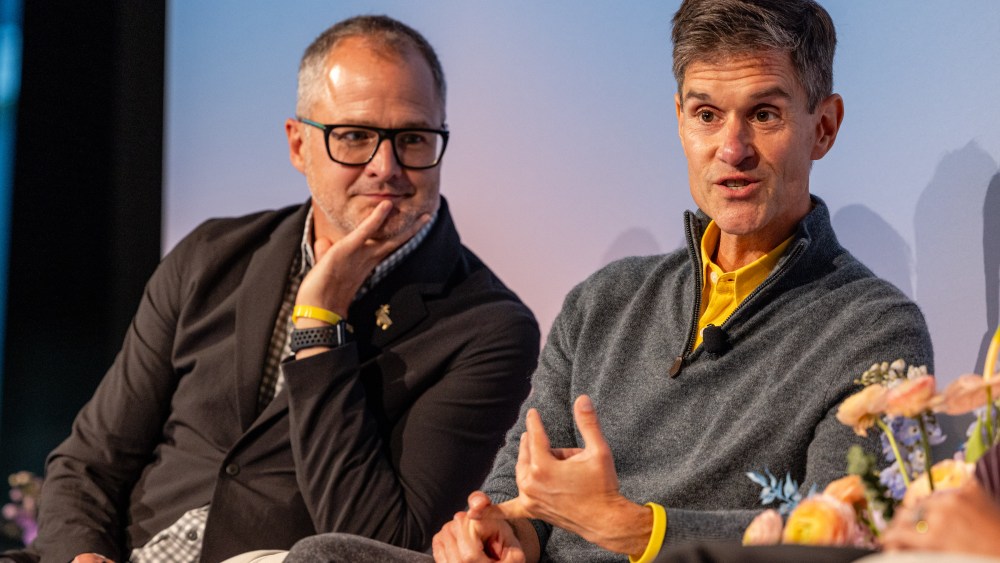
At the 2023 WWD Beauty & Wellness Forum, cofounders Dr. Brent Ridge and Josh Kilmer-Purcell were joined by Kindness.org cofounder and chief executive Jaclyn Lindsey to discuss the benefits of creating a culture of kindness, both internally and externally.
“My background as a physician was in functional aging and the genetics of aging, but 90 percent of what I had to do in my practice is counsel people on preventative medicine. What we’re learning now through the science of kindness is that that’s equally as important — giving and receiving kindness,” Ridge said. “That’s what formed the foundation of our company.”
Related Articles

Ridge noted that when giving or receiving kindness, cortisol levels in the bloodstream decrease, inflammation lowers and “you actually change the way that the DNA repairs itself in the surface of the skin, just by giving and receiving an act of kindness.”
Beekman 1802 wanted to come up with a way to define and measure kindness, and create a toolbox of resources for employees to foster its growth. Enter Kindness.org, who developed the Kindness Quotient, a means of measuring the kindness of an organization.
“Feeling valued is one of the biggest predictors we have for how happy you are at work,” Lindsey said. “When you think about [employee] retention, the biggest thing we learned across companies is that kindness is a better predictor of happiness than what you’re paid.”
The brand has also looked to artificial intelligence to foster kindness. “We have recently implemented artificial intelligence to track kindness, prompt kindness in the workplace and then measure it on a routine basis using Kindworks.ai,” Ridge said. “If you can measure something and gamify something and make it more interesting for people to do, they’re going to do it more.”
Answering an audience question, Lindsey said kindness is elastic and has an action-oriented definition. “A lot of people think we should focus on empathy, but empathy is a feelings-based initiative. You don’t always apply your empathy,” Lindsey said. “The action is what we’re interested in maximizing. So we define kindness with the ABCs: an action, intended to benefit someone and typically at a cost.
“We combat the narrative that kindness is free. It takes your intention, it wakes willingness, it sometimes takes money, and it takes time. For us, it is action, benefit, cost. That allows us to better measure it. Justice, fairness, gratitude, empathy and compassion are all extensions of that choice,” she continued.