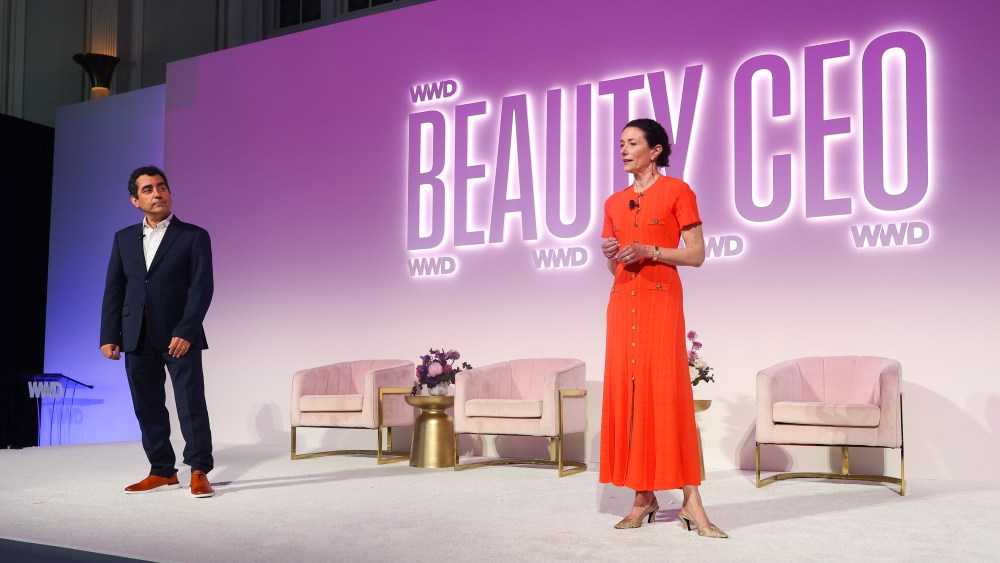
How has Procter & Gamble humanized personal care over the past 20 years?
“These learnings are evergreen and especially relevant in today’s dynamic, uncertain and challenging times,” said Alex Keith, chief executive officer of beauty at P&G.
Personal care, which includes antiperspirants, deodorants and body lotions, is among beauty’s hottest categories today. It’s a $61 billion segment that’s been growing at 6 percent over the last three years. Two decades ago, however, the segment was sleepy — functional but without lots of exciting innovation.
Related Articles

“Many people didn’t even think about it as beauty,” Keith said.
Thanks in large part to P&G, that is no longer the case, with innovation and insights helping to create meaningful growth for the entire category despite difficult macro sociopolitical and geopolitical contexts like 9/11 or the COVID-19 pandemic.
Keith and Freddy Bharucha, president of personal care at P&G, shared key takeaways from the company’s approaches to birthing such transformations. In the early 2000s, for example, Old Spice was 60 years old with a heritage in cologne. It appealed to young guys, and the business was doing well. P&G sought opportunities to expand it into personal cleansing. Data suggested to innovate with bar soap, which they launched with Old Spice scents. But that failed.
Consumers often can’t envision for themselves what they really want or require. “We need to look beyond the data to observation and insight to find the innovation opportunities,” Keith said.
P&G talked to young guys. “They told us they used their mom’s, sister’s or girlfriend’s body wash,” Keith said. “They said it lathers better and it’s nicer to use.”
That aha moment led to the launch of the first mass retail men’s body wash with Old Spice, and with it “The Man Your Man Could Smell Like” campaign. “It was a huge hit,” Keith said. “Within a very short time, mass retail male body cleansing was meaningful and growing fast. This was a big turning point for the category.”
By 2018, Old Spice had midsingle-digit growth, but guys told P&G the brand wasn’t that relevant anymore. “The basic benefits — lather, scent, cleansing — was no longer enough for them,” Bharucha said. “In fact, they started discovering the more premium body washes again — those that were being used by their wives, sisters and spouses.”
P&G recognized men wanted the likes of moisturization and exfoliation, so the brand launched body wash with skin care benefits. The associated campaign called “Men Have Skin Too” had the premise: What if a guy’s body wash is so very good that women start stealing it from their men?
“This raised the bar for how to bring more higher-order ingredients into our cleansing category,” Bharucha said.
Keith underlined another segment — deodorants — is not just a part of beauty, it is beauty’s fundamental start. But in 2007, the category was stagnant with 98 percent market penetration.
P&G noted two conflicting data points: 50 percent of female antiperspirant users had a sweat breakthrough at least weekly. But women also said all deodorants work the same and work fine. The company knew it had to create a new level of performance.
“Our solution was based on what was a true technical breakthrough,” Keith said. “It offered the maximum allowable antiperspirant sweat protection in a nonirritating formula — something that simply wasn’t available in mass retail at the time.”
The result? The entire category grew by more than 12 percent within one year. “Ultimately, clinical forms were the main driver of the category growth for over five years,” Keith said.
She and Bharucha outlined three core leadership lessons, which can contribute to elevating consumer experiences in unimaginable ways. “Ground everything in rich and deep human insight,” Bharucha said. “The second: explore possibilities. Go beyond what the consumer necessarily sees as what’s possible. And the third is empower our people in ways that allow them to lead the bold choices.”