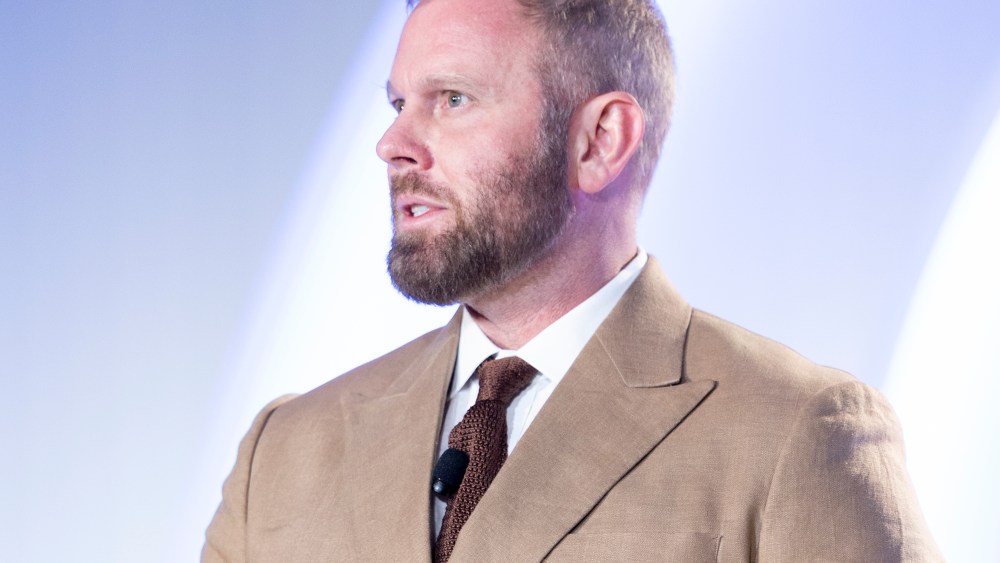
Richard Christiansen’s founding of Flamingo Estate hits close to home — literally.
Christiansen, who had previously founded Chandelier Creative, is no stranger to building brand nor image. So, when the coronavirus pandemic struck, he looked to his own home — and surrounding orchard — for inspiration.
Now, Flamingo Estate is a broad-reaching lifestyle brand that encompasses beauty, home, books and more. But in its earliest iteration, it was about delivering restaurant-quality produce to Angelenos from farmers affected by restaurant closures.
Related Articles

“I thought we could maybe sell a dozen boxes that first Friday of COVID-19 [lockdowns], and we sold 300,” Christiansen told attendees of the 2024 WWD Beauty CEO Summit. “I became a vegetable salesman. And my job was to make the vegetables look really sexy.”
That design-forward approach has informed every step of the brand, from its creative to its product development. In the early stages of its packaging and visuals, Christiansen’s best friends — photographers and painters — worked on the campaigns, and he opened the outdoor spaces of his home to a concert series in his garden.
“After years of working very hard, I got back in my own body. I took lots of hot showers, lots of hot baths and I came fully alive again. I also started eating again after working in fashion marketing for 20 years,” he joked.
Food-grade ingredients became the backbone of Flamingo Estate’s personal products, which now entail candles and body products and, soon, skin care. “We made over 150 products in the first two years of Flamingo Estate, which is sort of staggering,” he said. “But it got me to believe that Mother Nature is the last great luxury house, and we are making her goods. No amount of AI is going to replace the joy of jasmine or the taste of amazing olive oil.”
Christiansen has since tapped other collaborators, too, from his past life. “I took my beehives and took them to Kelly Wearstler’s Garden, and did the same thing at LeBron James’ house,” he said. “We’ve been collaborating maybe in a different way than you’re normally used to.”
The late Gaetano Pesce designed vessels for olive oil and vinegar prior to his passing earlier this year, and those will be launched later in 2024.
“In retail, we’ve been trying to push the boundaries and have fun,” Christiansen said. In East Hampton, for example, “we have ‘the most inconvenient store.’ I want people to think of it as my 7-Eleven, because it’s 30 products that are a pain in the ass to make.”
The first quarter of the year was the company’s best, with unique customers rising 66 percent; new customer orders increasing 84 percent, and the business boasting a repeat rate of 56 percent.
Christiansen is taking that as a cue to slow down, rather than speed up. “We feel deep responsibility to deliver surprise and delight to people,” he said. “In a world and an industry drunk on innovation, we maybe should think about doing the opposite: return to the old-fashioned way of doing things, things made really well with really good ingredients and enjoying things like a hot bath and a good meal every day.”