
When Christian Courtin-Clarins travels to faraway places to source ingredients for the beauty firm his father founded more than 50 years ago, he lives by a decree of do and eat everything. That philosophy ruled his latest research trip to Australia, where he swam in crocodile- and shark-infested waters and snacked on citrus-flavored green ants. During his two-week trek across the forests, deserts and coasts of Western and Northern Australia, Courtin-Clarins stayed with Aboriginal tribes, who tutored the Clarins Group chairman on indigenous plants. “There is a unique reservoir of plants in Australia that you can harvest in the wild bush without harming the bush,” he says. “We’re working with the communities so they can teach us their knowledge, and we reward them for that information.” Between visiting ancient caves and Aboriginal welcoming ceremonies and fishing for mud crabs, Courtin-Clarins spoke with the locals about native plants and flowers.
Related Articles
On The Scent Trail
Keeping an eye out for fragrance ingredients, Courtin-Clarins visited Albany in Western Australia, which produces sustainable sandalwood oil. He was also enchanted by the boronia as a potential fragrance note, which blooms as small hot pink flowers on long green stems and is used as a food flavoring as well as an aroma.
Daily Dose
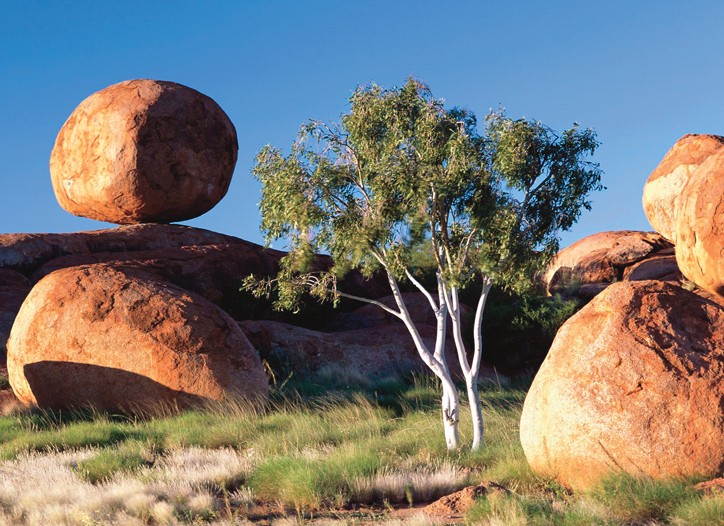
Courtin-Clarins was most impressed by the medicine tree, a tree that naturally sheds its papery bark. The bark lends itself to skin care, because it speeds up cell renewal, purifies and moisturizes. A pair of elder Aboriginal sisters instructed him on the tree’s health benefits. “They treated the tree as if it were part of their family and made sure we didn’t damage it when we took some bark,” he said.
Orange Crush
The rich, orange-hued fruits on the Gubinge tree (or Kakadu plum) also intrigued Courtin-Clarins. Touted as an Aussie superfruit, one kilo of the fruit contains the equivalent of vitamin C found in 100 kilos, or 220.5 lbs., of oranges.