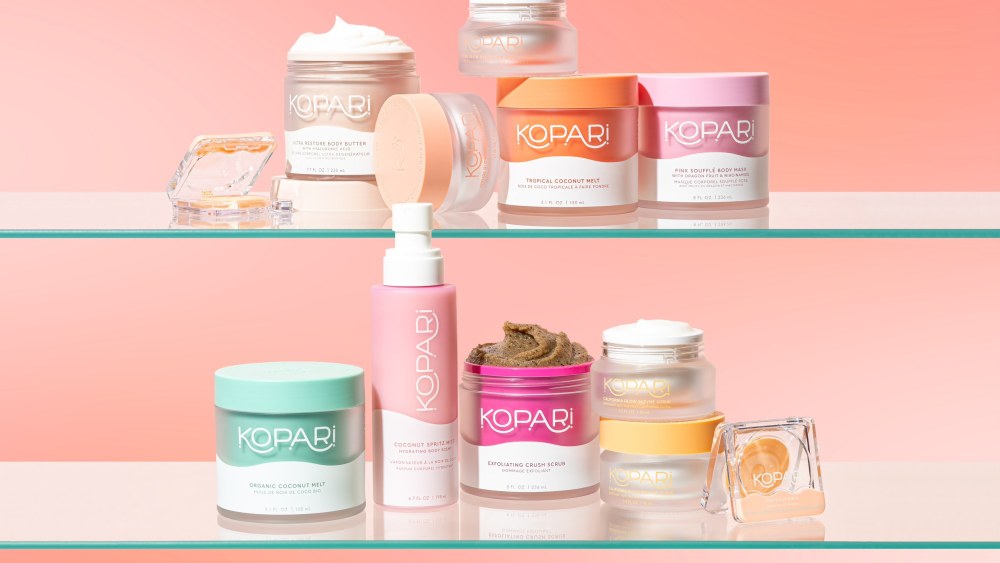
As sustainability and “clean” formulations become table stakes in beauty, one of the trends’ early entrants is upping the ante.
Kopari is reentering the market with updated packaging, reformulated products and a rethought roster of manufacturers in its supply chain. The efforts, the brand said, are part of its deepening commitment to sustainability and formulas billed as “clean.”
“Clean beauty has really evolved since five years ago, and the language is becoming a lot more linear,” said Susan Kim, chief executive officer of Kopari, which launched in 2016. “A year ago, I wanted to keep our cleaner-than-clean formula profiles but also keep up with what consumers are wanting from a clean beauty queue.”
Related Articles

To that end, Kopari reformulated its products to eschew polyethylene glycol, which Kim cited “questionable research” around.
“Articulating our philosophy was one of the first steps. ‘Clean’ is confusing, but I didn’t want to just go with Sephora or Ulta’s clean standards, I wanted us to have our own position on what we think ‘clean’ should be. We now have a no-list of over 200 ingredients,” Kim continued.
Consumers will also be able to see the formulas themselves, thanks to the rethought packaging solutions. “Our partner agency did a lot of exploration about what’s intrinsically native to Kopari, and we wanted to bring the ocean to the forefront. We were inspired by the transparency element of the ocean,” Kim said. “What you’ll see in the rebrand of the packaging are elements of transparency, cleaner lines and elevated lines.”
Considerations for the new packaging went beyond aesthetics, though. “All of our new jars are recyclable, but in addition to that, they’re refillable,” Kim said. “We’re coming out with a refillable program in 2022. We want to create options for our consumers. Recyclability is, at this point, table stakes and we want to be pushing the envelope.”
With that in mind, Kopari has also agreed that if packaging components weren’t easily recycled, they would either find alternatives or leverage a partnership with TerraCycle. “Blue bin recyclable plastics are what we live for, we no longer are doing things like film on promotional kits, because they’re not recyclable,” Kim said.
“You can’t recycle small springs either, so we partnered with TerraCycle. We now have about five or six vendors that we use, and if they can’t offer recyclable materials, they’re not getting our business,” Kim continued.
The repackaging will roll out this month as a Holiday exclusive, and then into full distribution by 2022. Although challenges in the supply chain are posing problems across the beauty industry, Kim said broadening Kopari’s footprint with ‘cleaner’ manufacturers also gave the brand a newfound agility.
“It takes a good year and a half to make a meaningful difference with supply chain,” Kim said. “We’re going from one manufacturer to about nine manufacturers, which also avoids the limitations right now of the supply chain. We get to move in an indie way because of the new partnerships we have, and they’re amazing in how they think about formulation.”
While Kim declined to comment on sales, industry sources estimated the brand’s gross retail sales to have doubled in 2021, reaching $30 million.
For more from WWD.com, see:
Tula, Tatcha Named Top Skin Care Influencer Marketers
Clean Beauty Overindexes at Mass
Consumer Interest Sparks New Launches, Innovations in Vitamin C