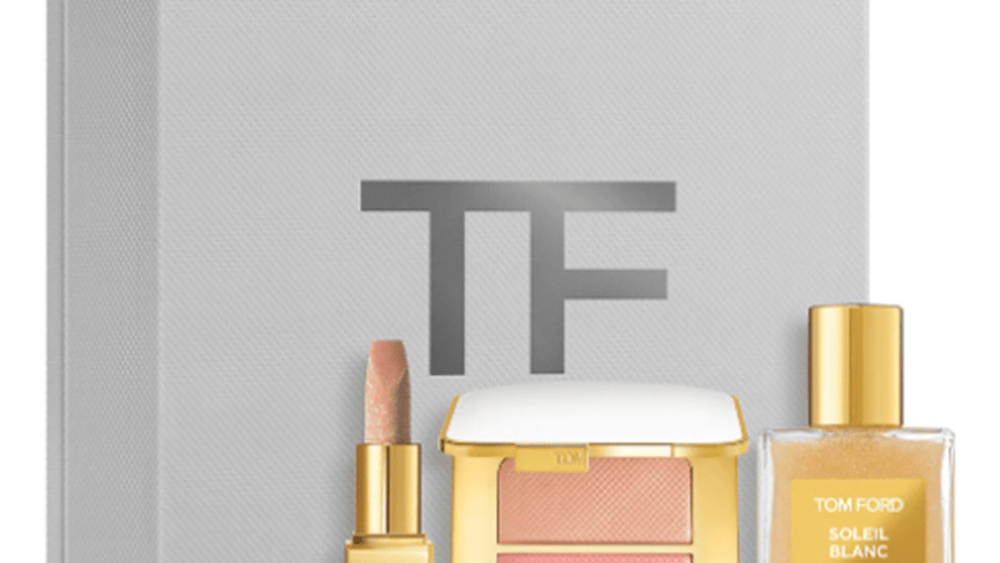
In November, The Estée Lauder Cos. became the new owner of Tom Ford, marking the beauty giant’s first venture into the fashion world and its biggest deal ever.
The acquisition also paved the way for the iconic designer to potentially exit the industry.
Paying $2.3 billion to acquire the luxury fashion, beauty and eyewear brand, Lauder outbid rival Kering, which was reported earlier that month to be a front-runner for the company.
Related Articles

As part of the deal, Ermenegildo Zegna Group and Marcolin SpA entered into long-term license agreements for Tom Ford fashion and Tom Ford eyewear, respectively. Marcolin has been the eyewear licensee since 2005, while Zegna has had the license for Tom Ford menswear since around 2006. Now, it’s responsible for all of Tom Ford’s fashion business, marking a further expansion by the Italian menswear powerhouse group into women’s fashion.
The deal valued the total enterprise of Tom Ford at $2.8 billion. The amount to be paid by Lauder for the acquisition is about $2.3 billion, net of a $250 million payment to Lauder at closing from Marcolin SpA.
As big of a move as the agreement was for Lauder, it also represented a major step by Ford and his partner and chairman Domenico De Sole — potentially paving the way for their exits from a fashion scene they have been a major part of for almost three decades.
Under the agreement, Tom Ford, founder and chief executive officer, will continue to serve as the brand’s creative visionary after closing but only through the end of calendar 2023. De Sole, chairman of Tom Ford International, will stay on as a consultant through that period, too. It is unclear at this stage whether Ford will extend his fashion design career beyond next year or instead leave the scene to concentrate solely on his other vocation, film directing.
“As an owned brand, this strategic acquisition will unlock new opportunities and fortify our growth plans for Tom Ford Beauty,” Fabrizio Freda, president and CEO of Lauder, said in a statement at the time. “It will also further help to propel our momentum in the promising category of luxury beauty for the long term, while reaffirming our commitment to being the leading pure player in global prestige beauty.”
Tom Ford said, “I could not be happier with this acquisition as the Estée Lauder Companies is the ideal home for the brand. They have been an extraordinary partner from the first day of my creation of the company and I am thrilled to see them become the luxury stewards in this next chapter of the Tom Ford brand.”
For its part in the deal, Ermenegildo “Gildo” Zegna, CEO of Ermenegildo Zegna Group, which also owns Thom Browne, described Tom Ford as one of the most “iconic and distinctive ultra-luxury brands in the world” and said this next step together perfectly aligns with its strategy.
“This transaction is our first since our listing on the New York Stock Exchange in December 2021, and confirms our commitment to leverage our platform to create value for all of our stakeholders,” he added.
While the deal marked the cosmetics giant’s first foray into fashion, it has had a licensing partnership with Tom Ford Beauty since around 2005.
At a Deutsche Bank conference earlier this year in Paris, executive vice president and chief financial officer Tracey Travis said: “Tom Ford and Jo Malone are two of our largest midsized brands that are knocking on the door of being over that $1 billion threshold to be large brands over the next couple of years.”
But not all parts of the beauty arm have been performing equally well. Lauder revealed earlier in November in its first-quarter fiscal-year earnings that Tom Ford Beauty makeup was negatively impacted by the decline in retail traffic and travel due to the COVID-19-related restrictions. But on the positive side, Tom Ford Beauty fragrance net sales grew by strong double digits, powered by launches such as Noir Extreme Parfum and Ébène Fumé.
As for market reaction, investors appeared to take the news in their stride.
In after-market trading, Lauder’s shares fell marginally, but the day after the deal, investors appeared to be relatively unfazed by the company’s largest acquisition to date — shares dipped slightly, by 1.8 percent, to close at $222.91.
It was a similar story for the publicly listed Ermenegildo Zegna Group, which is becoming a long-term licensee of the former for all of Ford’s men’s and women’s fashion, accessories, underwear, fine jewelry, children’s wear, textile and home design products. Zegna’s 20-year licensing agreement with Lauder allows for an automatic renewal for additional 10 years. As part of this transaction, Zegna will acquire operations of the Tom Ford fashion business. The company’s shares ended the day up 2.3 percent to $10.97.
Of the deal, Olivia Tong, an analyst at Raymond James, said: “This is EL’s largest deal to date, with now full control of a fast-growth brand pivotal to what we expect will be EL’s eventual recovery in China and travel retail. Importantly, we expect minimal transition disruption in the non-beauty portions of Tom Ford, as Marcolin continues as the brand’s eyewear license partner and fashion brand Ermenegildo Zegna will continue as the brand’s fashion, accessories [and] underwear partner.”
Given Tom Ford’s super-premium positioning in beauty, she believes the brand should continue to be a growth driver for Lauder, with the brand’s fragrance line ranking number 15 in the U.S. and number 10 in China, while increased door expansion and consumer mobility should support makeup growth.
And in a recent deep dive of the deal, Ashley Helgans, an equity analyst at Jefferies, said: “We remain positive on the deal as we view little to no risk given EL has been operating TF Beauty since 2006. The greatest upside from the opportunity is the expansion of the beauty biz both online & into other categories, along with royalties from fashion & eyewear.”
She is assuming that Tom Ford Beauty reaches $1 billion in revenues in the next few years, adding that a push into skin care would be viewed as a positive.
“EL lists creative oversight, increased speed and agility, and online penetration as key deal synergies. We are optimistic innovation will bear fruit, but we would like more clarity from management before baking this into our model. With that said, we would view a push into skin care as a positive given TF Beauty’s lower penetration,” she added. “We also support increasing TF Beauty’s online penetration, which is minimal so far. The launch of a brand.com would be margin accretive given sales will be recorded at retail value vs. selling via wholesale/in-stores.”
For Zegna, which owns Thom Browne, Luca Solca, senior research analyst of global luxury goods at Bernstein, said it was a good deal. “It allows it to consolidate the license and to further develop after the acquisition of Tom Ford. I don’t believe the exit of Tom or Dom is a concern — it’s in the nature of things.”
One Milan-based luxury consultant, who asked to speak on condition of anonymity, said for Zegna, acquiring the Tom Ford fashion operations is a new way to aggregate different businesses. “It appears that the IPO has made Zegna more courageous in its choices, creating synergies, while each company does its best within each area of specialization.” Zegna publicly listed on the New York Stock Exchange in December 2021.
In addition to being a longtime Tom Ford menswear licensee, Zegna was also a shareholder, with a 15 percent stake in the company, so this new development is seen as “a natural step,” said the consultant, which “will allow Zegna to strengthen its womenswear segment, and the group at large. Zegna has a strong supply chain built over the years and its textile or knitwear pipeline can be put to good use. The sky’s the limit, it’s all to be shaped and formed and Gildo Zegna will surely create an appropriate structure to fuel the brand’s development.”