PARIS — Merger talks between the Estée Lauder Cos. and Puig persist.
“As of today, we can confirm that conversations are ongoing, but no final decision has been made yet,” said Jose Manuel Albesa on Tuesday during his first earnings call with financial analysts and journalists since becoming Puig chief executive officer on March 17.
As previously reported, the Spanish fragrance and fashion company and the Estée Lauder Cos. said on March 23 that they are in merger talks. If they do come together, the new beauty powerhouse would have just over $20 billion of estimated combined sales, making it the largest premium beauty player worldwide.
Related Articles
“We acknowledge that there is a lot of curiosity about the progress of these discussions,” Albesa said. “However, unless an agreement is reached, there can be no assurance regarding the transaction or the terms. And therefore, at this stage, we cannot comment further on this evolving situation.”
The Puig company delivered record first-quarter sales for a solid start to the year.
In the three months ended March 31, the maker of Rabanne, Carolina Herrera and Jean Paul Gaultier fragrance and fashion reported net sales of 1.22 billion euros, up 0.8 percent in reported terms and 4.7 percent on a like-for-like basis. The organic gains beat those of the premium beauty market in the period.
Puig has consistently outperformed the premium beauty market for each of the last five years, including the past eight quarters, when the group has traded as a public company.
“Puig handily beat Q1 expectations with 4.7 percent organic growth (versus consensus 3.6 percent) against a challenging backdrop,” wrote David Hayes, an equity analyst at Jefferies, in a note.
He lauded the group’s solid performance for fashion and fragrance, with sales rising 3.9 percent like-for-like; the strength of its makeup activity, whose sales increased 9.2 percent, and the Europe, Middle East and Africa region’s sales, up 3 percent, which Hayes said were “better than feared.”
Albesa described Puig’s quarterly performance as broad-based — with all of its product segments and geographies contributing to growth on an organic basis.
“Our largest segment, fragrance and fashion, showed a performance within the context of more moderate underlying growth when compared to Q1 of 2025,” he said. “It was supported by a strong performance in makeup and a steady delivery in skin care.”
The fragrance and fashion activity, with sales of 897.2 million euros, accounted for 74 percent of Puig’s overall sales.
Albesa noted a softer trend in prestige fragrances, while niche perfumes continued their strong momentum, with double-digit growth and market outperformance.
“We see huge potential for niche,” he said, explaining it has amazing growth in Asia and big opportunity in North America. “The U.S. represents roughly 25 percent of the total niche global market.”
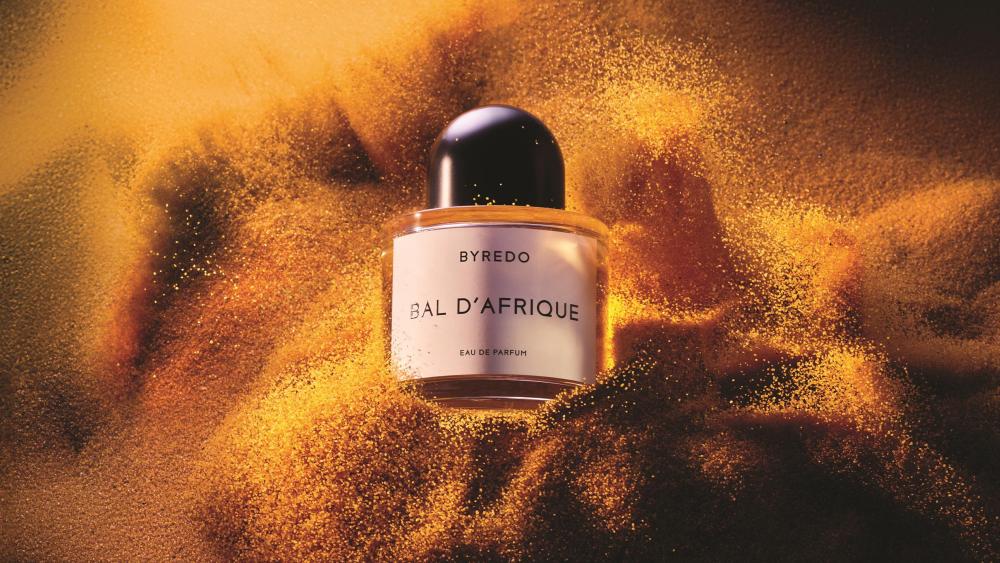
However, niche for Puig in the country currently generates just 15 percent of its sales there. Its niche fragrance brands, such as L’Artisan Parfumeur, Penhaligon’s and Byredo, are in only 150 doors, versus the group’s main competitors that are in about 600 doors. So this year, Puig will begin expanding and escalating the category in the country with a strategy that is “selective and productivity-driven,” according to Albesa.
Puig’s makeup division had sales of 170.8 million euros, or 14 percent of the company’s business. Growth was driven by Charlotte Tilbury, with strong momentum across both the Asia-Pacific and EMEA regions.

“We continue to see immense potential with Charlotte Tilbury for the long term,” Albesa said. The brand is only distributed in about one-fifth of the footprint it could be in.
Skin care generated 12 percent of Puig’s total first-quarter sales, with 147.3 million euros, up 4.7 percent on a like-for-like basis.
“Overall, the performance was resilient, supported by a balanced contribution across the portfolio,” Albesa said.
Puig’s business in the EMEA region totaled 643.8 million euros. There, the consumer was more cautious in the quarter, and the growth was led by fragrance and fashion, as well as by makeup. The ongoing situation in the Middle East had an estimated minus 1.2 percent impact on the zone’s revenues, largely concentrated in March.
“We are closely monitoring developments and currently expect some ongoing effects, while continuing to operate prudently across the region,” Albesa said.
Puig’s sales in the Americas came to 428.3 million euros, rising 2 percent like-for-like.
“The underlying performance remained healthy, with growth led by Carolina Herrera within prestige, as well as Byredo in niche, confirming the continuous strength of our brand portfolio across the region, despite currency headwinds,” Albesa said.
Foreign exchange, particularly the U.S. dollar’s weakness, had a negative impact of 4 percent on Puig’s overall quarterly sales.
The Asia-Pacific region, with sales of 131 million euros, registered 26.1 percent organic gains, led by niche fragrance and Charlotte Tilbury.
“APAC represents over a third of the global beauty market, yet accounts for just 11 percent of Puig sales,” Albesa said. “We have been investing behind reducing this gap for several years, and we believe now [there is] the right momentum to accelerate.”
Over the last five years, the group’s main focus has been the U.S., where it has now reached roughly 21 percent penetration.
In Asia-Pacific — a long-term priority for Puig — there are two different strategies in place, depending on the region. “For Northeast Asia we are going to focus on consolidating our niche brands and Charlotte Tilbury,” Albesa said.
In Southeast Asia, India and Oceania, the focus will be on prestige fragrance and derma. “We are setting a high level of ambition, but without compromising our profitability,” Albesa said.
Looking at full-year 2026, Puig maintained its guidance.
“We continue to expect to outperform the premium beauty market on a like-for-like basis, reflecting the strength of our brand portfolio, the relevance of our innovation pipeline and the disciplined execution across regions and categories,” Albesa said.
Puig considers the prestige fragrance market as normalizing, growing at around 3.5 percent in the quarter in like-for-like terms, therefore moving toward its historical levels.
Meanwhile, some brands are taking different strategies to growth, including more promotions and price offers, according to Albesa.
“We are not going to play this game,” he said. “We will lean on the strength of our brands, and we remain confident that we will outperform through innovation.”
Puig estimates that the prestige makeup market is growing by low midsingle digits, while derma is posting midsingle-digit gains. Such first-quarter increases by product category are expected to continue at pace through the full year.
Puig’s adjusted EBITDA [earnings before interest, taxes, depreciation and amortization] margins are anticipated to remain stable, in line with 2025, despite operating in a more challenging cost environment.
Albesa underlined Puig remains focus on executing its strategy with agility, supporting its brands and driving profitable growth. “Q1 reflects disciplined execution and a strong foundation for the year ahead,” he said.