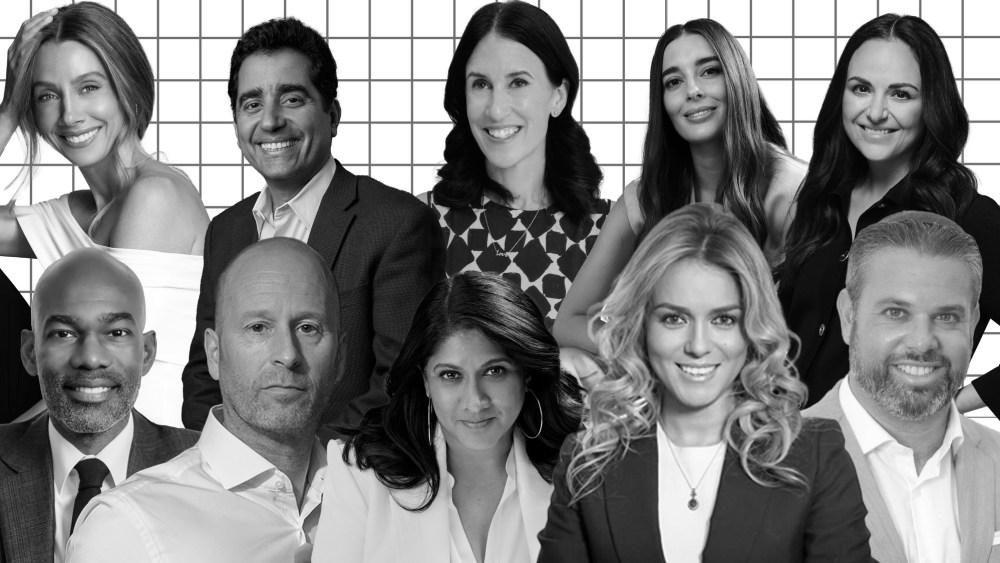
We live in volatile times. To understand how the leaders who are speaking at the 2025 WWD Beauty CEO Summit are approaching both the challenges — and opportunities — around operating in such a complex global environment, we asked them to share their thoughts with us on the key issues of today. For many — the bigger the challenge, the more exciting the opportunity. We asked: As you look to the next 12-24 months, what’s the big idea that’s going to move your business forward?
Cassandra Morales Thurswell, founder and CEO, Kitsch
Related Articles

Despite uncertain times — tariffs, market fluctuations, and industry complexities — we remain committed to what works: incrementality, diversification and meeting the customer where they are.
Kitsch is championing this new movement in beauty: leaning into the power of incrementality. In a world that often demands overnight transformation, we’re embracing thoughtful, step-by-step growth, both for our customers and our brand.
We’re curating collections that take the guesswork out of beauty, showing customers exactly what they need and how to use it. Our vision for the next 12 to 24 months is to expand our offerings, explore new channels and strengthen our brand ecosystem.
Our approach is inspired by the steady, purposeful growth of iconic brands like Apple — where every launch builds on the last and deepens the connection with the customer. We don’t believe in disruption for disruption’s sake. We believe in progress that lasts. By staying grounded in authenticity and anticipating real needs, we’re making beauty feel accessible, intentional and empowering.
When you don’t know what’s going to happen, you stick with what works, and being responsible always works. By collaborating with partners, staying true to our values and genuinely supporting our community, we’re ensuring everyone feels taken care of — even in the face of uncertainty.
Incrementality is no longer a slow burn — it’s the spark. It’s the antithesis of the hero sku, it’s a strategic play. And Kitsch is igniting a smarter, more sustainable future, one meaningful step at a time.
Michelle Peluso, CEO, Revlon
The current macro environment is very challenging, but I’m going to look past that to the impact technology and AI are already having and will continue to have on our industry. My career has always been at the intersection of consumer and technology. The shifts happening today in technology and AI remind me of the early days of digital — where whole industries began to get remade, company by company, click by click.
Technology and AI already are and will increasingly remake:
- How we sense consumer demand
- How we design
- How we manufacture product
- How we organize supply chains
- How we market
- How we code
- How we sell
- How we solve thorny retail problems, like shrink
- How we provide service
- How we learn, and so much more
AI already can produce compelling content, visual imagery, dynamic creative, innovative pricing models, automation of code, beauty and packaging design alternatives, sophisticated supply chain insights and asynchronous chatbot servicing, to name a few. Moreover, improvement cycles are happening at a rapid pace. With all of this in mind, the question is how do we future-proof our organizations? We need new models for hiring talent, faster and bolder process redesign, new skills, new teaming, new incentives, and, perhaps most of all, new security and governance models. Never for the faint of heart, revolutions in capability like the one we are in now offer tremendous opportunity for those who are both thoughtful and bold.
Emily Essner, president & chief commercial officer, Saks Global
My vision for the future is grounded in the notion that when our brand partners succeed, Saks Global succeeds, and even more importantly, our customer wins. In the near- and long-term, I’m energized by the opportunity to deepen our relationships with our brand partners and maximize the impact of our partnership by strengthening our connection and collaborating closely.
Put into action, we’ll build the most compelling luxury assortment and bring it to life for customers in a way that is expertly curated to their preferences, ensuring that our customer remains central to our strategy. As the largest multibrand luxury retailer in the world — with scale, expertise and robust customer insights — Saks Global is uniquely positioned to make this vision a reality through our well-located store fleet and unique e-commerce experiences. From bringing the most inspiring fashion and beauty to our customers, to amplifying our brand partners through innovative and exclusive activations, I look forward to capitalizing on the opportunity to deliver luxury perfectly curated to each customer.
Saks Global’s luxury retail brands maintain distinct experiences — preserving their individual and rich brand identities — but all chart towards a common goal of offering the best luxury fashion in partnership with emerging and established designers. With this foundation, and the customer at the forefront of our strategy, we are delivering “The Art of You,” an elevated and seamless luxury shopping experience that is personalized to every customer at every touch point.
Freddy Bharucha, president, global personal care, P&G Beauty
Organizational culture and operating values have the ability to meaningfully impact business growth either positively or negatively. This starts with empowered accountability at all levels, where every team member knows what they are accountable to deliver and are fully empowered to make the bold choices needed to get there. Game-changing ideas can come from every corner, so it’s important to constantly work at nurturing curiosity, creativity and bold thinking at every turn while empowering employees to trust their intuition. While not a breakthrough idea, empowered accountability is a big idea that’s often easier said than done, and critical to the success of any business. This looks like being able to stay humble to learn, hungry to win, and treating each other with kindness, which helps us stay ahead, even in an increasingly dynamic environment.
Jaimee Lupton, cofounder, Monday Haircare, Daise Beauty, Laura Polko Los Angeles, Being Haircare
Young women have long been a driving force in beauty. While the term “Sephora tweens” was recently coined to describe high schoolers swarming beauty retailers with feverish intensity —excitedly strolling the aisles of a Sephora, Ulta or local drugstore has been a pastime for tween girls looking to express themselves and make their mark on the world through their beauty purchases.
But now they are the leading force in beauty: Since 2023, Gen Alpha is spending more on beauty than any other generation. The context collapse of social media has meant tweens have gained an impressive knowledge of ingredients and routine in recent years, coupled with their almost insatiable appetite for novelty.
Considering their virtually unparalleled enthusiasm for beauty and fragrance, many brands count them as “accidental” customers as a result of trickle-down marketing — but there are very few brands meeting them where they are with aspirational yet age-appropriate product offerings. In late 2024, we launched Daise Beauty: a mood-matching range of fragrance and body care that will soon expand into skin care and cosmetics, encouraging collectability, personalization and a less-serious approach to beauty. We plan on continuing to create products and brands to meet the fast-evolving needs and tastes of Gen Alpha.
Unlike the generation before them (Gen Z’s direct and indirect spending power is upward of $450 billion, and this is predicted to increase by 48% before 2030) members of Gen Alpha tend to be more at the whim of parental spending. However, their tastes are mature, and they demand an offering that respects this. Brands looking to tap into this cohort must create with Gen Alpha front of mind, from community and values to packaging and product design, and digital spend and marketing activations.
With Gen Alpha at the fore, the future of beauty is bright.
Joey Shamah, cofounder, AS Beauty Brands
At AS Beauty, our core strategy for advancing the business centers around strategic acquisitions. We have become experts in revitalizing brands that have experienced slow growth. By focusing on digital expansion, operational efficiency and scalability, we capitalize on the brand equity built over time, while doubling down on the brands’ origins and roots. We also recognize that not all products are created equal, so we prioritize the ones that truly drive the business, allowing us to focus on what matters most and scaling these key items for maximum impact.
Our track record speaks for itself: With our initial five brands, we have successfully repositioned them as leaders in their respective markets and categories. As we look toward 2025 and beyond, we’re positioned to maintain this momentum by adding transformative brands to our portfolio. This approach not only strengthens our market position but also underscores our commitment to sustainable, bottom-line growth.
Dr Julius Few, plastic surgeon and founder, Dr Few Skincare
Dr Few Skincare represents the first-of-its-kind clean, scientifically tested and clinically backed skin care that has been shown to be significantly effective through peer reviewed science publication, meaning it has met the rigorous requirements for scientific journal publication, including unbiased panel review and strict scientific method requirements. Our formulations are designed to address unmet needs in the current marketplace for skin care
The next 24 months will be dramatic for managing post GLP-1 (i.e. Ozempic) or glucagon-like-peptide-1-related changes to the body and skin. I’ve developed a new state-of-the-art topical formulation to address skin-related changes in those individuals on GLP-1 therapy. Patients who notice wasting and premature aging of the skin due to GLP-1 therapy now have an answer, our clinically proven topical rejuvenation product DermaReverse. We believe that this will be a significant anchor to our business and at the same time provide an unmet need. We also believe that there is a significant opportunity to address concerns in the appearance of skin while protecting the skin from the environment, a new area that we are calling Regenerative Biodynamic Cosmeceutical Skincare.
Melis del Rey, general manager, health and beauty, Amazon U.S. Stores
The big idea propelling us forward is our integrated approach to beauty, wellness and health across the customer experience. From where I sit leading Amazon Health and Beauty in the U.S., my team is witnessing firsthand how these categories naturally converge in customers’ lives. Customers shop across categories, from cosmetics to skin care to nutrition regimes and personal care essentials, based on a condition they’re experiencing, such as acne, hair loss, antiaging or menopause. Amazon is uniquely positioned to understand these interconnected condition-based shopping missions. Today’s customers don’t see rigid boundaries between offerings. They’re seeking holistic solutions, including, in some cases, access to care and other health services. Looking ahead, we’re strategically expanding beauty adjacencies to create a shopping experience that supports Amazon customers to discover the right solution for their needs, all in one trusted destination.
Priya Nair, president, beauty & wellbeing, Unilever
Beauty and well-being are deeply interconnected: Enhancing one enhances the other and compromising one compromises both. People no longer see the pursuit of beauty and well-being as independent of each other. In fact, nearly nine in 10 people say they don’t feel beautiful unless they also feel good on the inside. They’re now seeking solutions that support physical appearance, mental well-being and positively contribute to overall health.
At Unilever, we’ve seen this shift happen and are converging beauty and well-being to meet these evolving consumer needs. Part of our approach involves the advancement of new thinking through market-leading science. Unilever R&D started exploring the wellness-beauty connection over a decade ago. In the last five years, we’ve initiated several programs to establish a direct link between beauty and well-being. For example, stress can accelerate the aging process, signs of aging in return contribute to lower self-esteem which in turn can lead to higher psychological stress.
We’re also continuing to deliver premium products that address consumers’ desire for both beauty and well-being benefits. This can be seen across our portfolio with brands such as Nutrafol and Liquid I.V., where this connection is integral to their core proposition, as well as in new innovations from brands like Dove and Clear.
Jamie Elden, chief revenue officer, Listrak
The industry is facing a pressing challenge as it navigates the evolving relationship between in-store and e-commerce — amid rising consumer demand for seamless, personalized shopping journeys.
Meanwhile, conversations between brands and consumers have evolved. Consumers no longer want to be “advertised to.” They’re interested in brands that communicate their values, participate in their topics of interest and contribute to their conversations.
The challenge for brands is to deliver these kinds of hyper-personalized communications, ones that are simultaneously rooted in both the brand’s core values as well as the consumer’s individual interests, and have those communications be consistently personalized across touch points, from SMS and email to e-commerce and brick-and-mortar.
Key elements include:
- Brick-and-Mortar Meets Technology: Physical stores must evolve into hubs of engagement by integrating technology, transforming stores into experiential spaces and ensuring that shoppers receive tailored recommendations.
- E-Commerce Becomes More Dynamic: E-commerce platforms must also level up, integrating elements like dynamic on-site product recommendations to help personalize the shopping experience and differentiate themselves from the competition.
- Marketing Automation as the Bridge: By leveraging technology, brands can understand each consumer, unifying data to deliver hyper-personalized campaigns. Platforms like Listrak empower brands to engage customers effectively with the right content, on the right channel, at the right time — creating a single customer view so you can market to individuals, not just email or SMS lists.
By truly understanding each individual, brands can deliver personalized messages that resonate and drive results, by winning, engaging and keeping customers.