As global economic pressures mount, beauty‘s most agile players are rethinking how to maintain that status in an increasingly unpredictable business landscape.
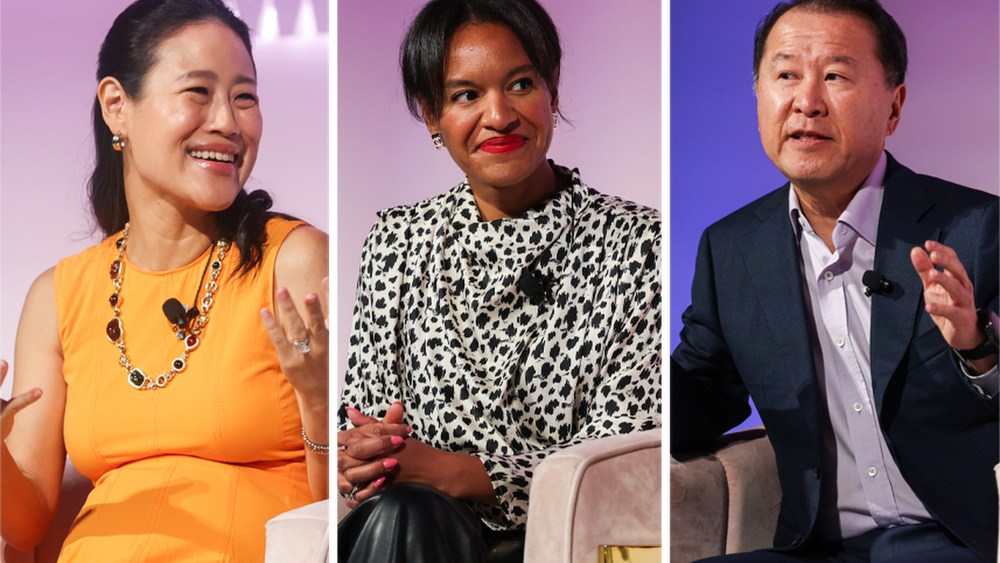
In conversation with WWD deputy managing editor Evan Clark at the 2025 Beauty CEO Summit, E.l.f. Beauty chief financial officer Mandy Fields, Peach & Lily chief and founder Alicia Yoon and iLabs founder and CEO David Chung talked where they’re pivoting — and where they aren’t — as they forge their respective paths forward.
Related Articles

“What we’re doing is focusing on what we can control,” said Fields, who primarily serves a price-conscious consumer that, amidst this uncertainty, “is very much being choiceful,” with how and where they’re spending their money, she said.
“The first [impact] we see is a bill — that tariff bill definitely comes,” said Yoon, who operates the number-two prestige skin care brand at Ulta Beauty with Peach & Lily. “You have to pay that to clear your product; there’s been more friction, more paperwork, slightly longer shipping time — so, a little more work for our team.”
On the flip side, these shifts have forced the brand to reckon with and rework inefficiencies “on the top line and on the cost side,” that previously flew under the radar.
“Step one has been reaching out to suppliers and seeing if we can share the burdens of these tariffs and preparing for that…also taking a deeper look at, ‘oh, this functional team uses this platform to do project management and this team uses this other one — why do we have two?'” she continued.
As a manufacturer, in the weeks since President Donald Trump announced global tariffs, Chung has experienced an uptick in brands “importing finished-good products to the United States,” as well as inquiries about how to shift their formulation and manufacturing processes to the U.S. “Truly, for brands to prepare their Plan B — it takes a lot,” he said. “When you move a formula [process] to the U.S., that’s not a simple task. When you think about the components, packaging and raw materials — you will still need to import some of them, but you can still find ways to minimize some costs.”
Indeed, it’s a balancing act: As much as brands are thinking about how to switch gears, they’re mindful of not straying too far from their core.
“The other thing we’re doing to navigate the complexity is having ‘bright lines’ — sacred territory that we don’t touch,” said Yoon. For instance, the brand is avoiding swapping ingredients in key products for lower-priced alternatives in an effort to cut costs. “It’s very tempting to say, ‘OK — this ingredient, let’s swap it out for something that’s basically the same, or find a new supplier that’s more affordable — but that can impact quality.”
E.l.f., meanwhile, is highlighting products’ bang for their buck, understanding that’s what price-sensitive consumers are looking for. “We responded to this need from our community with our ‘Many-trick Pony’ campaign, highlighting our Halo Glow Liquid Filter, which is a $14 multi-benefit product that you can use in multiple ways and get impact,” said Fields.
“Listening to our community, making sure we’re offering product that meets them where they are and having a little fun with it…beauty is a category where you can bring a lot of joy to your community,” said Fields, “and we can’t forget that.”