
PARIS — ‘Tis the season to be jolly, especially for the Swiss watch industry as its exports have hit another record in November.
Total exports of watches in the month hit nearly 2.5 billion Swiss francs, or $2.88 billion, the Federation of the Swiss watch industry said Tuesday.
While monthly growth had softened since the summer and was 3.1 percent year-on-year in November, the organization said cumulated 7.7 percent increase over 11 months was “comparable to the remarkable performance recorded in 2022.”
Related Articles
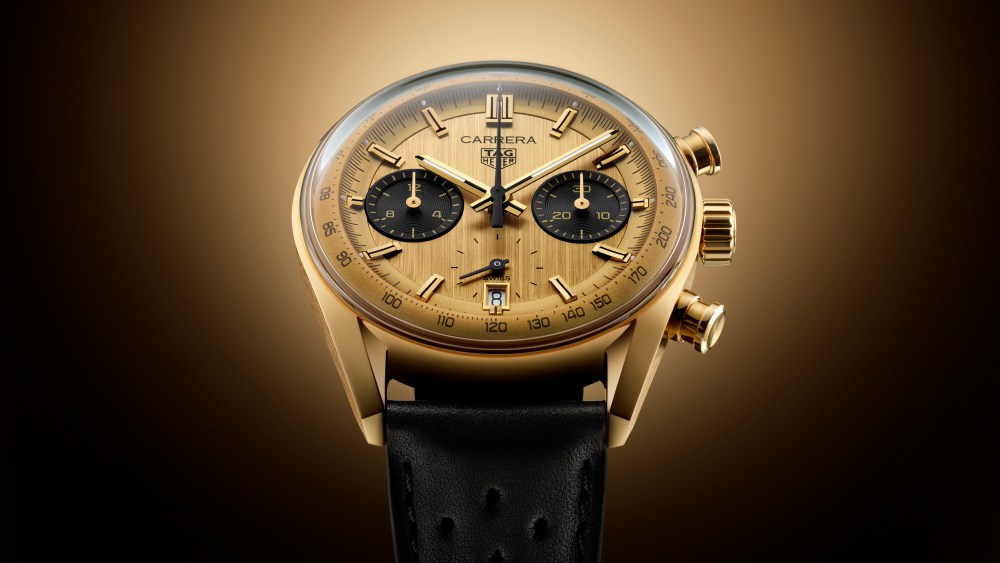
The total number of watches exported in November fell 1.3 percent but their value rose 3.3 percent overall, driven by decline in steel watches and the “other materials” category. By contrast, “other metals,” gold-and-steel as well as full gold timepieces rose in volume as well as value.
You May Also Like
Despite a slowdown in luxury goods in the last quarter and continued headwinds due to macroeconomic factors, demand for watches continued but at a more moderate pace.
Even with a growth of only 0.9 percent in November, the U.S. “performed well,” the organization said. The country led the watch export markets by a wide margin, its 400 million Swiss francs share nearly amounting to the combined results of the Hong Kong special administrative region and China, the second and third markets by size.
The 3.7 percent contraction of the Chinese market saw it slide to the third place, while the nearly 13 percent leap of Hong Kong saw it take second place.
Bernstein’s Luca Solca described China’s performance “surprisingly weak given an expected favorable fourth quarter,” which should have benefited from a favorable base effect.
Elsewhere, other countries in the top 10 also saw high-single-digit or mid-double-digit growth, led by the U.K. and Japan recording respectively 16.7 and 11.9 percent. France, Italy and South Korea on the other hand saw limited declines.
Watches at both ends of the price spectrum saw growth, with the under-200 Swiss francs category rising slightly above its 2022 high level, while the 3,000-plus francs category grew 5 percent for nearly the same number of units as last year.
According to a recent Bain & Company and Altagamma report on the global luxury goods market, there has been “an elevation” of the market, with a contraction in volumes because of higher average retail prices of products.
The slump in export of watches priced between 200 and 3,000 Swiss francs could also point to the aspirational consumer being increasingly priced out.
“The middle range is expected to continue to suffer as [upper] middle-class consumers are more cautious in their spending and taking longer time to decide, as mentioned by [chairman Johann] Rupert during Richemont’s [first-half 2024] earnings call,” Solca said.
Overall, these findings dovetail with the wider trend for a very small number of high net worth individuals driving a large proportion of sales. Retailers such as Mytheresa, Net-a-porter and Neiman Marcus are seeing an elite group of customers driving up to 40 percent of their businesses.