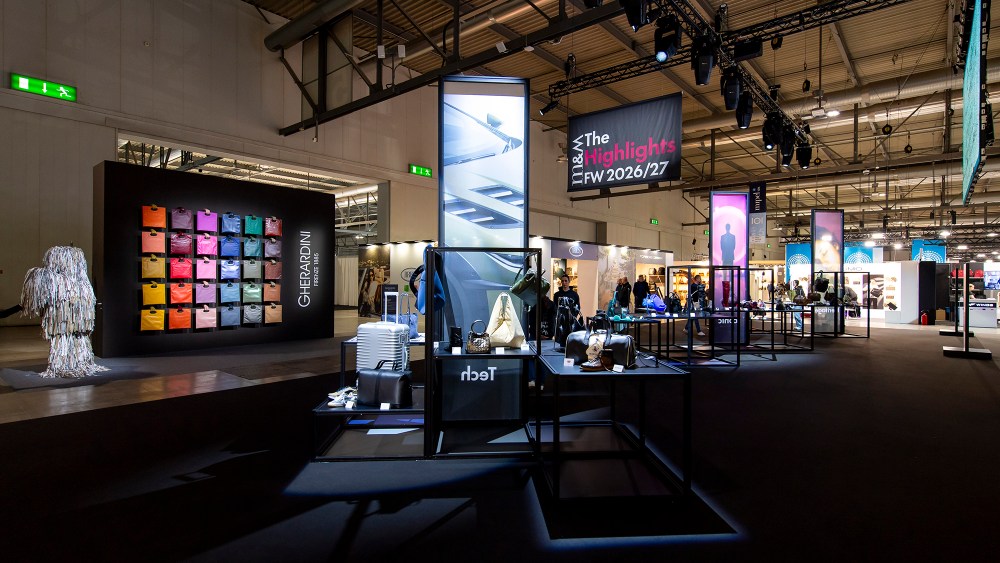
After a challenging 2025, Italy’s leather goods sector is banking on a brighter year ahead.
Executives at the February edition of the Mipel show, which wrapped up at Rho-Fiera Milano on Tuesday, said the outlook is beginning to shift as brands and buyers adapt to a new normal.
“There’s a good vibe and sentiment. Business has been tough the past few years, but we expect 2026 to be better, especially the second half,” said Claudia Sequi, president of Mipel and Assopellettieri. “The winter collections we are showcasing now can mark the turning point.”
Related Articles
Assopellettieri, the association of Italian leather goods companies, estimated that 2025 turnover decreased 4.9 percent from the year-ago period, totaling 11.4 billion euros. The industry saw a contraction in exports as well as sluggish domestic demand, though the overall rate of decline slowed in the second half.
You May Also Like
A number of burning issues continue to weigh heavily, from fresh uncertainty around tariffs and the weak U.S. dollar to persistent geopolitical challenges and increased material costs. “We’ve seen everything,” Sequi said. “We are facing a lot of problems, but we are starting to overcome them.”
She said the key for Made-in-Italy companies is to emphasize their heritage — and inherent sustainability — at a time when consumers are demanding modern product that stands the test of time.
Gherardini, for example, unveiled an immersive installation at the show that was dedicated to the Piattina, one of its best-known models. Created in collaboration with Zerow, which specializes in deadstock fabrics and leathers, the limited-edition collection was crafted from regenerated materials — illustrating how sustainability, research and fashion can come together.

A Fresh Format
Show organizers revealed the “Reinventing Mipel & Micam” project in December in collaboration with Lombardini22, an engineering and design company based in Milan. The goal was to strengthen synergies between the two trade shows, increase international relevance and make the experience more seamless for buyers and vendors.
For the first time, Hall 5 was dedicated primarily to Mipel, with its 200 brands positioned at the front of the space.
The show also debuted “Stars Avenue,” a walk of fame of sorts, to celebrate companies that have participated in every edition of the show for the past decade.
In addition, Micam and Mipel teamed on an interactive factory exhibit, which brought high-tech machines to the trade show floor to highlight the intricacies of the production process.
Key trends and materials showcased at Mipel included hair calf and suede, as well as croc and ostrich prints. Chocolate brown continued to dominate, while burgundy, green and tan were also in focus for fall 2026.
Versatility was the theme for Gabs, which was touting its classic G3 bag. The style can transform into five unique looks, depending on the occasion — from a roomy work tote to a compact evening style. “Women can carry this bag every day,” said Antonella Faedi, general sales and business development manager.
Differentiation was a big emphasis for many brands, including Braccialini. The brand’s best sellers included playful bags with whimsical prints and embellishments.
At Biasia, a vintage-inspired assortment nodded to ’90s minimalism, with crinkled leathers and traditional weaving and hand stitching. The brand also unveiled what it called urban essentials, merging functional styles with signature details like brushed hardware. And a Western range emphasized embellishment, from fringes to stud detailing.