PARIS — Excitement reached a crescendo with the return of physical Paris catwalks last week, but off the runways the accessories market wasn’t as quick to come back alive.
For accessories brands, which can’t take advantage of the much-loved catwalk format, there was less inclination to go back to business-as-usual and more willingness to rethink the way they do business.
More and more brands opted out of hosting Paris Fashion Week showrooms and continued connecting with press and buyers digitally. Buzzy contemporary labels like By Far and Manu Atelier; Georgian shoe label-of-the-moment Mach & Mach; Malone Souliers, Delvaux and Paris Texas are just a few examples.
Related Articles
Continued uncertainty and COVID-19 travel restrictions were the obvious reasons behind their decision to stay digital, but designers are also recognizing that they’re better off spending their time and money elsewhere — namely on content.
You May Also Like
In an oversaturated market where heritage names still dominate — buyers are going all in with new accessories from the likes of Chloé, Givenchy, Loewe and Saint Laurent — having a compelling story, a steady flow of Instagram-worthy visuals, and the right influencers wearing your shoes or bags on the streets has much higher return these days than a fancy presentation, a showroom at the Ritz Paris — or even new, seasonal product.

It’s why a big majority of accessories labels stayed focused on their core shapes and used up their budgets to shoot campaigns which were then wild posted all over the streets of Paris; to host events. or to engage with influencers and other creatives with clout. It’s a better success formula for luring the buyers, who are looking at street style and social media feeds to find out what’s hot or in many cases actively participating in the influencer scene themselves.
“Social media has established itself as one of the sources we look to when considering which pieces will drive volume in the next cycle,” said Lisa Aiken, Neiman Marcus’ new fashion director.
Cassie Smart, head of women’s wear accessories at Matchesfashion, echoed her thoughts, explaining that as important as a strong new collection is, “with that you need inspiring creative content to drive that emotion and engagement.”
Libby Page, senior market editor at Net-a-porter, added that brand content and online communities help Net’s teams determine popular styles to buy into and singled out Paris-based shoe designer Amina Muaddi as a good example of someone who uses content to her advantage.
Muaddi has never participated at a fashion week or hosted an official presentation, but instead keeps the momentum going with strong campaigns, limited-run collaborations, and plenty of personable content. During fashion weeks she is her own ambassador attending shows, from Prada to Loewe and Balenciaga, in runway looks and her own footwear designs — all cleverly documented on her social feeds.
Post-lockdown, more and more accessories players are seeing the value of content and wanting to take a leaf out of Muaddi’s playbook.
Gherardo Felloni at Roger Vivier for one chose not to bring back the Hotel Vivier and instead launched a film that told a story about the power of dreams. Apart from flashes of some new spring 2022 sparkly platforms, there was barely any product to be seen — the focus was on Felloni’s message, the fantasy storyline, the music and guest star Isabelle Huppert’s striking performance.
“It’s important to respect the audience, which might not be 100 percent linked to fashion. You have to invite them to follow you and tell a story beyond product,” said Felloni.
In the contemporary space, the brands that are strong on online content, engaged with fashion’s best online personalities, and able to create the kind of visuals that draw likes and shares are the ones that have managed to hold onto their relevance despite the market’s swing back to premium luxury and classic styles.
“Luxury heritage houses are front of mind with the client right now, particularly in handbags where identifiable branding and styles are incredibly desirable amongst a new luxury shopper. That said, there are a few ‘disruptors’, who having built hype through scarcity and social media in recent seasons are quickly gaining traction,” said Neiman’s Aiken.
“Everything we do is content. We are constantly shooting our own content and working with influencers in the wider sense of the word, meaning celebrities and other creatives. It’s been a major driver during the lockdown and the reason we were able to keep our sales strong,” said Luisa Dames, founder of the Berlin-based footwear label Aeyde.
London-based Miista also said that the artist interviews and humorous videos the brand started producing during lockdown led to direct sales increases. As a result, the company took the leap, invested in its own factory and started producing its first ready-to-wear collections earlier this year.
Istanbul-based Manu Atelier is another label that has kept buzzy and highly visible across its social channels: For spring 2022 it debuted a campaign shot by Harley Weir that was wild posted across Paris and hosted an intimate lunch, with some of the brand’s stylish and highly followed friends, to highlight the one new bag style it plans to push for fall.
Wandler, too, has been keeping its sell-throughs high by pouring more effort into giving customers an insight into its colorful world, with everything from broadcasting its takeover of an old Amsterdam gas station during the city’s fashion week and transforming it into a light installation, to staging makeshift street style shoots during lockdown, and showing the designer’s flair for electric color and architectural design through arty still life shoots.
“For me the biggest role in trying to maintain our success is to stay sharp, fresh and renew ourselves at all times within the Wandler signature. The moment that you feel comfortable, it’s time to push the envelope,” said Wandler, adding that her team shoots fresh content at least every two months and during online sales markets this can go up to four times a month.
It’s clearly paying off. According to Page, “Wandler is trending on Net-a-porter for its well-priced classics,” while its elevated content and storytelling capabilities ensure it “aligns with the luxury market.”
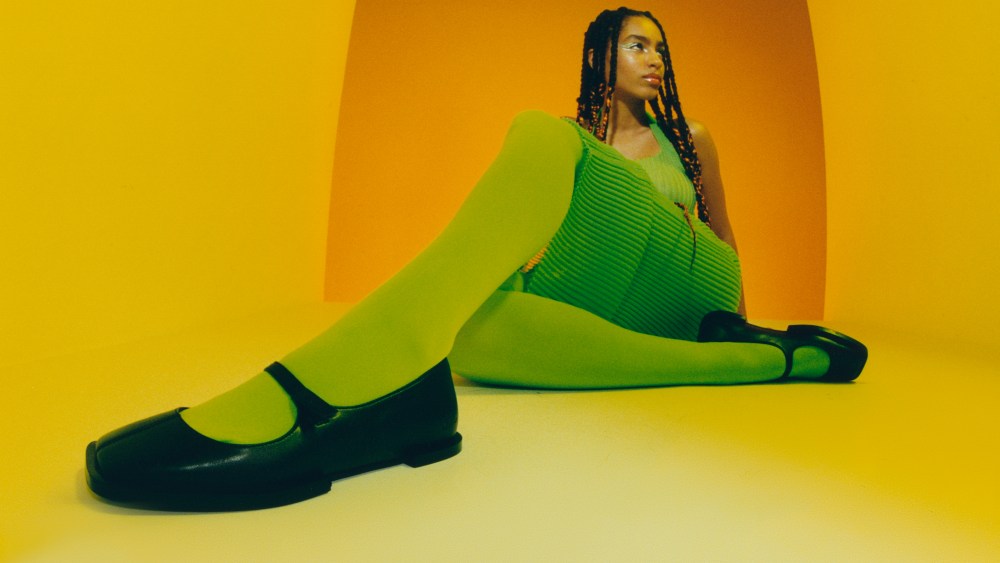
Paris-based Nodaleto is another brand that has gotten customers, including the TikTok generation, hooked on its cool platform Mary Janes and square-toe pumps because of its ability to create striking content.
While Julia Toledano is constantly refining and renewing the product, cofounder Olivier Leone brings it to life with hip, humorous imagery from its Netflix parody “Nodflix,” to spooky Halloween films and illustrated campaigns with celebrated Japanese artist Harumi Yamaguchi.
“Gen Z is crazy about the brand and I think it’s because of our [approach to] content. Image-wise we think about the brand like going into a museum, you wonder between pop art, something more timeless, then a new, eccentric artist. That’s how we play with our images and the new generation loves it when you create authentic content. Every time it’s about how marketing has an influence on them. We strive to entertain them day after day, we answer to everyone’s message and that’s how we create strong bonds,” said Leone who runs a creative studio in conjunction to his work for Nodaleto and is solely focused on image creation. “Without design nothing would be possible, but now you have to have everything aligned.”
For some brands, what makes their content and subsequently sell-throughs strong are broader messages of sustainability and inclusion that they stand behind.
For former Jimmy Choo design director Alfredo Piferi, the fact that his brand has a story to tell around responsible consumption is a big part of its rapid success. Sales grew over 130 percent in the last year, despite the slowdown caused by global lockdowns.
“I’m sure a big percentage of our success was the responsible and vegan aspect: people were ready and they were looking for it. If it was another leather shoe brand I would have probably still pushed forward but not as much or as quick as this. At the end of the day we all like a good story and this is a genuine story that comes from my heart and from really wanting to change the perspective of the market,” said Piferi.
Ditto for JiiJ, a new footwear name that has just launched in Paris and offers boots and Mary Jane pumps made using apple leather and available in a wider size range.
“Similar shoe styles might have been done before but what people are buying into is the story and this message of inclusion,” said founder Ieva Juskaite, who has been putting her focus on storytelling from the get-go, opting out of big launch events or physical showrooms and wild posting her futuristic debut campaign across Paris to create buzz.
While many brands are focusing on signature, seasonless styles and the right kind of content that keeps them feeling new and fresh, novelty isn’t completely dead.
There’s a simultaneous appetite for having fun with more risqué, kitsch accessories, be it glitter heels, dangerously high platforms or anything that harks back to the ’90s and early Aughts — undoubtedly a result of the trending Y2K hashtag on TikTok. Some brands are happy to ride the wave, as ephemeral as it might be, with hologram leather bags in the case of By Far; platform mules in patent pink or metallic blue leathers in the case of Paris Texas; and satin “Paris Hilton” baguette bags in the case of Italian up-and-coming label Iindaco.
“Bold, bright and optimistic dressing across ready-to-wear has trickled down into accessories,” added Page.