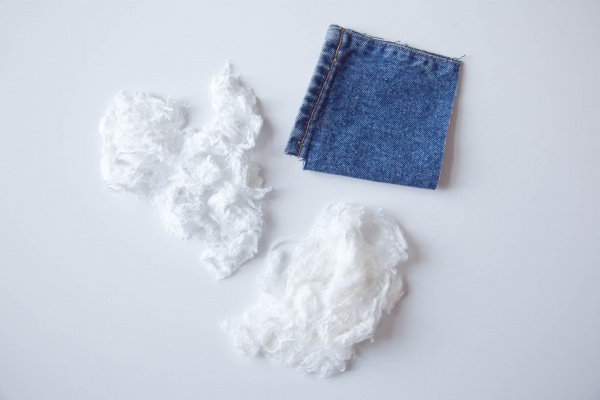

Re:newcell’s upcycling process has taken a giant step forward.
The Swedish company, which has developed a technology that can recycle cotton and other cellulosic textiles into a dissolving pulp that can then be turned into new fibers such as viscose and lyocell, has started construction on a demonstration plant that will help turn its vision for sustainability into a reality.
The new factory, located inside the AkzoNobel facility in Kristinehamn, about two hours outside Stockholm, is expected to be ready during the first quarter of 2017.
Re:newcell was founded in 2012 by a group of researchers from the Royal Institute of Technology in Stockholm and a small investment company. In early 2015, two Swedish School of Textiles students created a white T-shirt using only Re:newcell fibers recycled from blue jeans; tests found the garment to be comparable with other high-quality fibers when it came to dyestuff absorption, tenacity and abrasion resistance.
Related Stories
Speaking last November at Cradle to Cradle’s Fashion Positive event in New York City, the start-up’s business development manager, Henrik Norlin, revealed the process was ready to be scaled to about 3,000 tons per year.
“We’ve been doing this on a laboratory scale, up to 10 kilograms (about 22 pounds) at a time. What we want to do now is scale this because there’s not much more we can do on the lab scale,” he said.
That’s why Re:newcell is investing 8 million euros ($9.1 million) to build an initial production line.
“We are very pleased to now be able to move forward and contribute to realizing the dream of a sustainable textile industry,” Malcom Norlin, the company’s chairman, said in a statement. “Kristinehamn is located in the paper province in Värmland and gives us access to great skills when it comes to resource-efficient mass production.”