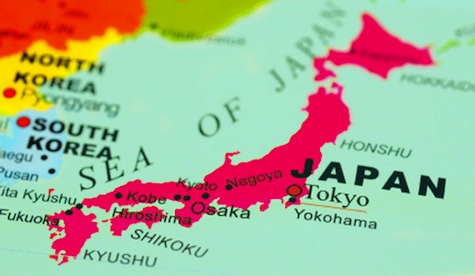
Japan has relaxed its Generalized System of Preferences (GSP) rules of origin for knitted or crocheted apparel articles and clothing accessories. Under the simplified system, knitwear exporting nations like Bangladesh will enjoy duty free exports even if the knitwear product is made from imported fabrics.
The eased origin rules, which took effect April 1, mean products classified in Chapter 61 of the HS Code can be qualified as originating goods if they were manufactured from fabrics (woven fabrics, felt, non-wovens, knitted or crocheted fabrics or lace) instead of only qualifying as originating goods if they were made from textile fiber yarns.
Related Stories
Japan grants preferential treatment to 137 developing countries, including Bangladesh, Cambodia, Ethiopia, Lesotho, Myanmar and Vietnam under its GSP scheme.
According to Japan’s Ministry of Foreign Affairs, here’s how the origin criteria works:
- In the case of the goods produced in a preference-receiving country only from the materials imported from Japan, or those produced in a preference- receiving country only from the materials wholly obtained in the preference-receiving country and the materials imported from Japan, such goods will be regarded as being wholly obtained in that country.
- Any goods exported from Japan which have been used as part of raw materials or components for the production of any goods produced other than those goods as provided for in the above-mentioned paragraph (1) shall be regarded as wholly obtained in that country.
For goods made in Indonesia, Malaysia, the Philippines, Thailand and Vietnam—regarded as a single preference-receiving entity—the below cumulative origin benefits will be extended:
1. When calculating the rate of use of materials not originating in the 5 Countries, the goods listed below are treated as having originated in the 5 Countries.
- All raw materials consisting only of the goods originating in the 5 Countries.
- All raw materials consisting only of the goods exported from Japan to the 5 Countries.
- All raw materials consisting only of the goods prescribed in a. and b.
- If mixed with raw materials from other countries (except goods exported from Japan), the portion of the raw materials which conform to the provisions of a. through c.
2. The goods are qualified to have originated in one of the countries when certain requirements as to their process or manufacture are satisfied in all these countries involved in their production.
Bangladesh believes the simplification will be a boon for exports, as now the country can export any ready-made garment item (RMG), woven or knit, regardless of where the fabric comes from, free of duty to Japan.
Japan relaxed its GSP rules of origin for woven apparel in 2011. According to the Bangladesh Garment Manufacturers and Exporters Association (BGMEA), the country’s RMG exports to Japan totaled just $74.33 million in fiscal 2008-09, and the number reached $572.27 during the July 2013 to June 2014 period. The BGMEA said the easing of the GSP policy played a major part in this growth, and that the further relaxation will help Bangladesh realize greater market share for its knits.