
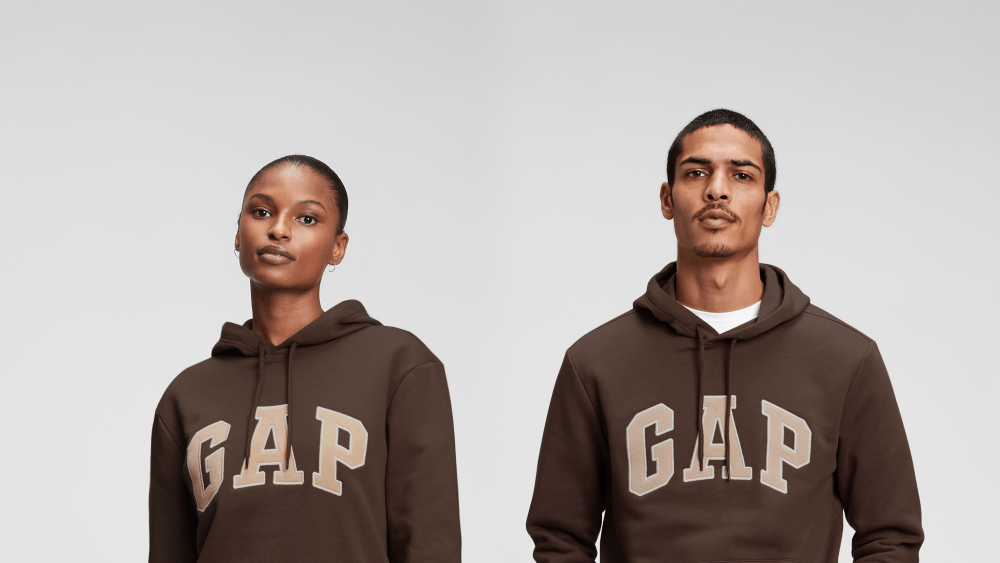
Gap Inc. has revealed its progress on the sustainability front — fresh off the heels of the Yeezy Gap hoodie drop Wednesday.
Noting “strong sustainability practices are a vital way for us to ensure the future,” Sally Gilligan, chief growth transformation officer at Gap Inc., said in a statement: “Our customers want to wear their values. We believe strongly that we can create amazing products and experiences for our customers while also ensuring we create opportunity and thriving communities.”
The twinned announcements of the sustainability report and Yeezy Gap drop may speak to the company’s crusade to woo the next generation and ESG investors alike. The $90, 100 percent cotton Yeezy Gap hoodie is already popping up on Depop for $899 in resale value, being sold out in most colors and sizes and now on backorder. Cotton is a core material under reform at Gap, with the company cleaning up over half of its cotton for reduced environmental impact. The hoodie follows in the footsteps of the $200 Yeezy recycled nylon jacket that debuted in June.
Related Articles
Cotton is Gap Inc.’s most-used material, representing 61 percent of the material mix across brands. Gap’s goal is to source 100 percent of its cotton from “more sustainable sources,” which the company determines from Higg Index data, Textile Exchange and its own lifecycle assessments. In 2020, Gap reported 54 percent of cotton sourced in this manner.
You May Also Like
Despite some vagueness, Gap Inc.’s environmental goals boasted some clear-cut headway across water, climate and biodiversity (or materials). Year-end sustainability data — including goals and progress to date across social and environmental areas — appear on the company’s website and its latest report released Wednesday.
The company has already achieved some climate milestones, including reducing scope 1 and scope 2 emissions (owned operations) by 50 percent from a 2015 baseline. As for broader operations, Gap has a goal to reach carbon neutrality across its value chain (across all scopes) by 2050 but the company did not reveal scope 3 data, saying it will be available in 2022.
The majority, or 80 percent, of Gap’s supply chain is investing in women’s empowerment initiatives. These include the Empower@Work with Business for Social Responsibility’s HERproject and the International Labor Organization’s Better Work, among others, to drive skills education for women workers and gender equity in global supply chains.
While seven goals fell under women’s empowerment and human rights, the majority, or 85 percent, lacked interim targets, saying “tracking in progress,” due to goals being recently set (per the report). The Personal Advancement and Career Enhancement program, however, touted its strides since 2007. To date, more than 804,000 women and girls have been assisted through Gap’s PACE program.