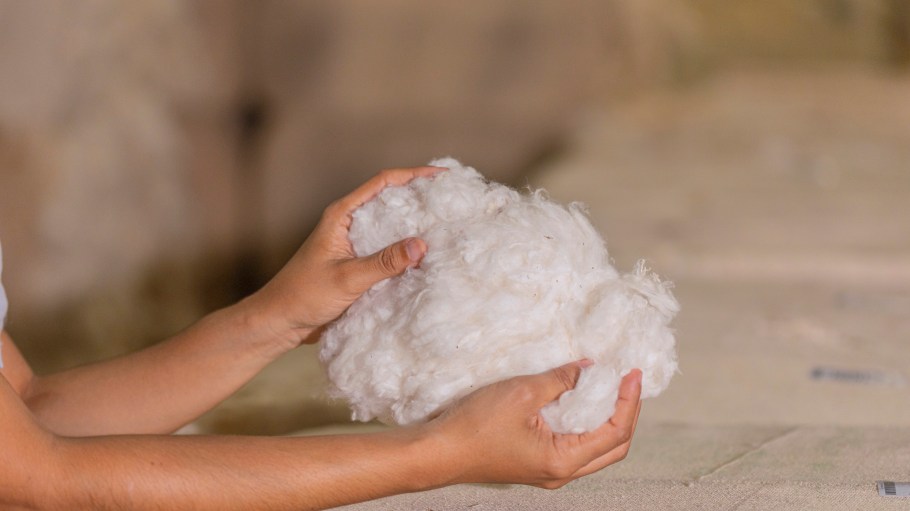
Global denim mills and manufacturers are driving the jeanswear industry’s shift toward regenerative cotton.
Through initiatives that promote regenerative agriculture education and provide funding, these mills are sourcing locally grown, traceable regenerative cotton and passing its environmental benefits on to brands.
Brazilian mill Vicunha, which accounts for 40 percent of Brazil’s denim fabric production, was drawn to regenerative agriculture because it safeguards the health of the land and supports local communities. In 2023, the mill launched Regen by Vicunha, a strategy to incorporate locally sourced regenerative cotton into its product portfolio by partnering with Scheffer, a leader in regenerative cotton production in Brazil.
Related Stories
“In addition to promoting biodiversity and carbon sequestration, the cultivation of our local regenerative cotton is exclusively carried out using rainwater, representing a significant advantage compared to other regions, greatly reducing water footprint in denim production,” said German Alejandro, Vicunha CMO. “This input is gaining strength as a sustainable alternative for large-scale production.”
By 2025, Vicunha aims to produce up to 2 million meters of denim made with regenerative cotton by 2025. The mill plans to scale up to 5 million meters by 2030.

“Since [launching] Regen by Vicunha, we have been working in strategic partnerships with many important local retailers, brands and creators, launching collaborative collections made with regenerative cotton. As a key partner in the fashion industry and leading sustainable practices in the supply chain, we are constantly seeking to create mutual value and promote good practices throughout the jeanswear network,” Alejandro said.
Pakistan-based Artistic Milliners offer a full collection of regenerative fabrics. The drapey and loose fabrics have been the most popular.
Artistic Milliners’ regenerative program started in 2023 with 92 farmers producing 300 metric tons of cotton lint. In the 2024 season, the program has increased to 600 farmers and 6,000 acres of land, producing approximately 2,000 metric tons of cotton lint. “Based on the demand, we have been able to exponentially increase the farming capacity in the last two seasons,” said Saqib Sohail, Artistic Milliners’ lead-responsible business projects.
Less than two percent of Artistic Milliners cotton consumption is regenerative cotton, however the firm’s goal is to increase to five percent in the next three years.
The program is in Rahim Yar Khan, in the southern region of Punjab province—the same location where the mill has been growing its Milliner Cotton Initiative cotton since 2019.
“Our target is to help regenerate the whole ecosystem in this region, which has been affected by decades of cultivation using chemical-based inputs,” Sohail said. “We are working with the RegenAgri standard, which provides a holistic approach to cultivation, focusing not only on the crop but also on soil health, community well-being, biodiversity, and farmer welfare. We [got] the farm areas certified in the first season, and our goal is to scale the program to include a larger community. We expect to increase the area by 25-30 percent per year for the next three years.”
The work is allowing the mill to look at carbon emissions through a new lens as well. “Through this program, Sohail said Artistic Milliners is calculating emissions at the farm level, providing this information to the farmers, and helping them reduce their impact. “This will eventually help the area combat climate change,” he added.
In Pakistan, regenerative agriculture is viewed as a solution to correct the region’s loss of yield and productivity due to climate change and land degradation over the last few decades.
“Regenerative cultivation can help regenerate and strengthen the soil and improve the whole ecosystem’s biodiversity. This will help create an enabling environment for farmers, who are otherwise moving away from cotton farming or even from farming altogether,” Sohail said.
Building on the success of its organic cotton program, Pakistani vertical denim manufacturer Soorty launched the Soorty Regenagri Initiative (SRI) in 2023. Covering 5,000 acres in Bahawalpur in South Punjab, the initiative engages 1,100 small-scale farmers.
SRI aims to safeguard soil health, biodiversity and community wellbeing while delivering responsibly grown, traceable cotton for Soorty fabrics. Through Soorty’s hands-on Farmers Training model, farmers master practices that minimize soil disturbance, enrich biodiversity, and lower carbon footprints, contributing to climate resilience. Additionally, the project is designed to ensure an active inclusion of female farmers to promote diversity and empowerment.
“Regenerative farming is the need of the time; it is essential for reversing ecosystem degradation caused by chemical dependency and intensive tillage,” said Eda Dikmen, Soorty senior marketing and communications manager. “By focusing on biodiversity, soil health, and reduced chemical use, regenerative practices help to restore harmony between farming and the environment.”
In 2023, Soorty used 250 metric tons of regenerative cotton. This year, Dikman said the company scaled to six times that amount, with over half sourced from its maturing regenerative crops. “While our current lint production is 1,300 MT, we [can] expand by two to three times as demand grows,” she said.
Future growth will align with customer demand, which Dikmen said is growing given the strengths that regenerative cotton offers to larger sustainability goals and commitments.
Cotton collaborations
Partnerships play an essential role in establishing and scaling regenerative cotton programs.
Turkish mill Maritaş Denim supports regenerative agriculture practices in the Harran region through a joint project with Harran University and Gaziantep University. The project entails comparing the differences between conventional and regenerative agriculture to measure the quality of regenerative cotton and the wearing comfort of the fabric. Fatih Kesim, Maritaş Denim’s deputy general manager, said it is Turkey’s first university-industry cooperation on regenerative cotton fiber production and its use in the textile industry.
Additionally, with the cooperation of local farmers, Maritaş aims to increase national awareness of cotton production through renewable agricultural practices, increase the number of farmers participating in the regional renewable agriculture facilities and increase income.
In 2024, the project, which is in its second year, became the first regenerative project accepted into Farm Program of the independent organization OCA (Organic Cotton Accelerator) and granted by The Scientific and Technological Research Council of Türkiye (TUBITAK). Control Union is the certification partner.
The mill’s Rejuvenate collection focuses on fabrics that use regenerative cotton, The fiber can also be applied to any other product.
Regenerative cotton grown through the project accounts for 13 percent of the cotton that meets Maritaş’ capacity. However, Kesim said the mill aims to scale the use of regenerative cotton in its production by increasing the land within the scope of the project. This year alone Maritaş grew the project area five times over compared to the first year.
“Of course, this depends on demand in our supply chain, but we always have the motivation to increase these investments in line with our sustainability commitment and we think such projects are important,” he said.
Maritaş’ regenerative journey began when a large brand with business ties to a farmer in Brazil inquired about it. It triggered the mill to evaluate the issue internally and how it could produce regenerative cotton locally. Now Kesim said regenerative cotton is “on the agenda of all brands” especially brands that value how the agricultural practices support their broader sustainability goals.
Turkish mill Bossa expects that its use of regenerative cotton will increase from one percent in 2024 to 10 percent in 2025 and to 25 percent by 2030, though Besim Ozek, Bossa’s strategy and business development director, said that will be decided by brands.
Ozek, who follows regenerative agriculture practices on his personal farm, anticipates demand for regenerative cotton to grow as clients become more familiar with the benefits the same way they did with organic cotton. The mill currently offers 100 percent regenerative cotton fabrics and blends with other sustainable fibers like lyocell, recycled cotton and Circulose.
Bossa launched its regenerative cotton initiative three years ago in Adana, Turkey—about six miles from the company’s mill. At the heart of the project is a long-term agreement with the Işık family, who’ve practiced farming for six generations. Bossa is covering all the certification, animal manure, and compost tea costs and paying the family a 20 percent upcharge for the cotton.
“Each year, we are developing our program. We are keeping the practices and dropping romantic ideas,” Ozek said.
No tilling, AI-controlled dripping irrigation, animal manure, compost tea, soil and leaf testing and crop rotation (cotton, wheat and potato) are on the mill’s “keep” list. It has dropped the idea of keeping sheep on the farm after harvesting and softened its stance on using herbicides after insects attacked the cotton bowls and vinegar did not help.
Orta recently launched regenerative cotton fabrics with The Lycra Company’s new bio-derived Lycra. “We combined these two materials because we are after the most responsible fabric that it gives more to Earth than it takes. This bio-derived Lycra’s raw material BDO is derived from industrial maze grown with regenerative farming principles too. So together, they advocate for better soil health, enhanced biodiversity, less dependence on fossil-based resources and at the end leads to less carbon footprint,” said Sebla Onder, Orta’s marketing and sustainability manager
Onder said interest in regenerative cotton is high and growing. Though the Turkish mill does not have a regenerative farming project, about 15 percent of its cotton consumption comes from regenerative sources. “There is always a curiosity around comparison with organic cotton coming from our customers,” she said. “The common questions are the continuous supply, if there is any performance difference compared to other cottons and if there are any available certifications.”
She added that clients are also interested in regen+organic cotton. “While regenerative systems do not push for organic production whose main principle is using non-GMO seeds, it encourages to eliminate GMO inputs with time to enrich the biodiversity,” Onder said. “The brands who build their brand identity as well as material strategy on organic cotton are more open to regen systems but would like to use regen+organic on their products. However, regenerative itself is a new but growing application system and need time to adjust and grow. Regen+organic would be the dream cotton but again needs time to grow.”
Learning in progress
“Regenerative agriculture is a new landscape, and we are working with our partners to grow the program sustainably, ensuring that farmers receive the most benefit,” Sohail said.
Artistic Milliners partnered with WWF-Pakistan as its implementation partner for its project as well as several research institutes to develop high-quality seeds for farmers and other bio-inputs like bio-fertilizers and bio-pesticides.
Sohail said choosing the right program that aligns with their values is important for brands. “Clients are careful not to claim something that they cannot prove. This is why we have gone with the robust standard of RegenAgri, which is widely accepted and has strong values,” he said.
Vicunha’s three production units in the Northeast region of Brazil are RegenAgri certified, enabling end-to-end traceability of regenerative cotton from cultivation to the final consumer, while ensuring the well-being of both the soil and the people who tend to it.
As regenerative agriculture grows, mills and brands face the familiar challenge of choosing which program, standards and certification body they can trust, especially as new EU laws target greenwashing.
“I think there is a lot of confusion with different regenerative programs in the market at the moment,” Sohail said. “People have been defining ‘regenerative’ differently, and that causes concerns when you start labeling products. A good way forward would be for standard-making bodies to arrive at a point of convergence. As regenerative agriculture grows, certification bodies also need to improve their capacities to audit and provide the right documentation quickly.”
While Ozek said RegenAgri serves a purpose he believes the standard should be updated and improved. “Compost tea, testing soil and leaves, and the education of farmers should be added. If we want to heal the soil, regenerative farming practice education will be more helpful than a certificate. Building a regenerative ecosystem should be taught in schools,” he said.
“Regenerative systems are based on constant growing. However, the certifications are based on once in a year audits,” Onder said. While they’re important for assurance and trust, she said the certifications usually lack on farmer/grower support systems. Additionally, mills and brands tend to forget about how challenging and labor intensive the farming is and only focus on the final paperwork.
“Certification or not, in regenerative farming the control should be continuous to see the improvement or failure and it should be educating and supportive. Some of the active regenerative programs act more like a consultancy too, which is great for farmers,” she said.
Dikmen said clients’ concerns revolve around supply chain consistency, lead times, and cost implications. However, Soorty’s vertically integrated setup is an advantage because it enables Soorty to oversee the entire production from fibers to finished garments, ensuring flexibility and purpose-driven design.
She added that though regenerative farming standards emphasize continuous improvement, “there is room for better alignment across certification bodies and clearer communication on scaling practices to meet increasing demand.”
One hurdle opposing a unified standard is how land differs region to region. “Regenerative agriculture practices may vary depending on the micro and macro factors of each region,” Kesim said. “This generally has many purposes, such as improving soil, using limited or controlled pesticides, irrigation and protecting wildlife. However, the methods applied to achieve these goals may vary depending on the region, and your application methods and their effects are measured during the certification processes.”
Cotton also doesn’t grow overnight—regenerative agriculture projects require long-term commitments.
Soorty’s initial contract spans four years, with plans to extend based on its success. “We aim to support our brand partners in achieving their sustainability goals while advancing the narrative around cotton—shifting from blame to possibility through science-backed practices and farmer-centric innovation,” Dikmen said.
Maritaş prepared a road map calendar for the first stage of its project, which began in 2023, to the end of 2025. Soil development and productivity are improving each year, and the best results will come to fruition in the third year. For this reason, Kesim said the mill is determined to continue the project.
“Since these types of projects are parallel to our environmentally friendly approach and sustainability policy, we see it as our mission to offer such products with high awareness to the market,” he said.
The positive influence of programs supporting regenerative agriculture is far-reaching and expansive.
Community is at the core of Artistic Milliners’ program, Sohail said. “All stakeholders are considered, not just the cotton plant. At the farm level, everyone is connected: animals grazing on the farm, forests and trees around the land, and communities living on and around the farm. All of these are taken care of and discussed, and their condition improved when regenerative farming is implemented accurately.”