
The Made in America push is having an impact across the retail landscape.
From mass-market giant Wal-Mart Stores Inc., which in 2013 committed to buying an additional $250 billion in products that sup- port American jobs over 10 years, to Brooks Brothers’ acquisitions of American factories to upscale Worth, which makes all of its first samples and certain styles in the U.S., retailers are embracing manufacturing closer to home.
When Wal-Mart — with $482 billion in annual sales — spoke, it opened ears and eyes.
“From the beginning when we put this ‘purchase order’ out there, we’ve had challenges,” said Cynthia Marsiglio, vice president of U.S. sourcing and manufacturing for Wal-Mart U.S., referring to the $250 billion commitment. “The obstacles have included navigating the supply chain and finding raw materials or component parts.”
Related Articles
Product categories with varying degrees of complexity can make manufacturing in the U.S. difficult.
You May Also Like
“Apparel and textiles are more challenging areas,” Marsiglio said. “Not everything is feasible in the U.S. today. But new technology and automation are making apparel and textiles competitive again.”
For the second straight year, the Wal-Mart Manufacturing Innovation Fund winners of $4 million in total grants were entities related to textiles.
“We’ve seen progress across the big food categories, as well as general merchandise and apparel,” Marsiglio said. “In toys, we’ve seen great momentum from the supplier base.” Marsiglio said Wal-Mart is “right on plan” in achieving its 10-year goal.
“We started looking at 1,300 categories across the business,” she said. “We’ve made a significant commitment to what we’ll buy.”
According to Marsiglio, Wal-Mart customers “have a desire to know where her products come from.” “Customers care and we don’t see that going away,” she said. “Behind price, it’s a driver of her purchasing decision. We’re trying to communicate [Made in USA products] and make it clear to her and easy to find. We’re really clear about the labeling.”
Wal-Mart this spring was accused by the watchdog organization Truth in Advertising of labeling products as Made in the U.S. when they were not.
“There were some inconsistencies across a small portion of walmart.com,” Marsiglio said. “We were quick to react and made some corrections. There were some errors we were able to address.”
At the other end of the price spectrum, Brooks Bros. has taken an organic approach to manufacturing in the U.S.
“There’s a lot of movement in the U.S. to bring back production and re-shore,” said Claudio Del Vecchio, the retailer’s chief executive officer. “The consumer seems to be more interested in American-made products. The challenges are still the same. All the machines that come to U.S. factories are imported. Technicians able to service those machines are very rare and the components aren’t here.”
Del Vecchio said he grew up in a factory of his parents’ business — Italian eyewear giant Luxottica — so when he came to Brooks Bros., it was “a natural thing to evaluate the state of the manufacturing.”
“At that time, it was not great,” he said. “The two factories that were left, a tie factory and a shirt factory, were planning to close. I looked at them and felt we could do something about them.”
Del Vecchio invested in the two factories and also purchased Southwick Clothing LLC, a suit manufacturer.
“It was on the edge of its life, with 290 employees,” he said. “Today, we have 550. We’re moving at the end of the month to a new building that has twice the amount of square footage — 45,000 square feet. We grew a little faster than we expected.”
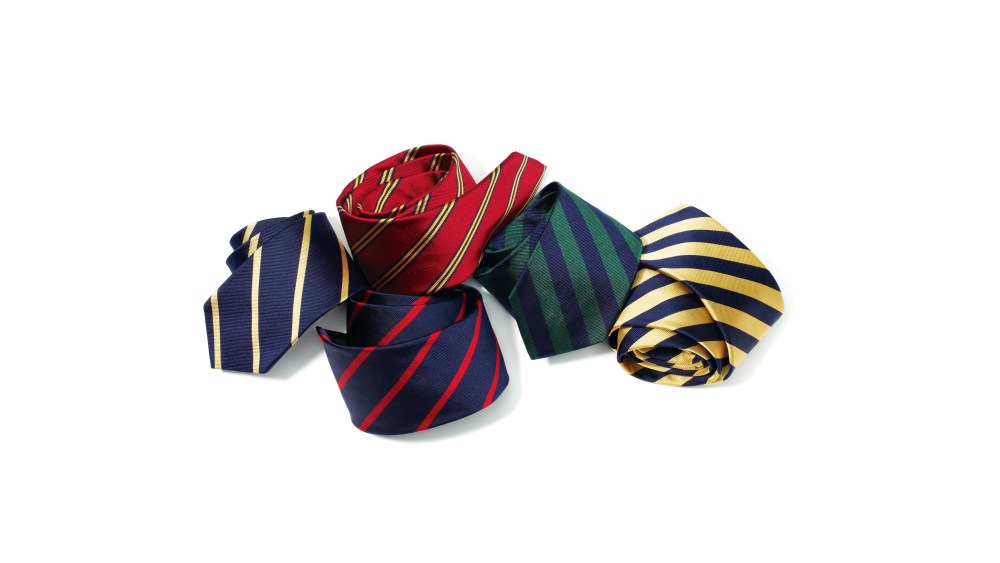
Brooks Bros. has acquired three factories since 2007, including Southwick in Haverhill, Mass., where 80 percent of the brand’s suits are made; a plant in Long Island City in Queens, N.Y., where all the ties are made, and a third factory in Garland, N.C., where all of the luxury and made-to-measure shirts and shirts under the Black Fleece label are produced.
“We’re keeping the Southwick brand alive,” Del Vecchio said, noting that the brand is sold to independent retailers in the U.S. and internationally. “We’re close to being able to offer a lot more product.
We can increase production.” The ceo said making products “in the U.S. per se is not the mission. The mission is offering our customer quality products. Made in America can fulfill part of that dream.”
Manufacturing at home can help increase the service level in stores. He said, “It gives us an opportunity to stock faster and be closer to the market. There are a lot of advantages. Of course, the cost is still the biggest problem because we’re importing all of the components.” Del Vecchio said the next challenge will be producing women’s wear in the U.S.
One of the stars of the Made in U.S. renaissance has been the Detroit-based watch brand Shinola, which has proclaimed its roots in a series of emotion-stirring videos and advertisements. Tom Kartsotis, the firm’s founder, discussing the planned introduction of audio devices, eyewear and jewelry at a June conference, said, “If [Shinola] can make a watch in Detroit, I think we can make just about anything.”
Shinola produced its first Made in Detroit watches in 2013 and its assortment has grown to include bicycles, paper goods and leather.