
ON THE ROAD
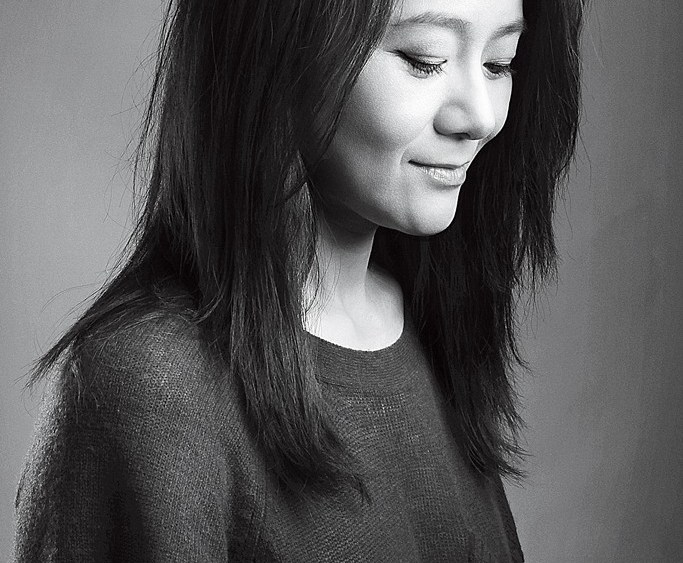
Yujia Zhai-Petrow designs her 1913Berlin collection for metropolitan nomads like herself. The Berlin-based designer was born in western China, on the ancient Silk Road, but it was cashmere and creativity that helped weave her career.
Zhai-Petrow’s home region, Xianjing, is one of China’s most diverse, home to many ethnicities and cultures. Zhai-Petrow remembers being fascinated with the colorful handcrafted clothing and high boots of the area’s tribes, as well as the work of her father, an accomplished oil painter, who encouraged her creativity. Her love of beauty was invigorated by living and studying in some of the world’s top cities, such as Hong Kong and Paris, and refining her skills at New York’s Fashion Institute of Technology and London’s Central Saint Martins. Her background includes fine art and fashion.
Related Articles
RELATED STORY: Berln Preview: Shifting Landscape >>
You May Also Like
An assignment for a cashmere brand set her on her current path. “Actually cashmere chose me,” she laughed. Developing an affinity for the luxury yarn, Zhai-Petrow set up a cashmere consultancy, and has since designed knits for a range of big-name clients from the mass market to the catwalk.
Zhai-Petrow found a home in Germany’s capital, finding an affinity with Berlin’s combination of the serious and the carefree. Inspired to create her own line, she launched 1913Berlin, which made its Mercedes-Benz Fashion Week Berlin debut last January.
“I found my comfort zone here, but it took a long time,” she said.
Her range of men’s and women’s separates is easy but elegant, made from Italian and Mongolian yarns, along with silks and delicate chiffons. “I don’t want to do museum pieces,” she said of her designs. “[I want] you to wear them.”
The brand’s sexy knits challenge cashmere’s buttoned-up reputation, and provide new basics, like flowing mini capes that could be tossed over a top and jeans or draped over a cocktail dress, and unisex cocooning sweater coats that transform from cozy to cool with the flick of a zip. A bell-sleeve jacket shows a subdued sparkle, while cable-knit mini shorts redefine HotPants. Sporty touches like waffle-weave sleeves, crewnecks and sweatshirt-style V-inserts were regular features of the fall line, relaxed and refined in neutrals (taupe, black, gray, tan) punched up with orange, purple and violet — intended for the on-the-go urbanite.
For spring, Zhai-Petrow is taking inspiration from another sort of traveler — a 19th-century Victorian — in her studio presentation at MBFWB. Narrow dresses with long trains will be paired with cropped lightweight jackets in intarsia prints, matched with oversize bags. Gossamer T-shirts of superfine cashmere meet short double-breasted blazers; colors for men and women will include antique gold, navy, light gray, grass green, rusty pink and black.
Zhai-Petrow wants the collection to embody the spirit of adventure — journeying from West to East — fine-tuned through the lens of American sportswear.
Retail prices for 1913Berlin start at 150 euros, or about $187, for accessories like scarves and hats; cashmere T-shirts and easy tops run 220 to 350 euros ($274 to $435), cardigans 380 to 700 euros ($474 to $872) and coats 1,200 to 3,000 euros ($1,500 to $3,740). The company’s fall collection will hit boutiques including Paris’ The Space and Berlin’s Oukan at the end of July and in early August.
— Susan Stone
HIGH STREET DUO
Like many young designers, Friederike Westphal and Linda Sinewe turned their passion into a job — and their dream into a reality — with the founding of their own women’s wear label, Hoogstraat. The two 30-year-olds set out on their own in 2010 after putting in six years in the industry. Their hands-on experience covered everything from the process of patternmaking to product, trend research, international production, logistics, corporate design, catalogues and ad campaigns, all of which served them as they established their business.
The duo met in 2008 while working for a Berlin streetwear label. Westphal was a designer while Sinewe did graphics. “Jeans are absolutely not our thing, but we discovered we were on the same wavelength,” Westphal recalled.
Added Sinewe, “And it was good that both of us weren’t doing fashion. I can take care of all the other aspects” related to running a fashion business.”
Hoogstraat is Dutch for “high street” (Sinewe studied in Holland), but their use of the word underscores their goal of doing “high fashion for the street,” with relaxed but design-oriented apparel that’s wearable — and affordable. Aimed at women between 25 and 45, Hoogstraat’s silk dresses retail between $212 and $275, jackets are $250 to $440 and skirts run $162 to $188. “We want to be in the middle,” Westphal declared. “We have lots of friends that need fashion [separates] to wear on the job, not just clothes from the verticals. And they’d rather have [fewer items but one] that’s special. But that doesn’t mean a hand-beaded dress for 800 euros.”
Hoogstraat’s look is clean, reflecting, they noted, their northern roots, with cuts that are neoclassical in spirit, but tweaked. For instance, next fall’s sleeveless cowl-necked dress has a top with a soft geometric V-shape that meets a wider waistband, a full (but not too full) skirt falling in easy folds below. Or a typical, no-fuss look for going out features a white lace tank top paired with pleated brown silk pants with a bow sash.
A quote on the wall sets the tone for their upcoming spring collection: “The excitement of flirtation lies in the unexpected.” This translates into soft silks and laces teamed with leather and matte surfaces with shine, “but it’s all still simple and fairly minimal,” Sinewe commented.
The collection is entirely produced in Saxony, though Westphal said “when we produce more, it’s clear we’ll have to leave Germany. Too many contractors are closing down.”
And expansion is now in Hoogstraat’s game plan. Carried in 20 German specialty stores that Westphal and Sinewe personally contacted, next season will find the label going after new contacts at the Premium fair in Berlin. “It’s the next step, and we’re also in the process of getting an investor on board, which will mean a bigger atelier and more people in the company. We’re in our first negotiations,” Westphal revealed.
Even if the second part of Hoogstraat’s tag line — “Designed in Berlin and Made in Germany” — falls to the side, the first will undoubtedly remain. “We like the lifestyle here, and every day brings an inspiration, whether it’s in a bar, cafe, club or exhibit,” said Westphal. “Last weekend we had the Carnival of Cultures going on right outside our window. There are always these incredible little moments in Berlin.”
— M.D.
FAULT LINES
Sarah Büren and Sonja Hodzode, designers of Blame, can’t be faulted for their witty approach to fashion, which garnered them this winter’s Premium Young Designers Award for women’s wear, and a finalist spot in the current Berlin Senate’s “Start Your Fashion Business” competition.
The two met in 2001 in the fashion design program of Trier University of Applied Sciences but went their separate ways after their studies. Hodzode went to Hugo Boss, Marc Jacobs and Michalsky, with a stop at New York’s Fashion Institute of Technology, and Büren headed to Sinha-Stanic, Preen and into fashion trend forecasting.
“We really had to dream for a long time to have our own label,” said Hodzode, somewhat wistfully. They even bought fabric during their time at Trier in 2003, but they weren’t quite ready to get started until 2010. Since then, they haven’t looked back, refining their edgy feminine looks each season, often going for the ugly-cool aesthetic that pops up at times in Prada and Marni — wild patterns, boxy cuts, hems just this side of dowdy.
Their most recent collection, last fall’s Neon Sparkled Nights, combined versatile ladylike dressing with sexy details, mixed prints and textures, and surprised with bits of blazingly bright embroidery. Their separates and dresses are designed to be office-friendly with potential to thrill after hours, for confident career girls with a sense of humor.
The Blame girl is 25 to 50-plus — a figure that’s been adjusted due to the line’s popularity with a range of women. Now, Hodzode and Büren are starting to think about the Blame boy, but they lack the manpower at the moment, and estimate that goal is about two years away, even though the less-saturated men’s market might be a smarter choice for these upstarts.
“Women’s wear at the moment is the more difficult thing. That’s why we chose it. Why do what’s easy?” said Büren.
First, they’re going through the looking glass for spring. Pulling in “Alice in Wonderland” influences, Blame’s next collection will feature floral-printed silks and sheer cottons blocked a bit off-kilter at the seams, touched with vintage-look cotton lace. Looks are sweet but sophisticated; contrasting black velvet ribbon trim on collars calls to mind a girlish Alice headband, but adds dark interest. Colors of rich rust, black as well as lemon-lime brocade show up in split skirts and full shorts. A twisted white tweed flecked with bright threads suits slim-cut pants and a fitted, no-lapel blazer. Highlights of neon pink accent blouses and dresses, this season a bit more body-conscious than in previous collections, a response to feedback from customers and buyers.
But Blame won’t back down from a love of brights. “There aren’t many German designers who really play with color,” said Hodzode. “It’s fun for us.”
The duo will present their collection in the MBFWB studio next month. Retail prices for Blame start at 70 euros, or $88, for accessories; dresses run 180 to 400 euros, or $225 to $500; tops are 100 to 230 euros, or $125 to $287, and jackets range from 370 to 390 euros, or $461 to $486. The line is available in Berlin’s F95, Paderborn, Germany’s Moods and Workshop in Turn. A Web shop is expected to launch soon.
— S.S.
ART CONNECTION
Young designer Malaika Raiss is a prime example of Germany’s frequent art and fashion connection. Born in Darmstadt and raised by an artistic family, the 27-year-old Raiss found her calling at a young age. “My father works in media, my grandpa was a painter and my grandma taught me how to sew,” she said.
She grew up surrounded by fashion magazines, always had an interest in art and painting, and at the age of 12, she started making her own clothes.
After studying fashion design in Mannheim, Raiss moved to Berlin where she became a junior designer at Lala Berlin. After four years there, she freelanced for several other Berlin brands, including Sabrina Dehoff, until 2010, when she founded her own namesake label.
Delicate, feminine yet minimal sophistication is the essence of her collections. For spring, she’s primarily been inspired by Sixties and Seventies Hollywood rock ’n’ roll glamour and Dennis Hopper’s book “Photographs 1961-1967.” She has made these her own by translating ripped T-shirt yarn, usually found in casual streetwear, for example, into deluxe hand-knit tops.
In contrast to last season’s monotone collection, spring’s palette will be awash in swimming pool blue, palm tree green, dusty white and light gray.
Texture is also a key element. “Our focus is on the texture of the fabrics, so that our fabrics are not flat but have a hand,” she noted, pointing to a kaleidoscope palm-tree cotton and silk summer jacquard, and crinkled leather.
Then, too, there are early Nineties and “Beverly Hills, 90210” influences in shoulder-free dresses, and sportswear looks in silk and viscose. “Back cleavage and off-the-shoulder styles are important. And I am excited about our egg-shaped shoulder jacket,” she added.
To round out the picture, scarves, purses and small leather goods will be introduced this season.
Her knitwear is hand-made in Germany and the ready-to-wear is produced in Poland. “It’s very important for us to have control over the production and we need to be as close to this process as possible,” she observed.
She explained that her customers want to know where the clothes come from and how they are made. The target group varies, from young girls to confident, fashion-savvy women who want pieces they will have for a long time.
There is also a green aspect to MalaikaRaiss. “All our materials are eco-friendly and we do not use materials that are not recyclable,” she said.
The collection also utilizes textiles “exclusively woven and developed in France for us,” she said. One example is based on an old fabric Raiss had from her grandmother.
MalaikaRaiss is carried by about 10 doors in Germany, Taiwan and Japan. Retail prices range from about 890 euros, or $1,118 for a Swarovski embroidered gown; 80 euros, or $100, for a silk and viscose shirt and 259 euros, or $325, for a silk dress.
The designer has yet to finalize her Berlin presentation venue, which she said will either in the MBFWB studio or off-site. The brand will also show at Capsule in Paris.
— Norma Quinto
BOYS TO MEN
A bottle of red nail polish is not the first thing one expects to see in the atelier of a men’s wear designer.
“Well, I am a girl,” was Sissi Goetze’s response, though on this day, her nails were a light aqua green. But her stylistic heart and soul are purely in the male sector.
Born in Dresden but raised in Munich after her family emigrated there in 1988, Goetze completed her fashion studies in 2008 at Berlin’s University of Applied Sciences (alongside other Berlin up-and-comers Hien Le and Issever Bahri’s Derya Issever and Cimen Bachri.) While she’d designed much men’s wear during her studies, an internship with Bruno Pieters cinched it.
“The collection Pieters was working on had a whole lot of ruffles, and I thought, ‘No, no, this just isn’t me,’” she recalled.
She went on to earn a master’s of arts degree in men’s wear at Central Saint Martins, her 2010 graduate collection a surgically precise men’s lineup in white cotton shirting that incorporates many features Goetze is still investigating today.
“I work like I’m doing a study. Each collection develops out of the last,” Goetze said. “I like to research till I’ve probed the last detail. Maybe that’s also why I do men’s wear,” she suggested. “With women’s, you’re expected to do something new every season. The field for something new is narrower in men’s, especially when, like me, you’re concentrating on simpler things.”
Goetze will show 12 looks from her third signature collection at the MBFWB studio space, and her designs will also take to the runway July 6 as one of the three designer finalists in the Berlin Senate’s “Start Your Fashion Business” competition. The collection will also be on hand in the Collect Showroom grouping at the Capsule trade fair in Berlin, as well as during men’s fashion week in Paris. Concrete sales, however, are just beginning, with Goetze bagging Berlin trend store Voo as her first retail door. At current exchange, wholesale prices start at about $120 for a shirt, $150 for pants, $175 for blousons and $200 for other jackets. Production is centered in Berlin.
Asked to describe the kind of man who wears Sissi Goetze, she responded: “He’s a mix between Axel Foley of ‘Beverly Hills Cop’ and Clark Kent.”
Pointing to some inspirational photos hanging on her wall, she explained, “There are two poles: cool guys on the street and then these fastidious, orderly, buttoned-up fellows. And lately I’ve been inspired by old photos of children [from the Fifties and Sixties], translating their classic boys’ clothing proportions into something for adults.”
It’s almost as if the kids’ photos were waiting to be found, for from the start, Goetze has had a penchant for cropped, high-cut pants and “Leave It to Beaver”-like bombers and blousons. Next spring, she’ll offer lots of short pants — not shorts, but pants tailored to the knee, plus classic English schoolboy caps, “cutely rounded” lapels, narrow ties, and longer, somewhat oversize jackets as part of that overgrown schoolboy look.
— M.D.
HOME BOY
Born in Tel Aviv, Daniel Blechman moved to Berlin when he was four. “So yes, I am a Berliner,” the now 40-year-old said. His fashion interest also goes back to his childhood years, when his Russian mom’s style savvy made him the best-dressed kid in elementary school. In his midteens, he got into labels like Gaultier Jr. and then developed his eye for street art, culture and style hanging out with his friends. He and his pals went so far as to import Stussy, becoming the original members of the brand’s Berlin chapter. Then it was off to London, where Blechman studied interior design at Richmond University, and fueled his fashion passion working for the agency Gimme 5.
His taste in clothes soon outgrew his budget. “I loved people like Ann Demeulemeester, but it was so expensive. And I thought, all my friends like what I wear, so why not make stuff for my friends? With my friends.” Which is what he did.
In 2008, Sopopular was founded, the name a nod to Nirvana, or more precisely Kurt Cobain, who two days before he died had said, “It’s tough to be so popular.” Blechman caught the quote on an episode of MTV Masters and told his best friends, “We have a name, so let’s do a brand, and that’s how it started.”
Blechman makes no bones about the personal content of Sopopular. “I’ve always had the urge for clothes I’d want to wear myself.”
Hanging in Sopopular’s Kreuzberg offices were plenty of Blechman’s “from-me-to-you” looks, from this collection dubbed Unsung Heroes. Batiked gingham shirts are styled with a diminutive collar and placket, and easy cotton pants conversely sport a wide waistband, as does a blocky gray sweatshirt. A gray jersey crewneck shirt with an attached oatmeal crew, its longer, drawstring bottom peeking out from under, is a lightened-up version of a popular fall look, while a short-sleeve black tailored jacket with matching shorts lined in gray (for those accent roll-ups) references “Miami Vice.”
Accessories include two varieties of suspenders, one with silver metal luggage hook clips and another with long leather button loops. At current exchange, retail prices range from about $625 to $750 for coats, $625 for suits, $187 to $250 for trousers, $175 to $250 for shirts and $73 to $160 for T-shirts and sweatshirts.
“I try to do edgy classics you can wear more than one season and can combine with nearly everything you want,” he stated. Sopopular sells to nine doors in Germany and another seven shops in Holland, Italy, Switzerland, Austria, China and Korea, plus the brand’s online store.
Blechman is joining the MBFWB lineup with his first presentation in the tent studio space — looking forward to the editorial exposure — but Sopopular will also be exhibiting at Seek. “At the end of the day, I don’t need to be famous,” he said. “I need people to buy my clothes.”
— M.D.