
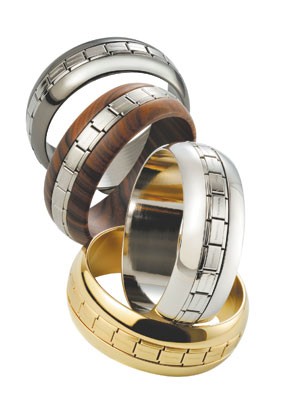
MILAN — When Nomination founder Paolo Gensini approached jewelry shops in the late Eighties with his first steel and gold bracelets, many pooh-poohed the idea.
“They told him that steel was used for cooking pans, not for jewelry,” said his 23-year-old son, Alessandro, Nomination’s marketing manager.
Little did they know that steel, together with other unconventional materials such as rubber, silicon, clay and denim, would add new oomph to the jewelry market for the younger crowd. These materials often coexist with gold and diamonds.
Other jewelry companies that have successfully used the materials include Miss Sixty, Pomellato’s DoDo line, Kris and Swatch Bijoux.
Nomination bracelets also broke new ground by featuring 18-karat gold letters and numbers that could be assembled to spell out names, dates and messages. This trend of personalizing a piece of jewelry transformed the Florentine firm into a $60 million business.
The success of companies like Nomination and Kris illustrates the growing importance of adapting fashion trends to jewelry as firms try to attract a younger customer.
“Fashion trends are important to capture the consumer’s mood and we re-adapt them to the jewelry based on color and whether minimalism is hotter than retro looks, for example,” said Alessandro Testi, chairman and designer of Testi SpA, which makes the Kris and Rebecca jewelry lines.
Laura Burdese, chief executive officer of Swatch Group Italia, said, “A jewel today represents a fashion accessory that characterizes a young woman’s style, her mood and the thousand facets of her personality.”
Gensini agreed: “Today, the edgier consumers steer clear of mass-driven jewelry, opting for pieces that reflect personality.”
Underscoring that point is Pomellato’s successful extension called DoDo. The collection consists of yellow or white gold animal-shape charms, at times sprinkled with diamonds. Each animal bears a message: The octopus stands for hug me, the whale symbolizes strength and the owl is conceived for nightlife-loving people.
“In the beginning, DoDo was a way to give Pomellato clients a piece of jewelry that was refined but less expensive,” said Francesco Minoli, ceo of Pomellato. “Since the use of precious materials and stones was very low, it capitalized on the emotional aspect.”
Related Articles
You May Also Like
Today, DoDo represents nearly 40 percent of Pomellato’s $143 million in sales and plans for 2007 include the opening of new stores in Italy and abroad, joining DoDo’s nine existing flagships.
Miss Sixty Jewels, which was launched in 2005, became a hit by partnering steel with denim in its Ovals collection.
“In our case, a young woman who wears these jewels transmits a lifestyle philosophy,” said Wichy Hassan, creative director for Miss Sixty. “Our design creed emerges from symbols and from the same attention to detail and finishes that highlights our clothes.”
Aside from denim-padded silver earrings and bangles, Miss Sixty’s lineup includes such shapes as wings and coins.
Swatch made its foray into jewelry with materials such as rubber, nylon, clay, silicon and resin combined with plastic and steel.
“This launch in 2000 radically changed the medium-low jewelry market, which was until then prevalently unbranded,” said Burdese.
Kris made ripples in the market by applying graphic computer designs to its jewelry forged from steel, diamonds, gold, rubber and galalite. In sync with the current fascination for rose gold in the fine jewelry segment, Kris is now pushing bronze.
“Young men and women who wear our jewels are attentive to trends, but also demonstrate that they believe in the stable values of love, freedom and friendships,” said Testi.
Nomination’s symbols now include nautical flags, birth signs and its latest offering, a collection called Trilly, with charms and pendants shaped like Tinkerbell. Nomination collections count about 8,000 sales points worldwide, plus 40 namesake stores. In the U.S., the brand is carried in 1,000 points of sales, and the company plans to open a flagship in the spring.