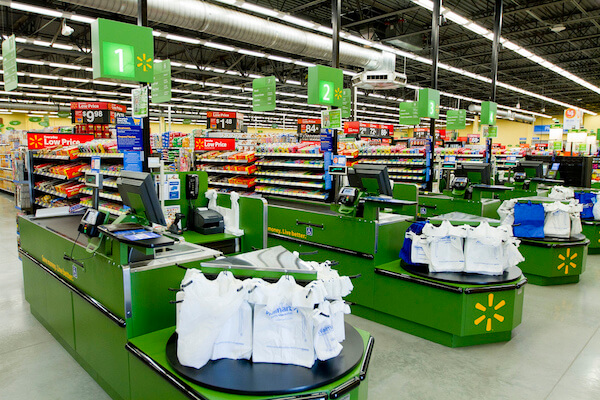

Walmart announced an extensive lighting program with Current, powered by GE, at the NRF Big Show today. The company has installed more than 1.5 million LED fixtures in 10 countries across 6,000 stores, distribution centers and corporate offices.
Over the past decade, Walmart has been able to reduce its lighting energy consumption and reduce costs by more than $100 million.
“Energy is one of the key operating expenses that we can reduce while delivering system upgrades that improve the customer shopping experience,” explained Mark Vanderhelm, Walmart’s vice president of Energy. “The ripple effect from these LED conversions throughout the business is truly staggering. We believe that by continuing to reduce one of our biggest operating expenses, we’re supporting future innovation and delivering on our promise of Every Day Low Prices.”
Related Stories
Walmart also uses Current’s TriGain technology to show off products in their best light and enhance color vibrancy. Additionally, the retailer is retrofitting LED and controls in all of its distribution centers in the U.S., as well as replacing all other overhead lighting with LED.
The LED investment is one part of the retailer’s emissions reduction plan, designed to result in a 18 percent reduction in emissions from 2015 levels by 2025. Thus far, the company has reduced energy usage by more than 12 percent per square foot since 2010.
In addition to lighting, the retailer plans to power 50 percent of its operations with renewable energy by 2025; upgrade its refrigeration, heating and cooling systems; and improve fleet technology.
During his keynote address, CEO and President Doug McMillon said doing good should be a priority for all retailers going forward. “If you assume the world will become increasingly transparent, and everyone is going to be increasingly informed, when they look at your company do they feel good about the decisions that you’re making?” he said, adding its one reason the company is tackling greenhouse gases, working to remove toxins in some products and collaborating with suppliers on other ways to make a difference. “I think that stuff matters some today, and matters more to a minority of the customer base. but over time that’s just going to grow and become increasingly important.”