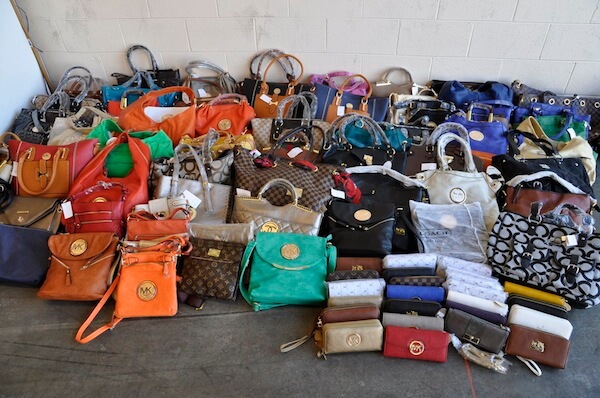
If you’ve ever walked New York City’s Canal Street or Santee Alley in Los Angeles, than you know there’s no shortage of fake fashion. And that’s just the stuff that gets in.
U.S. Customs and Border Protection (CBP) announced that in cooperation with the U.S. Immigration and Customs Enforcement (ICE), it seized a record 31,560 shipments of counterfeit goods in 2016. That’s 9 percent more than the previous year.
As usual, apparel and accessories represent the largest piece of that pie at 20 percent. Watches and jewelry topped the list with handbags and wallets running a close second. Combined, that’s $887.5 million if the goods had been genuine.
Related Stories
Not only do counterfeits undermine the earning power of the companies that own the intellectual property, the also pose a risk to consumers since most are made of inferior materials, not made under controlled conditions and labeled with false information.
“Products that infringe on U.S. trademarks, copyrights, and patents threaten the health and safety of American consumers, the U.S. economy, and our national interests,” said CBP commissioner R. Gil Kerlikowske. “This record-breaking year of IPR seizures highlights the vigilance of CBP and ICE personnel in preventing counterfeit goods from entering our stream of commerce and their dedication to protecting the American people.”
The bulk of these goods (45 percent) originated in China closely followed by Hong Kong at 43 percent.
In a separate announcement this week, Chinese retail giant Alibaba announced an alliance with 20 leading international brands, including Louis Vuitton, Swarovski, Sony and Samsung to stop counterfeiting. The group plans to share information about their individual intellectual property enforcement efforts and employ big data to stop fakes both online and off.
Alibaba has long been singled out for not doing enough to quell the flow of fakes on its sites. Last month, the U.S. Trade Representative added Alibaba’s Taobao to its Notorious Markets List, which flags marketplaces that are known to carry counterfeits.