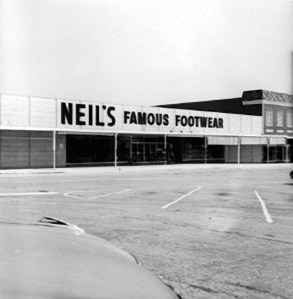
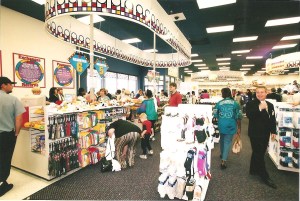
The first turning point for shoe stores came in the late 1940s when strip malls began to take hold, and chains like Kinney Shoes and Edison Brothers expanded, signaling a wave of change. Soon, independents struggled to keep up with national players like Payless, founded in 1956, and flourishing department stores, as people moved out of city centers. (The first Famous Footwear store pictured above.)
Stouts Footwear
Image Credit: Courtesy
2. THE MALL BOOM
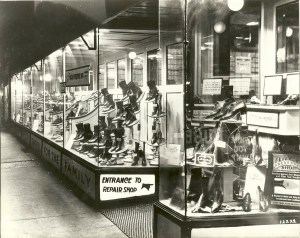
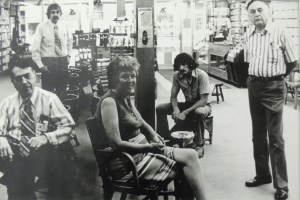
The 1960s brought further deterioration of downtown shopping areas as a growing middle class ushered in the rise of suburbia — and another innovation: the mall. The fallout of these retail shifts of the 1960s took its toll. In 1976, FN covered a National Shoe Retailer Association workshop where Howard Davidowitz of S.D. Leidesdorf & Co. declared that “footwear retailers have to admit the future of retailing is in the mall and learn to cope or go out of business.” (Stouts Footwear pictured above.)
DSW
Image Credit: Courtesy
3. BUDGET-FRIENDLY SHOPPING
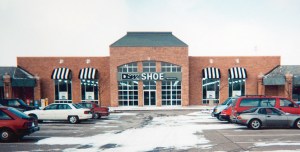
The recessionary environment of the 1970s and ’80s ushered in the price-conscious shopper, helping to fuel the rapid rise of big-box stores like Walmart, Kmart and Target. Then by the mid-1990s, many department stores had consolidated, leaving space for off-price retailers like T.J. Maxx. Designer Shoe Warehouse (DSW) debuted in 1991.
Kith Osaka
Image Credit: Courtesy
4. SNEAKERS IN THE SPOTLIGHT
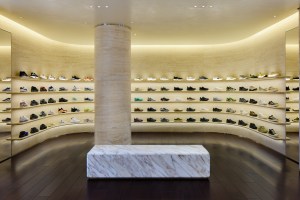
In 1974, FN noted that a new athletic specialty store concept was beginning to appear across the country. One of those new chains was Foot Locker, which launched in 1974 as a spin-off from the Kinney banner. It was followed a few years later by Finish Line in 1976. Decades later, JD Sports and Dick’s Sporting Goods are the powerhouse players making headlines. And a crop of forward-thinking sneaker-driven boutiques, including Kith and Concepts, as well as specialty running stores, have kept kicks top of mind. (Kith Osaka pictured above.)
Zappos
Image Credit: AFP via Getty Images
5. E-COMM ARRIVES
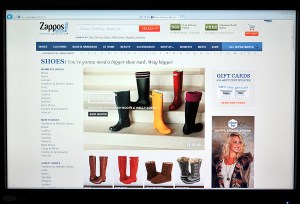
It wasn’t until the late 1990s that online sales became a topic of conversation as a viable shopping option. And just as the mall had shaken up the retail model, online shopping hit brick-and-mortar stores with similar force. In 1999, FN reported on the launch of Zappos.com, a milestone moment for shoe e-commerce. A year later, Net-a-porter.com made its debut in 2000, and helped transform luxury shopping for consumers worldwide.
Shoe-Carnival
Image Credit: Courtesy
6. ALL IN THE FAMILY
Leading names like Rack Room, Famous Footwear, Shoe Carnival and Shoe Show have forged ahead, thanks to their value proposition and ability to cater to the whole family.
At Genesco-owned Journeys, the teen retailer’s new mantra is “Style-led, not sneakerhead,” which serves as the basis of Journeys’ reinvention plan. “It’s about, do these shoes allow consumers to express their own style, and are these the right silhouettes that they desire, and will they serve the multiple occasions our customers are looking to wear these shoes to,” Journeys’ president Andy Gray said in an interview with FN last November, when Genesco celebrated its centennial. (A Shoe Carnvial store pictured above.)
Montano’s Shoes
Image Credit: Courtesy
7. INDEPENDENT MINDS
Despite the so-called demise of the independent, many storied retailers have not only survived, but thrived. Their No. 1 advantage? Service. “Our stores embody quality, customer service and education on foot health, while incorporating style,” said Jim Sajdak, owner of Stan’s Fit For Your Feet. “We truly shop the world to bring in styles and brands for our stores and online.” (Montano’s Shoes pictured above.)
Saks Fifth Avenue Beverly Hills Flagship
Image Credit: Peter Christiansen Valli
8. DEPARTMENT STORE SHAKE-UPS
Change and challenge has been a constant theme in the department store sector for decades. “The business is always evolving, and you have to like change,” said Tracy Margolies, the veteran department store exec who was inducted into FN’s Hall of Fame in 2023. The past five years have been particularly frenetic. In February 2020, the beloved Barneys New York flagship on Madison Avenue closed its doors permanently, just a year after Lord & Taylor shuttered its flagship on Fifth Avenue. And this spring, Hudson’s Bay Canada went dark.
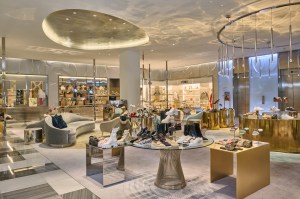
Meanwhile, the remaining players have increasingly partnered up, with Saks Global’s recent $2.7 billion buyout of Neiman Marcus generating major attention, particularly because Saks’ late payments to vendors continues to spark major concerns. At Macy’s, the retailer has been reducing its brick-and-mortar footprint. (Shoe department at Saks’ Beverly Hills pictured above.)
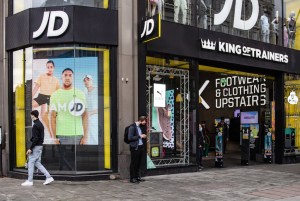
A scene outside JD sport shop. The Prime Minister announced
Image Credit: SOPA Images/LightRocket via Getty Images
9. THE BIG GET BIGGER
M&A has been sweeping the retail world in the past decade, with Dick’s Sporting Goods and JD Sports emerging as the most active players in the athletic space recently. More consolidation has been underway at the luxury level, especially in the e-commerce space.