• In Bangladesh’s Factories, Rohingya Refugees Work in Fear Under the Radar
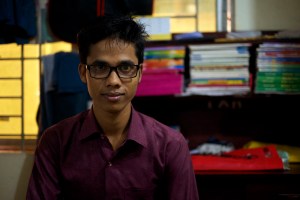
    Ayat Ullah, 20, had dreams of becoming a teacher in his hometown of Buthidaung in Myanmar's northern Rakhine State. But after he realized that the military was targeting educated Rohingya, he decided to flee to Chittagong, an industrial city in southern Bangladesh, and sought out work as a garment worker. Ullah sits in his rented home, in front of a desk full of his old school books.
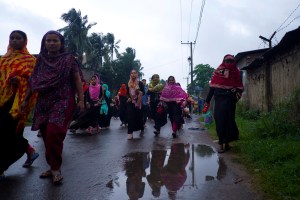
    Image Credit: Dene-Hern Chen/WWD

    Ayat Ullah, 20, had dreams of becoming a teacher in his hometown of Buthidaung in Myanmar’s northern Rakhine State. But after he realized that the military was targeting educated Rohingya, he decided to flee to Chittagong, an industrial city in southern Bangladesh, and sought out work as a garment worker. Ullah sits in his rented home, in front of a desk full of his old school books.

  • In Bangladesh’s Factories, Rohingya Refugees Work in Fear Under the Radar

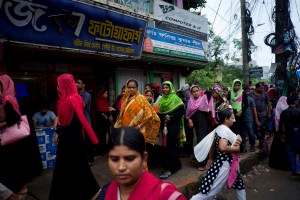
    Garment workers in Chittagong, southern Bangladesh, leave their factories at the end of the day.
    Image Credit: Dene-Hern Chen/WWD

    Garment workers in Chittagong, southern Bangladesh, leave their factories at the end of the day.

  • In Bangladesh’s Factories, Rohingya Refugees Work in Fear Under the Radar

    Garment workers in Chittagong, southern Bangladesh, leave their factories at the end of the day.
    Image Credit: Dene-Hern Chen/WWD

    Garment workers in Chittagong, southern Bangladesh, leave their factories at the end of the day.

  • In Bangladesh’s Factories, Rohingya Refugees Work in Fear Under the Radar

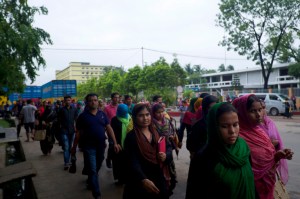
    Masses of women leave their factories at the end of the day in Chittagong, southern Bangladesh. This region has more than 500,000 people employed in its garment sector.
    Image Credit: Dene-Hern Chen/WWD

    Masses of women leave their factories at the end of the day in Chittagong, southern Bangladesh. This region has more than 500,000 people employed in its garment sector.

  • In Bangladesh’s Factories, Rohingya Refugees Work in Fear Under the Radar

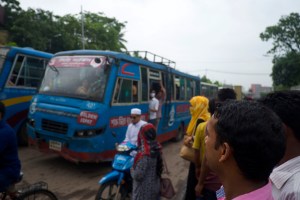
    A man looks on at buses carrying garment workers leaving an factory complex in Chittagong, southern Bangladesh.
    Image Credit: Dene-Hern Chen/WWD

    A man looks at buses carrying garment workers leaving an factory complex in Chittagong, southern Bangladesh.

  • In Bangladesh’s Factories, Rohingya Refugees Work in Fear Under the Radar

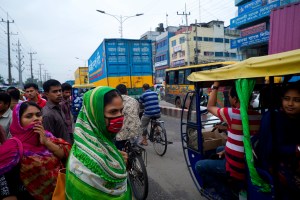
    More than 500,000 garment workers are employed by Chittagong's garment factories, which produce roughly 15 percent of Bangladesh's garment exports overseas. Garment workers look before crossing a hectic road as they leave work for the day.
    Image Credit: Dene-Hern Chen/WWD

    More than 500,000 garment workers are employed by Chittagong’s garment factories, which produce roughly 15 percent of Bangladesh’s garment exports overseas. Garment workers look before crossing a hectic road as they leave work for the day.

  • In Bangladesh’s Factories, Rohingya Refugees Work in Fear Under the Radar

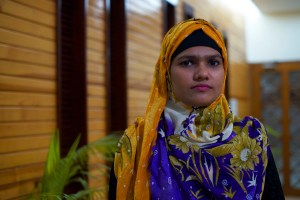
    Jasmine Khatum, 21, is a Rohingya working in a garment factory in Chittagong as a thread cutter. She and her family fled persecution in Myanmar in 2012, after one of their relatives was beaten to death.
    Image Credit: Dene-Hern Chen/WWD

    Jasmine Khatum, 21, is a Rohingya woman working in a garment factory in Chittagong as a thread cutter. She and her family fled persecution in Myanmar in 2012, after one of their relatives was beaten to death.

  • In Bangladesh’s Factories, Rohingya Refugees Work in Fear Under the Radar

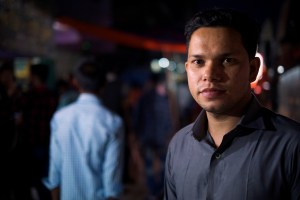
    Mohammad Ayoub, 22, has moved up quickly in the ranks since he started working in his factory in April 2017, going from a helper to a supervisor. But still, he worries about revealing his true status as a Rohingya refugee, as he believes that the Bangladeshi colleagues will turn against him. He stands outside his garment factory in Chittagong, southern Bangladesh, which produces boots for a prominent American footwear company.
    Image Credit: Dene-Hern Chen/WWD

    Mohammad Ayoub, 22, has moved up quickly in the ranks since he started working in his factory in April 2017, going from a helper to a supervisor. But still, he worries about revealing his true status as a Rohingya refugee, as he believes that the Bangladeshi colleagues will turn against him. He stands outside his garment factory in Chittagong, southern Bangladesh, which produces boots for a prominent American footwear company.

  • In Bangladesh’s Factories, Rohingya Refugees Work in Fear Under the Radar

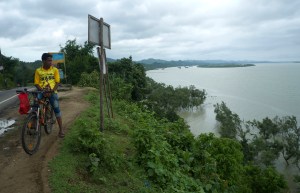
    A man looks across the Naf river. More than 700,000 Rohingya refugees have crossed the Naf River from Myanmar into Bangladesh to flee persecution from the Myanmar military.
    Image Credit: Dene-Hern Chen/WWD

    A man looks across the Naf River. More than 700,000 Rohingya refugees have crossed the Naf River from Myanmar into Bangladesh to flee persecution from the Myanmar military.

  • In Bangladesh’s Factories, Rohingya Refugees Work in Fear Under the Radar

    Children play in a refugee camp in Cox's Bazar, Bangladesh.
    Image Credit: Dene-Hern Chen/WWD

    Children play in a refugee camp in Cox’s Bazar, Bangladesh.

  • In Bangladesh’s Factories, Rohingya Refugees Work in Fear Under the Radar

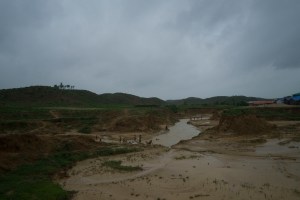
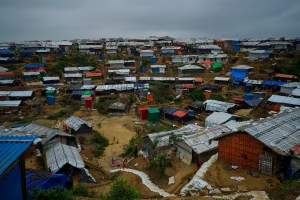
    More than 700,000 Rohingya have fled Myanmar for Bangladesh since the Myanmar military started cracking down on the ethnic minority group. The influx of refugees into the refugee camps of southen Myanmar's Cox's Bazar has led to overcrowding, which results in poor conditions and food scarcity.
    Image Credit: Dene-Hern Chen/WWD

    More than 700,000 Rohingya people have fled Myanmar for Bangladesh since the Myanmar military started cracking down on the ethnic minority group. The influx of refugees into the refugee camps of southen Myanmar’s Cox’s Bazar has led to overcrowding, which results in poor conditions and food scarcity.

  • In Bangladesh’s Factories, Rohingya Refugees Work in Fear Under the Radar

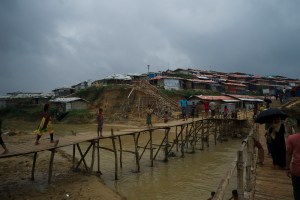
    Rohingya refugees cross a bridge in a camp in Cox's Bazar, southern Bangladeshi. More than 700,000 Rohingya have fled Myanmar since August 2017, when the military started cracking down on this ethnic minority group. They have faced widespread persecution in Myanmar for decades.
    Image Credit: Dene-Hern Chen/WWD

    Rohingya refugees cross a bridge in a camp in Cox’s Bazar, southern Bangladesh. More than 700,000 Rohingya have fled Myanmar since August 2017, when the military started cracking down on this ethnic minority group. They have faced widespread persecution in Myanmar for decades.

ad