Ready for Battle: OnPoint
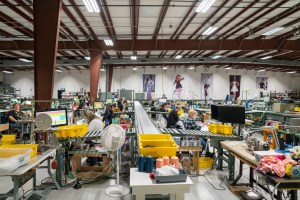
OnPoint’s on-demand manufacturing facility in Florence, Ala.
OnPoint’s on-demand manufacturing facility in Florence, Ala.
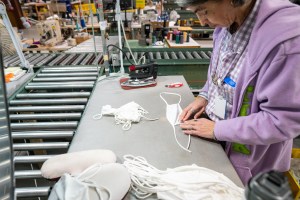
Technology-driven workflows is what experts predict will power the shift in the U.S. garment manufacturing industry, post-pandemic.
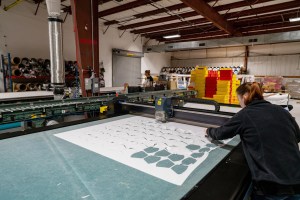
Masks are being cut. Much of the processes at OnPoint are automated.
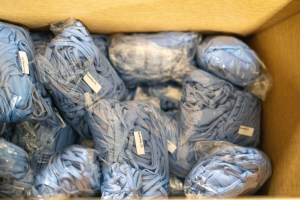
Masks are bundled in sets of 25. Best told WWD that a network of manufacturers partnered to cover production costs and offer the masks pro-bono.
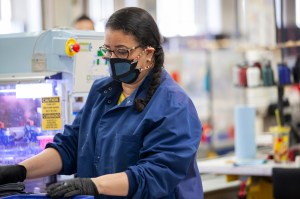
New Balance associate using and fabricating face masks at the company’s Lawrence, MA factory.
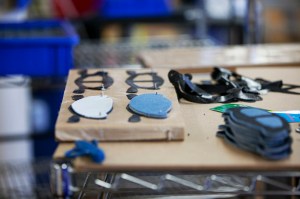
The company estimates it will produce 100,000 masks a week and also working toward surgical mask certification.
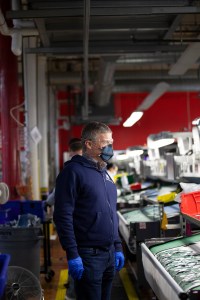
New Balance president and ceo Joe Preston, at the company’s Lawrence, MA factory.
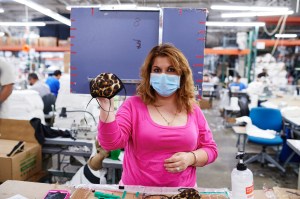
The Los Angeles Apparel facility has produced more than 100,000 non-medical masks.
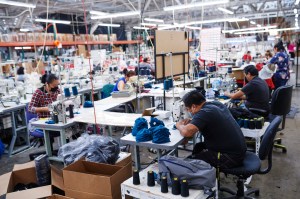
WorkersÕ sewing stations were moved 6 feet apart to comply with social distancing guidelines.
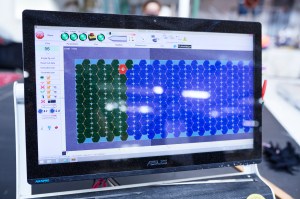
Los Angeles Apparel is part of a consortium of manufacturers producing masks and PPE, with production funded by the U.S. Department of Health and Human Service, with a goal of producing 10 million masks a week.
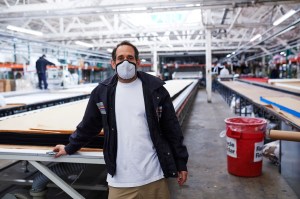
Dov Charney founded Los Angeles Apparel in 2016, a vertically-integrated brand follow-up to his previous venture, American Apparel.
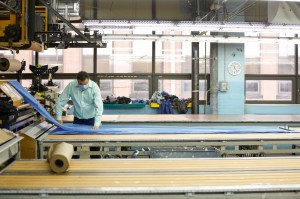
Heritage menswear brand Hickey Freeman made the decision March 23 to convert the companyÕs factory in Rochester, New York, in operation since 1912, into a facility to produce protective face masks.
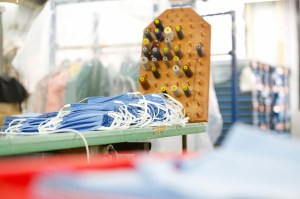
Rochester General Hospital approached Hickey Freeman about the making masks and shipped 33 boxes of surgical drapes to use as material to the factory to supply the effort.
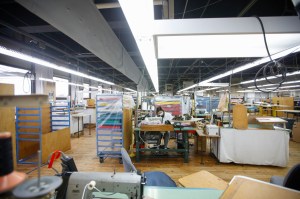
Hickey Freeman has been able to rehire 100 workers and hopes to add another 100.
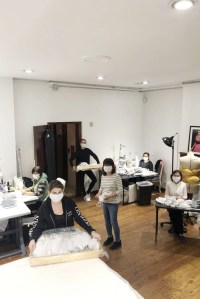
A look at the mask production space.
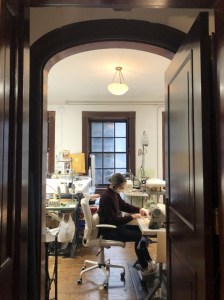
A seamstress at work for Christian Siriano’s effort.
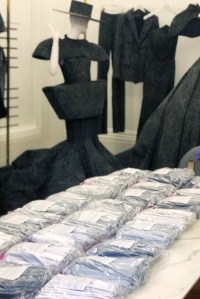
A close-up of masks designed by Christian Siriano s group.
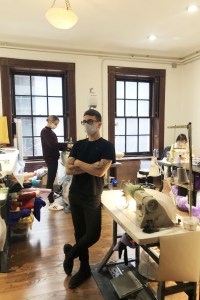
Christian Siriano is leading a team to make masks and gowns for relief workers.
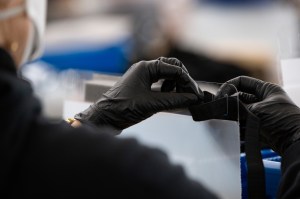
For the close-up of the gloves: Workers at the Brooklyn Navy Yard are taking safety precautions with protective gear.
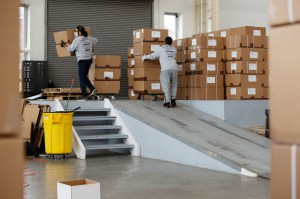
Workers from Bednark Studio and Duggal Visual Solutions are part of a group effort making face shields in The Brooklyn Navy Yard.
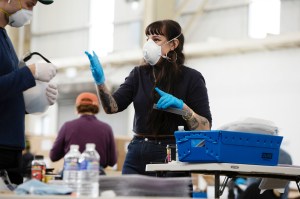
Workers from Bednark Studio and Duggal Visual Solutions are part of a group effort making face shields in The Brooklyn Navy Yard.
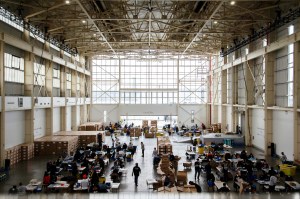
An aerial view of the group effort underway at Bednark Studio with help from Duggal Visual Solutions.
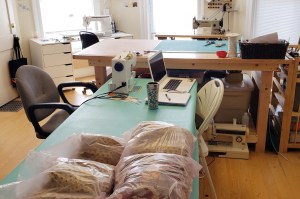
Fabric.com donated fabric for use of Nineteenth Amendment’s small-batch manufacturers and independent makers.
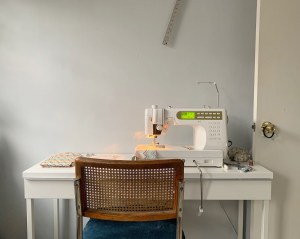
Independent designers like Victoria Yee Howe fuel the network effect of Nineteenth Amendment’s mask-making initiative.
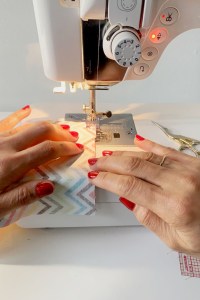
The “Buy One, Give Many” fund-raising campaign funds production costs for Nineteenth Amendment and its network of manufacturers and designers.
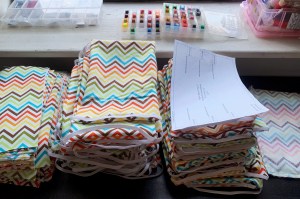
Fabric masks are not medical-grade but are rather intended for frontline essential workers, such as food delivery or grocery clerks. Here are stacks of fabric masks, completed by Howe.
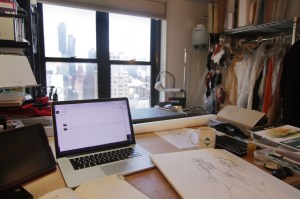
Sketches sit atop Leetal Platt’s work station where the tech pack is pulled up on the screen.