• L’Oréal

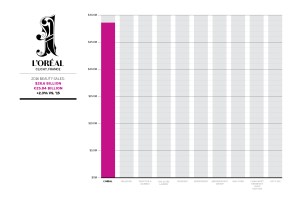
    L’Oréal benefitted from the global growth in the makeup segment and continued to move forward with its digital strategy in 2016. Within the Consumer Products division, makeup saw double-digit growth driven by NYX, Maybelline, L’Oréal Paris and Essie. The L’Oréal Luxe division grew 6% and e-commerce sales rose 33%. The strong growth at L’Oréal Luxe was boosted by the acquisition of two brands, niche fragrance label Atelier Cologne in July and fast-growing U.S. makeup brand It Cosmetics in August, which it bought for $1.2 billion.
  • Unilever

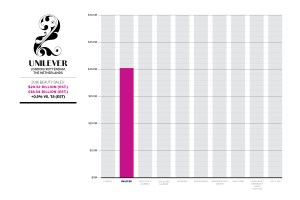
    In what it described as a challenging market, Unilever focused on sustaining growth of its core personal-care brands through innovation as well as growing its prestige business in 2016. The company acquired subscription-based Dollar Shave Clun]b for an estimated $1 billio, and the hair-care brand Living Proof. Unilever’s deodorant activity performed well. In hair care, growth drivers included the launch of TRESemmé Beauty-FULL Volume and the relaunch of Sunsilk. Dove benefitted from premium ranges including Advanced Hair and Dove Men + Care.

  • Procter & Gamble Co.

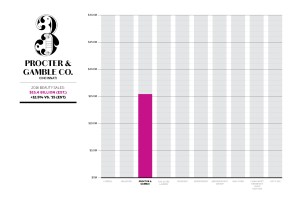
    P&G sold 41 beauty brands to Coty Inc. in October for $11.6 billion as part of an overarching plan to simplify and pare down to its fastest-growing core businesses. Taking the brands that were sold (P&G also divested the Christina Aguilera and Dolce & Gabbana fragrance licenses to Elizabeth Arden and Shiseido, respectively) and the effects of foreign currency out of the equation, P&G’s beauty division grew sales 2.1% in 2016. Part of that gain came from SK-II, which posted double-digit growth.

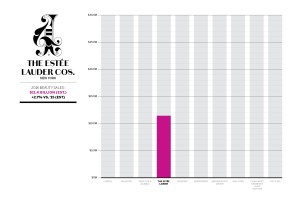
  • The Estée Lauder Cos.

    Makeup, fragrance and acquisitions are paving the way for growth at the Estée Lauder Cos., which bought three brands and saw its makeup and fragrance sales grow 8% each in 2016. The acquisitions, including Too Faced (for $1.45 billion) and Becca, give Lauder increased exposure to specialty retailers like Sephora and Ulta Beauty, and a larger presence in the fast-growing artisanal fragrance segment. Brand standouts included La Mer, Jo Malone London, Tom Ford and Smashbox.

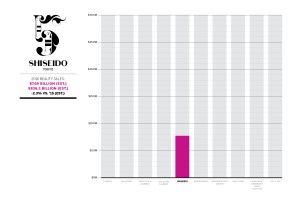
  • Shiseido Co.

    After a major overhaul in 2015 aimed at modernizing and globalizing its business model with revamped products, promotional tools and a reorganized management structure, Shiseido was boosted in 2016 by strong sales from its prestige brands, additional sales from new brands and improvements from its domestic business. Shiseido made significant additions to its prestige portfolio, signing a license for Dolce & Gabbana’s beauty business and acquiring Gurwitch Products, the owner of Laura Mercier and ReVive, for an estimated $260 million.

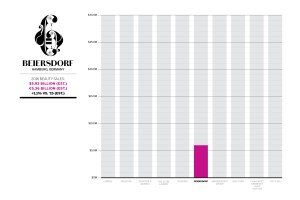
  • Beiersdorf

    Sales for Beiersdorf’s Consumer business segment, which includes its beauty activity as well as bandages, grew 1.1% to €5.61 billion in 2016. Organic sales for the division increased 3.3%, with all three of its core brands, Nivea, Eucerin and La Prairie, contributing. Nivea increased its organic sales by 3.8%, Eucerin by 1.5% and La Prairie by 5.5%.

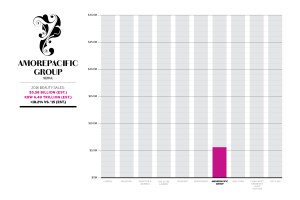
  • AmorePacific Group

    2016 was another year of strong growth for AmorePacific Group, albeit at a slightly slower pace than 2015, when its sales climbed 22.8%. Domestic sales accounted for 75% of revenues. Exports to Asian countries represented 24% of sales and grew 38% . Sales in Europe grew 4%, while revenues in North America increased 10%. Combined, the two regions accounted for 2% of sales.

  • Kao Corp.

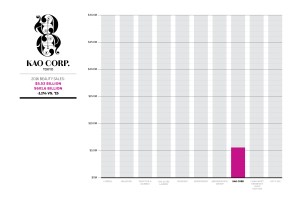
    On a constant-currency basis, Kao Corp.’s beauty sales grew 2.9% year-on-year. Domestically, sales were strong; international sales increased thanks to strong growth in China and Taiwan. In September, Kao introduced a premium skin care and makeup line under the Kanebo brand name in international markets. Sales of skin care grew in Asia and the Americas; hair-care sales declined internationally.

  • LVMH Moët Hennessy Louis Vuitton

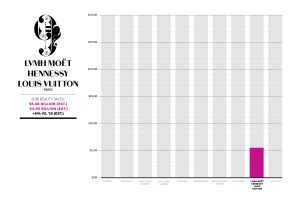
    It was another year of solid growth for LVMH’s beauty activity. Makeup overtook fragrance as the largest category with a 44% share of sales. Estimated makeup sales grew 16.5% to €2.18 billion, while fragrance revenues dipped 2% to €1.88 billion and skin care sales increased 0.5% to €891.5 million. Parfums Christian Dior gained market share in all regions. Parfums Givenchy saw strong growth in Asia and in the makeup category. Benefit had strong momentum and Make Up For Ever grew in every region. Sales in the U.S. accounted for 18% of the business, France for 12%; the rest of Europe, 25%; Japan, 5%; the rest of Asia, 28%, and other markets, 12%.

  • Coty Inc.

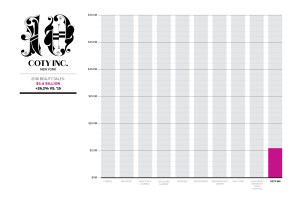
    Coty Inc. took a giant step towards its goal of becoming a top three beauty company with the completion on Oct. 1 of the $11.6 billion purchase of Procter & Gamble’s Specialty Beauty portfolio (the year’s largest beauty transaction.). Consequently, the formerly fragrance-heavy business reorganized into three divisions: Coty Consumer Beauty, Coty Luxury and Coty Professional Beauty. Before the P&G deal, Coty closed its $1 billion acquisition of Hypermarcas’ beauty and personal care business.

ad